Author: ilsehaider

Photography, Painting, Video, Studio Visit

  • Andrea Clausen in my Studio, 2006, Staged photoshooting in the foyer of the Burgtheater, 2006

    Photomontage (l), colour photograph behind plexiglas (r)

    photo credits: ©Ilse Haider

  • Athletes in my Studio (l), 2006, Poster design for international Women’s Day (r), 2011

    Photograph (l), photomontage, typography by Nina Ober (r)

    photo credits: ©Ilse Haider

  • Here you come again, 2006

    Video performance with Rosemarie Brucher (3min), camera: Momo Pröll

    Recorded and shown at the Galerie Steinek, Mr. Big, Vienna, 2006, video credits: ©Ilse Haider

  • Shift of Attention, 2001

    80 x 65cm, colour photograph behind plexiglas

    Renée Stieger-Reuter at the Tabakwerke, University of Arts, Linz, photo credits: ©Ilse Haider

  • Barbara and Peter, 1988

    40 x 30 x 8cm, photographic emulsion on plaster

    photo credits: ©Ilse Haider

  • Robert Pfaller in my Studio, 2002

    120 x 100cm, Indian ink on paper

    photo credits: ©Ilse Haider

    > text

  • Sir Eduardo Paolozzi, 1989

    Photograph

    My professor in the Ceramics Dept. studio at the Royal College of Art, London, photo credits: ©Ilse Haider

Continue reading

Crossing the Line

Herbert Schnepf

CV

Herbert Schnepf

(*1979 in der Steiermark/Ö, lebt und arbeitet in Wien) studierte Theater- und Filmwissenschaft/ Kunstsoziologie in Wien und Paris/ Nanterre. Anschließend Assistenz und Öffentlichkeitsarbeit für Filmfestivals, Filmproduktionen, Galerien und Künstler*innen; daneben im Sozialbereich u.a. als Trainer für Deutsch als Fremdsprache in Strafanstalten und Kunstakademien und in der Flüchtlingsbetreuung tätig. Arbeitet derzeit im Projektmanagement einer sozialen NGO und absolviert eine Ausbildung zum Psychotherapeuten.

EN

In her current exhibition, Ilse Haider shows a series of images of actors from films of the 1960s and 1970s. The picture-objects and sculptures are created in Haider’s characteristic three-dimensional photo technique. When viewed from the right angle, the faces of the women become visible and nearly tangible on complexly structured wooden elements, yet at the same time, they appear aloof and lost in reverie.

The portraits are juxtaposed with four small-format photo reliefs showing scenes from films by Pier Paolo Pasolini, Michelangelo Antonioni, John Cassavetes, and John Huston. These works, likewise conceived as three-dimensional photos, clearly contrast the calm, almost classical seeming portraits of the women through the scenes depicted with garishly colored backgrounds, yet at the same time, provide the key to their understanding: in all of these films, women are shown trying to break out of norms, cross borders, or escape from unbearable situations, and are punished for this with degradation or marginalization, or are confronted with the difficulty of leading a life outside the norm.  

The portraits of the women are the essence of that feeling in which something has gone out of kilter, geometric structures and patterns have shifted wildly, confronting us with the disillusioned expression in the face of an inhospitable and cold reality. Where the patterns obey a clear geometry, the faces disappear in the network of individually illuminated elements and can be recognized only gradually in the central perspective.

With Crossing the Line, Ilse Haider shifts into focus images that tell of an era in which social and sexual norms were burst open in favor of a liberated and self-determined society. Some fifty years after these social upheavals, the question arises as to what remains of this liberation and where the pressure for conformity and standardization have again gained the upper hand.  While the pressure to adapt one’s image to a socially and technologically shaped ideal is currently growing beyond measure, formerly progressive approaches have reversed direction and relentlessly demand correctness without tolerating any opposition. Ilse Haider’s portraits turn the gaze to women who are outsiders, on the wrong side of the right morality. She thereby depicts a theme that has evolved from a profoundly feminine and artistic dilemma to a central contradiction of digital media reality: the compulsion to please without sacrificing one’s self.

(translation: Lisa Rosenblatt)

(2023, Crossing the Line, catalogue, Galerie Leonhard)
DE

In der aktuellen Ausstellung zeigt Ilse Haider eine Serie von Bildern von Schauspieler*innen aus Filmen der 1960er und 1970er Jahre. Die Bild-Objekte und Skulpturen wurden in der für sie typischen 3-dimensionalen Fototechnik ausgeführt. Durch die Betrachtung im richtigen Blickwinkel werden die Gesichter der Frauen auf komplex strukturierten Holz-Elementen sichtbar und geradezu greifbar, wirken dabei aber trotzdem unnahbar und entrückt.

Den Portraits sind vier kleinformatige Foto-Reliefs mit Szenen aus Filmen von Pier Paolo Pasolini, Michelangelo Antonioni, John Cassavetes und John Huston gegenübergestellt. Diese Arbeiten sind ebenfalls als dreidimensionale Fotografien konzipiert, heben sich durch die dargestellten Szenen mit grell-bunten Farbhintergründen deutlich von den ruhigen, geradezu klassizistisch anmutenden weiblichen Portraits ab und liefern zugleich den Schlüssel zu ihrem Verständnis: In all diesen Filmen werden Frauen gezeigt, die versuchen aus Normen auszubrechen, Grenzen zu überschreiten oder aus unerträglichen Situationen zu entfliehen und die dafür mit Abwertung oder Ausgrenzung bestraft oder mit der eigenen Schwierigkeit, ein Leben außerhalb der Norm zu führen, konfrontiert werden.

Die weiblichen Portraits sind die Essenz dieses Gefühls, bei dem etwas aus dem Lot gekommen ist, sich geometrische Strukturen und Muster wild verschoben haben und uns mit dem ernüchterten Ausdruck angesichts einer unwirtlichen und kalten Realität konfrontieren. Dort, wo die Muster einer klaren Geometrie gehorchen, verschwinden die Gesichter im Netz der einzelnen belichteten Elemente und lassen sich nur allmählich in der zentralen Perspektive erkennen.

Ilse Haider rückt mit Crossing the Line Bilder in den Fokus, die von einer Zeit erzählen, in der gesellschaftliche und sexuelle Normen gesprengt wurden zugunsten einer befreiten und selbstbestimmten Gesellschaft. Gut 50 Jahre nach diesen sozialen Umbrüchen stellt sich die Frage, was von dieser Befreiung geblieben ist und wo der Zwang zur Anpassung und Normierung wieder überhandgenommen hat. Während der Druck, das eigene Bild einem sozial und technisch geformten Ideal anzupassen gerade ins Unermessliche steigt, haben sich auch einst progressive Ansätze zum Zwang verkehrt und fordern unerbittlich Correctness ein ohne jeglichen Widerspruch zu dulden. Ilse Haiders Portraits lenken den Blick auf Frauen, die sich im Out befinden, auf der falschen Seite der richtigen Moral. Sie beschreibt damit ein Thema, das sich vom zutiefst weiblichen und künstlerischen Dilemma zum zentralen Widerspruch der digitalen Medien-Realität entwickelt hat: Der Zwang gefallen zu müssen, ohne das eigene Selbst zu opfern.

(2023, Crossing the Line, Katalog, Galerie Leonhard)

Continue reading

CROSSING THE LINE

  • Exhibition view: John Cassavetes, Gina Rowlands and film scene from A Woman under the Influence, 2023

    video credits: ©Ilse Haider

    >press release

  • Gena Rowlands, 2023, Gena Rowlands, 2023

    40 x 30 x 25cm, 140 x 90 x 25cm, photographic emulsion on wood / acrylic paint

    Original (l): G. Rowlands in FACES, Impress/United Archives/APA-PictureDesk, Original (r): G. Rowlands in GLORIA, Columbia/Everett Collection/APA-PictureDesk, photo credits: ©Ilse Haider

    >press release

  • John Cassavetes, 2023

    70 x 71 x 40cm, photographic emulsion on wood

    Original: J. Cassavetes, Juan Cortes/Camera Press/APA-PictureDesk, photo credits: ©Ilse Haider

    >press release

  • Film scene from A Woman under the Influence, 2023

    40 x 60 x 6cm, photographic emulsion on wood / acrylic paint

    Original: Gena Rowlands and Peter Falk in A WOMAN UNDER THE INFLUENCE, 1974, directed by: John Cassevetes, Everett Collection/APA-PictureDesk, photo credits: ©Ilse Haider

    >press release

  • Exhibition view: Jean Seberg, 2023

    50 x 40 x 31cm, photographic emulsion on wood / acrylic paint

    Original/side 1: J. Seberg in BONJOUR TRISTESSE, 1959, Columbia/mptv/APA-PictureDesk, Original/side 2: J. Seberg in A FINE MADNESS, 1978, Warner Brothers©/David Sutton/mptv/APA-PictureDesk, video credits: ©Ilse Haider

    >press release

  • Lauren Bacall, 2023, Claire Trevor, 2023

    85 x 60 x 20cm, 42 x 37 x 15cm, photographic emulsion on wood / acrylic paint

    Original (l): L. Bacall, Friedrich/Interfoto/APA-PictureDesk, Original (r): C. Trevor in RAW DEAL, 1948, Everett Collection/APA-PictureDesk, photo credits: ©Ilse Haider

    >press release

  • Film scene from Key Largo, 2023

    45 x 60 x 10cm, photographic emulsion on wood / acrylic paint

    Original: Humphrey Bogart, Claire Trevor and Lauren Bacall in KEY LARGO, 1948, directed by: John Huston, Everett Collection/CONTRA/APA-PictureDesk, photo credits: ©Ilse Haider

    >press release

  • Film scene from Teorema, 2023

    40 x 60 x 6cm, photographic emulsion on wood / acrylic paint

    Original: Silvana Mangano and Carlo de Mejo in TEOREMA, 1968, directed by: Pier Paolo Pasolini, Ronald Grant Archive/Mary Evans/APA-PictureDesk, photo credits: ©Ilse Haider

    >press release

  • Exhibition view: Teorema, Silvana Mangano, Pier Paolo Pasolini, 2023

    140 x 90 x 20cm, photographic emulsion on wood / acrylic paint

    Original (m): S. Mangano in BARABBAS, 1962, Everett Collection/APA-PictureDesk, photo credits: ©Ilse Haider

    >press release

  • Pier Paolo Pasolini, 2023

    47 x 34 x 11cm, photographic emulsion on wood / acrylic paint

    Original: P. P. Pasolini in IL DECAMERON, 1971, Artemis Film/Mary Evans/APA-PictureDesk, photo credits: ©Ilse Haider

    >press release

  • Film scene from Il deserto rosso, 2023, Silvana Mangano, 2023

    60 x 78 x 12cm, 85 x 60 x 20cm, photographic emulsion on wood / acrylic paint

    Original (l): Monica Vitti and others in IL DESERTO ROSSO, 1964, Original (r): S. Mangano in MAMBO, 1954, both: Everett Collection/APA-PictureDesk, photo credits: ©Ilse Haider

    >press release

  • Film scene from Il deserto rosso, 2023

    60 x 78 x 12cm, photographic emulsion on wood / acrylic paint

    Original: Monica Vitti and others in IL DESERTO ROSSO, 1964, directed by: Michelangelo Antonioni, Everett Collection/APA-PictureDesk, photo credits: ©Ilse Haider

    >press release

  • Monica Vitti, 2023 (both)

    85 x 60 x 20cm, photographic emulsion on wood / acrylic paint

    Original: M. Vitti in MODESTY BLAISE, 1966, Everett Collection/APA-PictureDesk, photo credits: ©Ilse Haider

    >press release

  • Monica Vitti, 2023

    85 x 60 x 20cm, photographic emulsion on wood / acrylic paint

    Original: M. Vitti, Roger-Viollet/APA-PictureDesk, photo credits: ©Ilse Haider

    >press release

  • Monica Vitti, 2023

    85 x 60 x 20cm, photographic emulsion on wood / acrylic paint

    Original: M. Vitti, Roger-Viollet/APA-PictureDesk, photo credits: ©Ilse Haider

    >press release

Continue reading

Film from Scrapbooks 1945-1976 – aussortiert

  • The nude body – featuring The Unknown Author, 2013

    Film from diary scrapbooks (12 min), 1945-1976

    Film: concept/realisation: Ilse Haider, editing: Tatia Skhirtladze, video credits: ©Ilse Haider

    > text

  • Scrapbooks, 1945-1976

    30 x 21cm, collages and drawings on paper

    From issue #50/1949 and #133/1958

    > Text

  • Scrapbooks, 1945-1976

    30 x 21cm, collages and drawings on paper

    From issue #48/1947 and #56/1952

    > Text

  • Scrapbooks, 1945-1976

    30 x 21cm, collages and drawings on paper

    From issue #100/1953 and #120/1954

    > Text

  • Scrapbooks, 1945-1976

    30 x 21cm,collages and drawings on paper

    From issue #60/1951 and #100/1953

    > Text

  • Scrapbooks, 1945-1976

    30 x 21cm, collages and drawings on paper

    From issue #155/1959 and #210/1973

    > Text

  • Scrapbooks, 1945-1976

    30 x 21cm, collages and drawings on paper

    From issue #89/1951 and #145/1964

    > Text

  • Scrapbooks, 1945-1976

    30 x 21cm, collages and drawings on paper

    From issue #139/1960 and #95/1952

    > Text

  • Scrapbooks, 1945-1976

    30 x 21cm, collages and drawings on paper

    From issue #50/1949 and #121/1954

    > Text

  • Scrapbooks, 1945-1976

    30 x 21cm, collages and drawings on paper

    From issue #133/1956 and #70/1950

    > Text

  • Scrapbooks, 1945-1976

    30 x 21cm, Collages and drawings on paper

    From issue #70/1950 and #190/1968

    > Text

  • Scrapbooks, 1945-1976

    30 x 21cm, collages and drawings on paper

    From issue #221/1974 and #95/1952

    > Text

  • Scrapbooks, 1945-1976

    30 x 21cm, collages and drawings on paper

    From issue #222/1974 and #199/1972

    > Text

  • Scrapbooks, 1945-1976

    30 x 21cm, collages and drawings on paper

    From issue #211/1973 and #211/1973

    > Text

  • Scrapbooks, 1945-1976

    30 x 21cm, collages and drawings on paper

    From issue #229/1975 and #230/1975

    > Text

Continue reading

Photographic emulsion on wood / acrylic paint

  • Aretha, 2022

    140 x 90 x 30cm, photographic emulsion on wood / acrylic paint

    Original: A. Franklin, 1967, publicity portrait, Atlantic Records/Everett Collection/APA-PictureDesk, photo credits: ©Ilse Haider

    > text

  • Aretha, 2022

    140 x 90 x 30cm, photographic emulsion on wood / acrylic paint

    Original: A. Franklin, 1967, publicity portrait, Atlantic Records/Everett Collection/APA-PictureDesk, video credits: ©Ilse Haider

    > text

  • Billie Eilish, 2025

    140 x 90 x 20cm, photographic emulsion on wood / acrylic paint

    Original: B. Eilish, 2019, at the music and art festival “MS Dockville”, photo: Jonas Walzberg / dpa/APA-PictureDesk.com, photo credits: ©Ilse Haider

    > text

  • KAMALA HARRIS / We are not going back, 2024

    82 x 60 x 20cm, photographic emulsion on wood / acrylic paint

    Original: K. Harris, 2024, KAMIL KRZACZYNSKI /AFP/APA-PictureDesk, video credits: ©Ilse Haider.
    > Press Information, EN> Press Information, DE

    > text

  • Amy, 2023

    138 x 90 x 15cm, photographic emulsion on wood / acrylic paint

    Original: A. Winehouse, 2007, Suzan/PA/APA-PictureDesk, photo credits: ©Ilse Haider

    > text

  • Taylor Swift, 2025

    85 x 60 x 10cm, photographic emulsion on wood / acrylic paint

    Original: T. Swift, 67th Annual Grammy Awards – Arrivals, Jordan Strauss/AP/APA-PictureDesk.com photo credits: ©Ilse Haider

    > text

  • Johnny, 2021

    80 x 60 x 20cm, photographic emulsion on wood / acrylic paint

    Original: J. Cash, 1970s, Everett Collection/APA-PictureDesk, photo credits: ©Ilse Haider

    > text

  • Monica Vitti , 2023

    85 x 60 x 15cm, photographic emulsion on wood / acrylic paint

    Original: M. Vitti in L’AVVENTURA, 1960, Everett Collection/APA-PictureDesk, photo credits: ©Ilse Haider

    > text

  • Eadweard Muybridge & Étienne-Jules Marey , 2023

    70 x 50 x 50 cm, photographic emulsion on wood / acrylic paint

    Original/side 1: E. Muybridge, 1900s, akg-images/APA-PictureDesk, Original/side 2: È.-J. Marey, 1890, Hervé Champollion/akg-images/APA-PictureDesk, photo credits: ©Ilse Haider

    > text

  • Hannah, 2022

    85 x 60 x 20cm, photographic emulsion on wood / acrylic paint

    Original: H. Arendt, 1941, Fred Stein/dpa Picture Alliance/APA-PictureDesk, photo credits: ©Ilse Haider

    > text

  • Hannah, 2022

    85 x 60 x 20cm, photographic emulsion on wood / acrylic paint

    Original: H. Arendt, 1941, Fred Stein/dpa Picture Alliance/APA-PictureDesk, photo credits: ©Ilse Haider

    > text

  • Studio view: Maria and Ava, 2017

    photographic emulsion on wood / acrylic paint

    photo credits: ©Ilse Haider

    > text

  • Marilyn, 2014

    73 x 63 x 43cm, photographic emulsion on wood / acrylic paint

    Original: M. Monroe, Marilyn Monroe, 1960s, Ullstein/APA-PictureDesk, video credits: ©Ilse Haider

    > text

  • Elizabeth, 2022

    140 x 90 x 30cm, photographic emulsion on wood / acrylic paint

    Original: Queen Elizabeth II, 1954, Illustrated London News Ltd/Mary Evans/APA-PictureDesk, photo credits: ©Ilse Haider

    > text

  • Catherine, 2022

    both: 85 x 60 x15cm, photographic emulsion on wood / acrylic paint

    Original: CATHERINE DENEUVE, 1969; THE APRIL FOOLS, Jalem Productions., Ronald Grant Archive/Mary Evans/APA-PictureDesk, photo credits: ©Ilse Haider

    > text

  • Frida Kahlo, 2024

    140 x 90 x 18cm, photographic emulsion on wood / acrylic paint

    Original: F. Kahlo, 1932, Guillermo Kahlo, Bridgeman Images/Bridgeman Art Library/ APA-PictureDesk, video credits: ©Ilse Haider.

    > text

Overview

  • Taylor Swift, 2025

    85 x 60 x 10cm, photographic emulsion on wood / acrylic paint

    Original: T. Swift, 67th Annual Grammy Awards – Arrivals, Jordan Strauss/AP/APA-PictureDesk.com photo credits: ©Ilse Haider

    > text

  • KAMALA HARRIS / We are not going back, 2024

    82 x 60 x 20cm, photographic emulsion on wood / acrylic paint

    Original: K. Harris, 2024, KAMIL KRZACZYNSKI / AFP /APA-PictureDesk, video credits: ©Ilse Haider

    > text

  • Aretha, 2022

    140 x 90 x 30cm, photographic emulsion on wood / acrylic paint

    Original: A. Franklin, 1967, publicity portrait, Atlantic Records/Everett Collection/APA-PictureDesk, photo credits: ©Ilse Haider

    > text

  • Aretha, 2022

    140 x 90 x 30cm, photographic emulsion on wood / acrylic paint

    Original: A. Franklin, 1967, publicity portrait, Atlantic Records/Everett Collection/APA-PictureDesk, photo credits: ©Ilse Haider

    > text

  • Aretha, 2022

    140 x 90 x 30cm, photographic emulsion on wood / acrylic paint

    Original: A. Franklin, 1967, publicity portrait, Atlantic Records/Everett Collection/APA-PictureDesk, video credits: ©Ilse Haider

    > text

  • Amy, 2023

    138 x 90 x 15cm, photographic emulsion on wood / acrylic paint

    Original: A. Winehouse, 2007, Suzan/PA/APA-PictureDesk, photo credits: ©Ilse Haider

    > text

  • Monica Vitti , 2023

    85 x 60 x 15cm, photographic emulsion on wood / acrylic paint

    Original: M. Vitti in L’AVVENTURA, 1960, Everett Collection/APA-PictureDesk, photo credits: ©Ilse Haider

    > text

  • Johnny, 2021

    80 x 60 x 20cm, photographic emulsion on wood / acrylic paint

    Original: J. Cash, 1970s, Everett Collection/APA-PictureDesk, photo credits: ©Ilse Haider

    > text

  • Eadweard Muybridge & Étienne-Jules Marey , 2019

    70 x 50 x 50 cm, photographic emulsion on wood / acrylic paint

    Original/side 1: E. Muybridge, 1900s, akg-images/APA-PictureDesk, Original/side 2: È.-J. Marey, 1890, Hervé Champollion/akg-images/APA-PictureDesk, photo credits: ©Ilse Haider

    > text

  • Eadweard Muybridge & Étienne-Jules Marey , 2019

    70 x 50 x 50 cm, photographic emulsion on wood / acrylic paint

    Original: E. Muybridge, 1900s, akg-images/APA-PictureDesk, photo credits: ©Ilse Haider

    > text

  • Hannah, 2022

    85 x 60 x 20cm, photographic emulsion on wood / acrylic paint

    Original: H. Arendt, 1941, Fred Stein/dpa Picture Alliance/APA-PictureDesk, photo credits: ©Ilse Haider

    > text

  • Hannah, 2022

    85 x 60 x 20cm, photographic emulsion on wood / acrylic paint

    Original: H. Arendt, 1941, Fred Stein/dpa Picture Alliance/APA-PictureDesk, photo credits: ©Ilse Haider

    > text

  • Studio view: Maria and Ava, 2017

    photographic emulsion on wood / acrylic paint

    photo credits: ©Ilse Haider

    > text

  • Marilyn, 2014

    73 x 63 x 43cm, photographic emulsion on wood / acrylic paint

    Original: M. Monroe, Marilyn Monroe, 1960s, Ullstein/APA-PictureDesk, video credits: ©Ilse Haider

    > text

  • Catherine, 2022

    both: 85 x 60 x15cm, photographic emulsion on wood / acrylic paint

    Original: CATHERINE DENEUVE, 1969; THE APRIL FOOLS, Jalem Productions./Ronald Grant Archive/Mary Evans /APA-PictureDesk, photo credits: ©Ilse Haider

    > text

  • Elizabeth, 2022

    140 x 90 x 30cm, photographic emulsion on wood / acrylic paint

    Original: Queen Elizabeth II, 1954, Illustrated London News Ltd/Mary Evans/APA-PictureDesk, photo credits: ©Ilse Haider

    > text

  • FRIDA KAHLO, 2024/b>, 2024

    140 x 90 x 18cm, photographic emulsion on wood / acrylic paint

    Original: F. Kahlo, 1932, Guillermo Kahlo, Bridgeman Images/Bridgeman Art Library/ APA-PictureDesk, video credits: ©Ilse Haider.

    > text

Continue reading

2 Eschen – workshop

Ilse Haider

EN

Playing with light and shadow — photography without a camera

Cyanotype photogram workshop to teach analogue photography and art works without a camera at the Verbandsgrundschule Karlsfeld/Munich.

In the cyanotype photogram workshop, a group of teachers were taught how to produce and use light-sensitive materials. In this way, the cyanotype technique, with its diverse design possibilities, could be introduced into the classroom at a low cost. The aim is for every child at the school to experience exposing a cyanotype print, so that they can immediately understand the image of the large ash tree. This creates an identification with the school. Nature and the environment can be explored and depicted in a direct, playful, and artistic way. The wealth of experience gained over the years is documented and passed on to future teachers and school children.

(translation: Lisa Rosenblatt)

DE

Das Spiel mit Licht und Schatten – Kameralose Fotografie

Cyanotypie-Fotogramm-Workshop zur Vermittlung analoger, kameraloser Fotografie und künstlerischem Arbeiten an der Verbandsgrundschule Karlsfeld/München.

In dem Cyanotypie-Fotogramm-Workshop wurde einer Gruppe von LehrerInnen die Herstellung der lichtempfindlichen Materialien und deren Handhabung beigebracht. Auf diese Weise konnte die Technik der Cyanotypie mit ihren vielfältigen Gestaltungsmöglichkeiten kostengünstig in den Schulunterricht eingeführt werden. Ziel ist es jedem Kind der Schule einmal eine Cyanotypie-Belichtung beigebracht zu haben, um das Bild der großen Eschen sofort zu verstehen. Es findet eine Identifikation mit der Schule statt. Natur und Umwelt können auf direkte, spielerische und künstlerische Weise erforscht und abgebildet werden. Der über die Jahre gesammelte Erfahrungsschatz wird dokumentiert und an zukünftige LehrerInnen und SchülerInnen weitergegeben.

Continue reading

2 Eschen / 2 Ashes

2 Eschen

Verbandsgrundschule München-Karlsfeld

  • Open Monuments

    Ash 1, 2021

    10 x 6m, atrium 1, high-pressure laminated FunderMax panels

    Facade view, Verbandsgrundschule Karlsfeld, Munich, Architecture: ALN LEINHÄUPL+NEUBER BKS & PARTNER ARBEITSGEMEINSCHAFT, Client: QUIVID, photo credits: ©Ilse Haider

    A big thank you goes to the many different people who got involved in the project and offered their support.

    > text

  • Open Monuments

    Ash 2 (Fraxinus excelsior), 2024

    10 x 6m, atrium 2, high-pressure laminated FunderMax panels

    facade view of 2nd atrium in 2nd building at Verbandsgrundschule Karlsfeld, Munich, Architecture: ALN LEINHÄUPL+NEUBER BKS & PARTNER ARBEITSGEMEINSCHAFT, Client: QUIVID, photo credits: ©Ilse Haider

    A big thank you goes to the many different people who got involved in the project and offered their support.

    > text

  • Making-of photogram Ash 1, 2019

    Ash tree in its natural environment, Zöbern

    photo credits: ©Ilse Haider

    > text

  • Making-of photogram Ash 1, 2019

    Felling and Transport Ash 1

    photo credits: ©David Lindinger

    > text

  • Making-of photogram Ash 1, 2019

    Arrival at the Music hall, Zöbern

    photo credits: ©Ilse Haider

    > text

  • Making-of photogram Ash 1, 2019

    Preparing the tree for exposure, Music hall, Zöbern

    photo credits: ©Andreas Klinger

    > text

  • Making-of photogram Ash 1, 2019

    Exposure of the photographic paper beneath the tree, Music hall, Zöbern

    photo credits: ©Ilse Haider

    > text

  • Making-of photogram Ash 1, 2019

    Darkroom equipment consisting of Making-of photogram Ash 1, Music hall, Zöbern

    photo credits: © Ilse Haider

    > text

  • Making-of photogram Ash 1, 2019

    Fully developed photograms, Music hall, Zöbern

    photo credits: ©Ilse Haider

    > text

  • Making-of photogram Ash 1 and Ash 2, 2019

    Fully developed photograms, reconstructed, Music hall, Zöbern

    photo credits: ©Ilse Haider

    > text

  • Ash 1, 2021

    left: 10 x 6m, atrium 1, high-pressure laminated FunderMax panels

    right: 10 x 6m, original photogram of Ash tree 1, Music hall, Zöbern, photo credits: ©Ilse Haider

    > text

  • 2 Eschen

    Ash 1, 2021

    left: 10 x 6m, atrium 1, high pressure laminated FunderMax panels

    right: Cyanotype-photogram-workshop, Verbandsgrundschule Karlsfeld, Munich, photo credits: ©Ilse Haider

    > about the workshop

  • 2 Eschen workshop

    Cyanotype-photogram workshop, 2022

    Verbandsgrundschule Karlsfeld, Munich

    photo credits: ©Ilse Haider

    > about the workshop

  • 2 Eschen workshop

    Cyanotype-photogram workshop, 2022

    Verbandsgrundschule Karlsfeld, Munich

    photo credits: ©Ilse Haider

    > about the workshop

  • 2 Eschen

    Cyanotype-photogram workshop, 2022

    Verbandsgrundschule Karlsfeld, Munich

    photo credits: ©Ilse Haider

    > about the workshop

  • 2 Eschen

    Cyanotype-photogram workshop, 2024

    Verbandsgrundschule Karlsfeld, Munich

    photo credits: ©Ilse Haider

    > about the workshop

FURTHER INFORMATION

Continue reading

Artificial stamen in silicone

  • Nudes

    Reclining male nude, 1999

    150 x 150cm, artificial stamen in silicone

    photo credits: ©Ilse Haider

    > text I

  • Nudes

    No,1999

    250 x 150cm, artificial stamen in silicone

    photo credits: ©Ilse Haider

    > text II

  • Nudes

    Male nudes (close up), 1999

    Artificial stamen in silicone

    At the Art Fair Cologne, 1999, photo credits: ©Ilse Haider

    > text II

  • Nudes

    Male nudes, 1999

    590 x 250cm, artificial stamen in silicone

    At the Art Fair Cologne, 1999, photo credits: ©Ilse Haider

    > text II

  • Nudes

    Exhibition view: Standing male nude, 1998

    180 x 70cm, artificial stamen in silicone

    At the Mumok, Prosperous Poison – On the Feminist Appropriation of the Austrian Unconscious, Vienna, 2015, photo credits: ©Ilse Haider

    > text II

  • Nudes

    Look at, 2003

    30 x 15cm, artificial stamen in silicone

    photo credits: ©Ilse Haider

  • Nudes

    Nudes (inspired by Anton Kolig), 2012, 2001

    72 x 80cm, 100 x 80cm, artificial stamen in silicone

    photo credits: ©Ilse Haider

    > text III

  • Nudes

    Male nudes, 1999, 1997

    72 x 80cm, 100 x 80cm, artificial stamen in silicone

    photo credits: ©Ilse Haider

    > text II

  • Nudes

    Exhibition view: Male nudes, 2008/2011

    250 x 150cm, artificial stamen in silicone

    At the Leopoldmuseum, nackte männer, Vienna, 2012, photo credits: ©Ilse Haider

    > text II

  • Nudes

    Exhibition view: Male nudes, 1999

    590 x 250cm, artificial stamen in silicone

    At the Speed Art Museum, Other Bodies, Louisville, 2002, photo credits: ©Speed Art Museum

    > text II

Continue reading

2 Eschen / 2 Ashes

Herbert Schnepf

CV

Herbert Schnepf

(*1979 in der Steiermark/Ö, lebt und arbeitet in Wien) studierte Theater- und Filmwissenschaft/ Kunstsoziologie in Wien und Paris/ Nanterre. Anschließend Assistenz und Öffentlichkeitsarbeit für Filmfestivals, Filmproduktionen, Galerien und Künstler*innen; daneben im Sozialbereich u.a. als Trainer für Deutsch als Fremdsprache in Strafanstalten und Kunstakademien und in der Flüchtlingsbetreuung tätig. Arbeitet derzeit im Projektmanagement einer sozialen NGO und absolviert eine Ausbildung zum Psychotherapeuten.

EN

2 Ashes

Ilse Haider’s project “Zwei Eschen” shows life-size photographic images of two Ash trees, realized 10 x 6 meters each on the façade walls of the two inner courtyards of the Karlsfeld primary school. With this motif, she refers to the circumstances of the new school building’s structural execution, for which numerous trees had to be felled, including two roughly eighty-year-old Ash trees.

The technique used is typical for Ilse Haider, yet at the same time, unique in its dimensions: a three-dimensional photograph of sorts in which a photographic image is applied to a raised surface, thus evoking the illusion of a spatial presence of what is depicted. Ilse Haider normally uses this technique to portray pop culture and art history icons, on roughly 1 x 2-meter large photo-emulsion coated wood elements.

For the present project, the artist chose to portray two trees in a life-size depiction of two fully grown specimens. While this idea has something playful and absurd about it, its execution presented a nearly gargantuan experiment: for the realization, the two felled trees had to be transported to a hall converted to a darkroom and under red light, lifted by numerous helpers onto light-sensitive paper that was subsequently exposed and developed in a custom-built production line. In a digital reproduction, the images were ultimately printed in equal part onto weatherproof panels and protruding slats. When viewed frontally, this gives rise to a complete image with a three-dimensional effect caused by the different pictorial levels’ depths.

The photographic technique used is that of a photogram[1]; the image’s blue color and monochrome wealth of detail, however, refer to the cyanotypes[2] of Ana Atkins[3] who produced the first botanical photos using this process in the mid-nineteenth century. The reference to the scientific-conservation process is significant in various ways: the portraits of the felled Ash trees represent the threat that humans present to nature; especially because the Ash tree is a particularly threatened tree species in Europe, of which it is assumed that the majority will succumb to a fungal infection in the next several years.

The images of the trees in the inner courtyards of the primary school can, however, also be understood as an allusion to the institution of school, per se, the abstract gathering and mediating of the world. The extremely elaborate procedure for producing the photograms can also be viewed as important: a huge, shared effort was required to carry out the project; like the effort still necessary for restoring ecological balance.

With its branches and sheer size, the image of a tree is undeniably open to many interpretations; it can symbolize a school’s social fabric, growth, or life itself, yet in the end, the beauty of every photo lies in allowing us to perceive a depicted object for what it is: a tree.

[1]A photogram is a photograph without a camera in which objects are placed directly on light-sensitive material and exposed.

[2]A cyanotype is one of the first photographic processes based on iron and not silver, which results in the typical blue color effect. Exposure takes place directly on the paper and requires sunlight or UV light.

[3]The British natural scientist Anna Atkins became famous for her (photographic) images of ferns and other plants using cyanotypes. She is considered the first female photographer due to this early application.

(translation: Lisa Rosenblatt)

DE

2 Eschen

Ilse Haiders Kunst-am-Bau-Projekt „Zwei Eschen“ zeigt die lebensgroßen fotografischen Darstellungen zweier Eschen, realisiert auf zwei jeweils 10 x 6 Meter großen Wänden der Innenhöfe der Grundschule Karlsfeld. Mit dem Motiv nimmt sie Bezug auf die Umstände der baulichen Realisierung des Schulneubaus, bei dem zahlreiche Bäume gefällt werden mussten, unter anderen zwei ca. 80 Jahre alte Eschen.

Die verwendete Technik ist typisch für Ilse Haider und zugleich einzigartig in ihrer Dimension: eine Art dreidimensionale Fotografie, bei der eine fotografische Darstellung auf eine erhabene Oberfläche appliziert wird und dadurch die Illusion der räumlichen Präsenz des Dargestellten hervorruft. Normalerweise portraitiert Ilse Haider mit dieser Technik Ikonen der Popkultur und Kunstgeschichte, auf etwa 1 x 2 Meter großen beschichteten Holzelementen.

Für das vorliegende Projekt entschied sich die Künstlerin zwei Bäume zu portraitieren, in lebensgroßer Darstellung zweier ausgewachsener Exemplare. Diese Idee hat etwas spielerisch-Absurdes, ihre Umsetzung aber stellte ein fast schon gigantomanisches Experiment dar: Für die Realisierung mussten die gefällten Bäume in eine zur Dunkelkammer umfunktionierten Halle transportiert und bei Rotlicht durch zahlreiche Helfer:innen auf lichtempfindliches Papier gehoben werden, das anschließend belichtet und in einer eigens aufgebauten Produktionsstraße entwickelt wurde. In einer digitalen Reproduktion wurden die Abbildungen schließlich zu gleichen Teilen auf wetterbeständige Platten und hervorspringende Lamellen gedruckt. Bei Frontalansicht ergibt sich dadurch ein vollständiges Bild, das durch die Tiefe der verschiedenen Bildebenen einen dreidimensionalen Effekt hat.

Bei der verwendeten Foto-Technik handelt es sich um ein Fotogramm[1]; die blaue Farbe und der monochrome Detailreichtum der Darstellung ist aber ein Verweis auf die Cyanotypien[2] der Ana Atkins[3], die in der Mitte des 19. Jahrhunderts mit diesem Verfahren die ersten botanischen Lichtbilder hergestellt hat. Die Referenz an das wissenschaftlich-konservierende Verfahren ist bedeutsam in mehrerlei Hinsicht: die Portraits der gefällten Eschen stehen für die Bedrohung der Natur durch den Menschen; insbesondere, weil es sich bei der Esche um eine in Europa besonders bedrohte Baumart handelt, von der vermutet wird, dass der Großteil ihres Bestands in den nächsten Jahren einer Pilzerkrankung zum Opfer fallen wird.

Die Darstellungen der Bäume in den Innenhöfen der Grundschule können aber auch als Anspielung auf die Institution Schule an sich, das abstrahierte Hereinholen und Vermitteln der Welt verstanden werden. Auch der enorm aufwändige Prozess der Herstellung der Fotogramme kann als bedeutsam gesehen werden: nur in einem großen gemeinsamen Kraftakt konnte das Projekt umgesetzt werden; ähnlich wie die Anstrengungen, die noch unternommen werden müssen, um das ökologische Gleichgewicht wiederherzustellen.

Das Bild eines Baums lässt zweifelsohne viele Interpretationen zu, mit seinen Verzweigungen und in seiner schieren Größe kann es als Sinnbild für das soziale Gebilde einer Schule, für Wachstum oder das Leben an sich stehen, nicht zuletzt liegt die Schönheit jeder Fotografie jedoch darin, zu ermöglichen, das abgebildete Objekt als das wahrzunehmen, was es ist: ein Baum.

[1] Ein Fotogramm ist eine Fotografie ohne Kamera, bei der Gegenstände direkt auf lichtempfindliches Material gelegt und belichtet werden.

[2] Eine Cyanotypie ist eines der ersten fotografischen Verfahren, das auf Eisen beruht und nicht auf Silber, wodurch sich der typische blaue Farbeffekt ergibt. Die Belichtung erfolgt direkt am Papier und benötigt Sonnenlicht oder UV-Licht.

[3] Die britische Naturwissenschaftlerin Anna Atkins wurde durch (fotografische) Abbildungen von Farnen und andere Pflanzen mittels Cyanotypien bekannt. Sie gilt durch diese frühe Anwendung als erste Fotografin.

Continue reading

Cotton buds

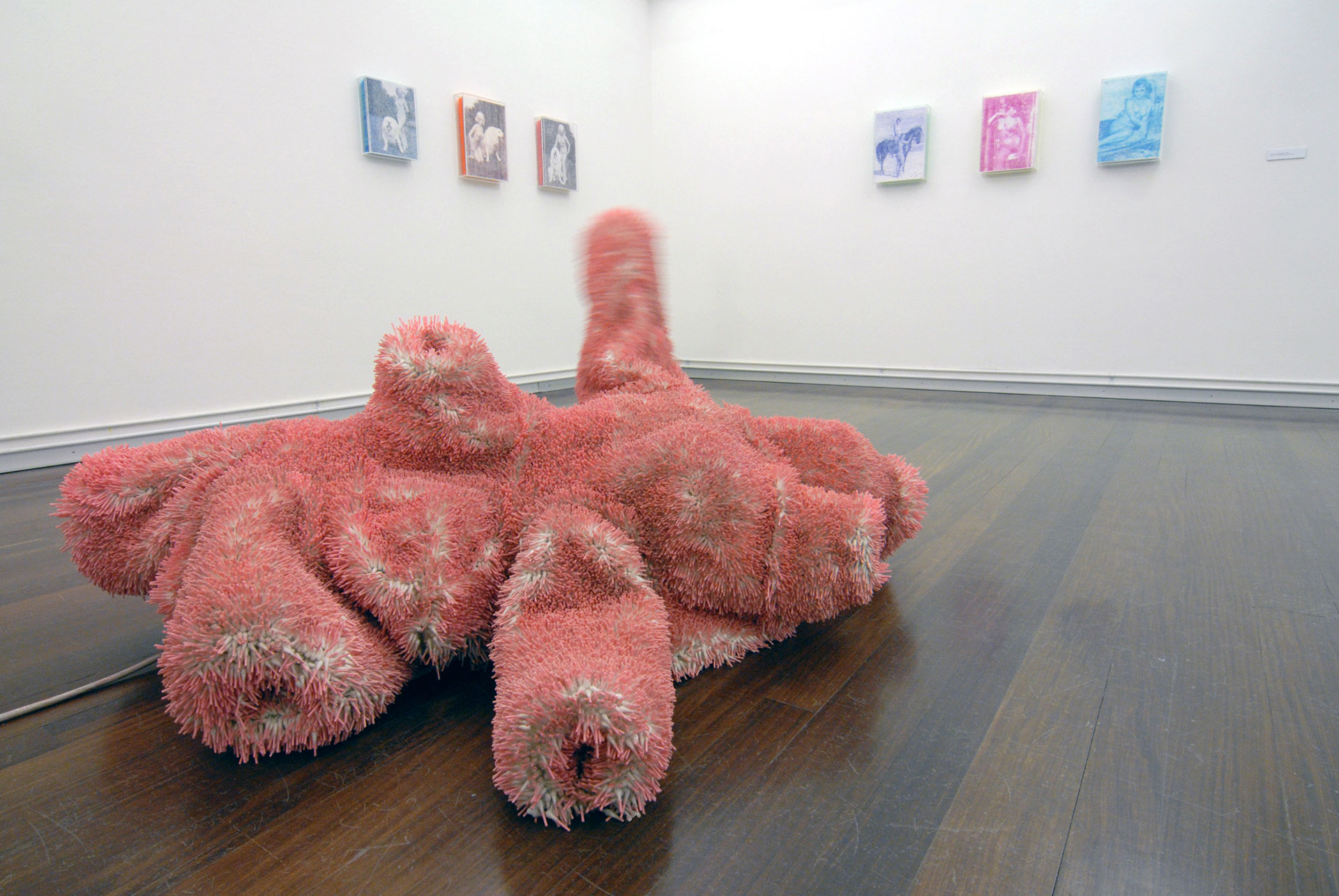
  • cotton buds

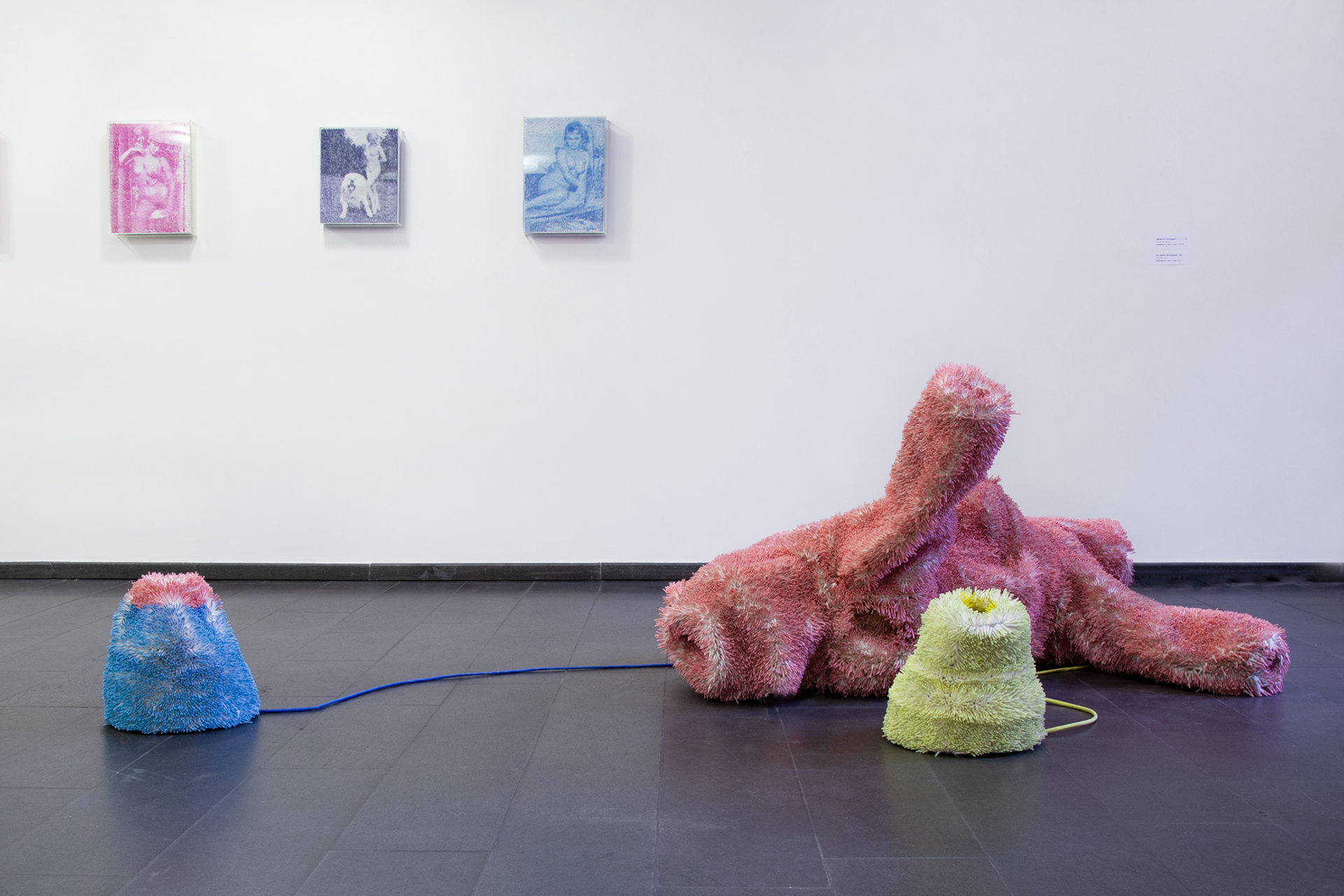
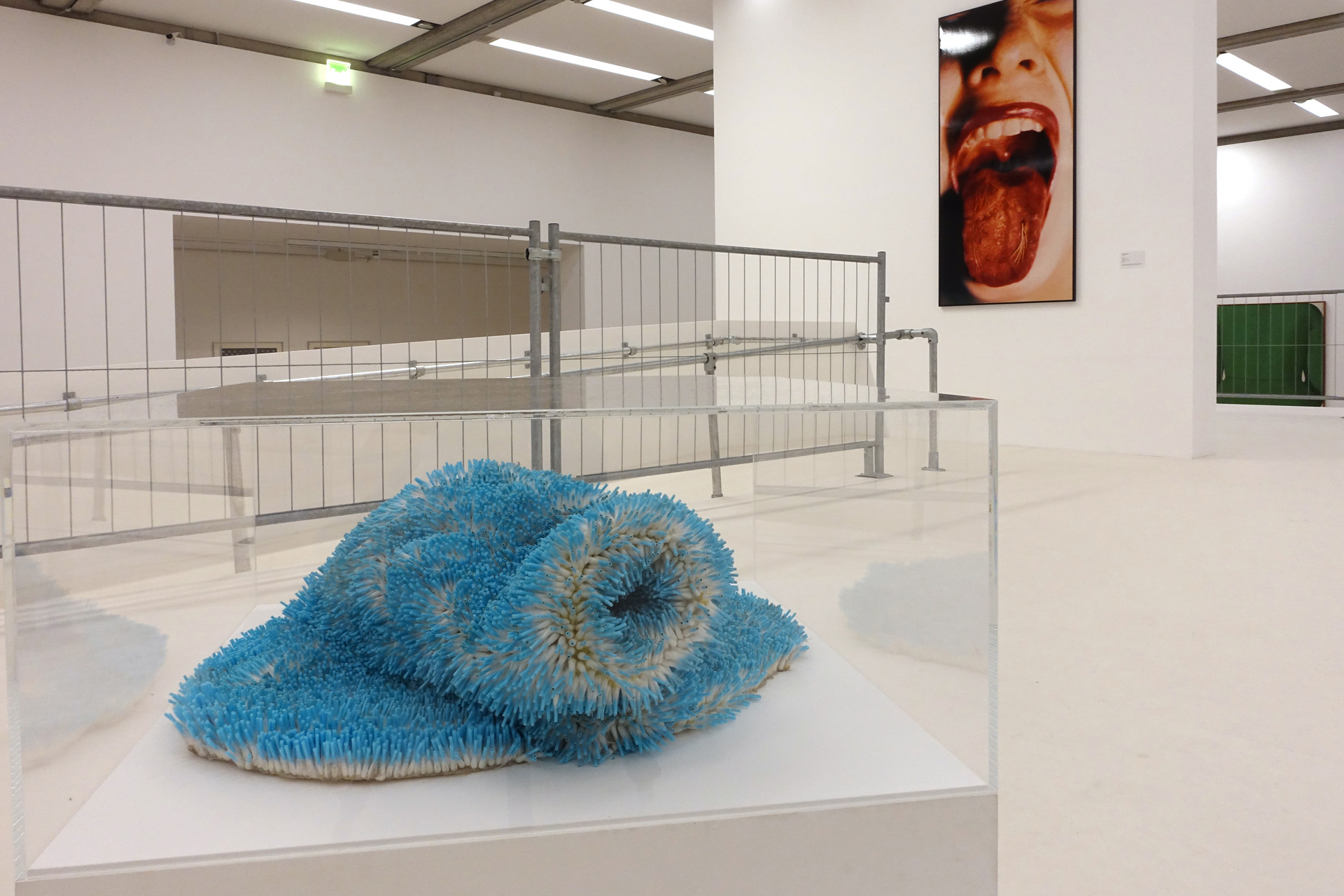
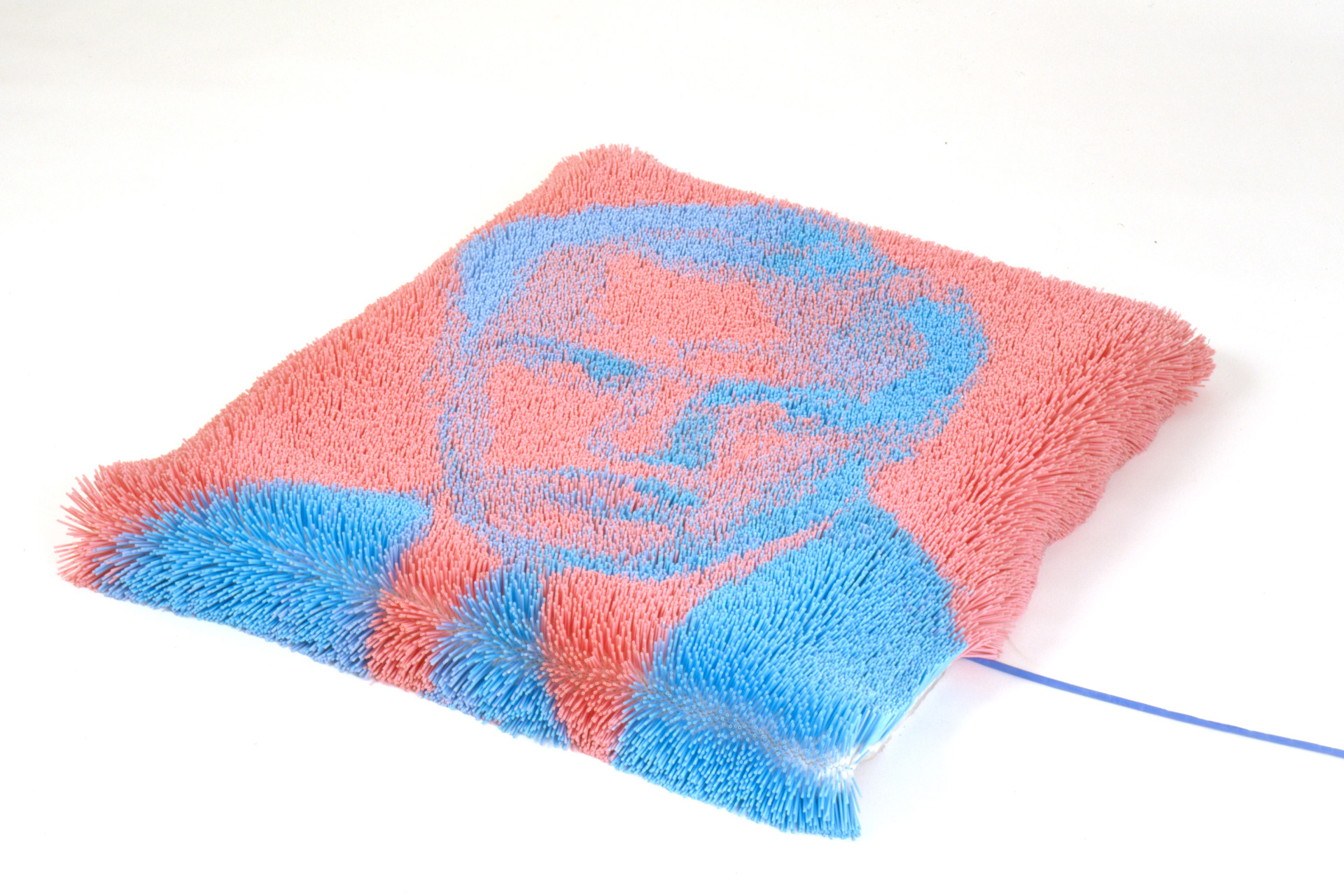
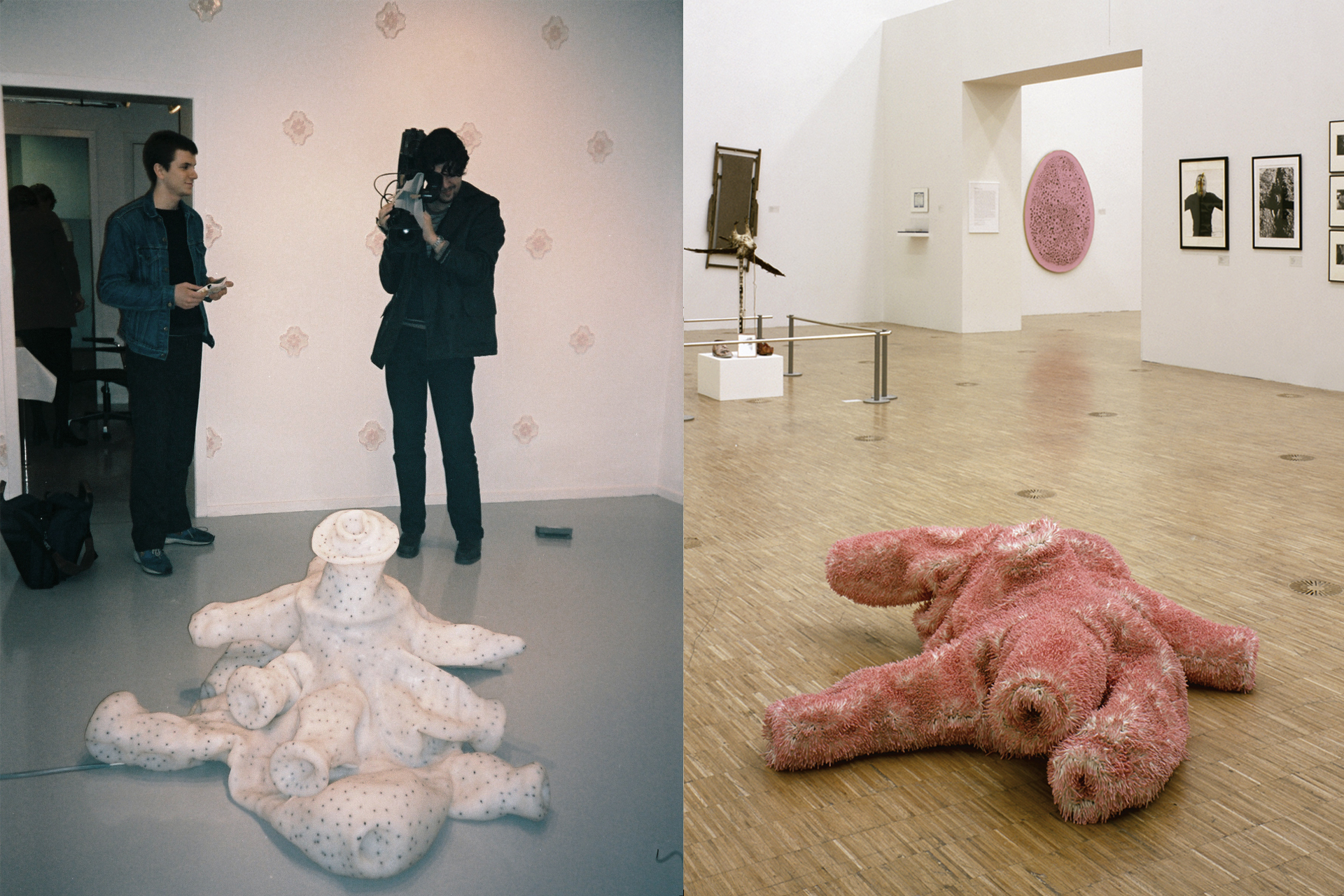
    The bungled Wedding Night, 1995

    120 x 160 x 90cm, cotton buds, silicone, electric motor

    At the Galerie der Stadt Fellbach, Good to see you, Stuttgart, 2010, photo credits: ©Ilse Haider

    > text

  • The bungled wedding night, 1995

    120 x 160 x 90cm, cotton buds, silicone, electric motor

    At the MUSA, Wien Museum, The 90s – setting 2 – subversive imaginations, Vienna, 2018, video credits: ©Ilse Haider

    > text

  • Cotton buds

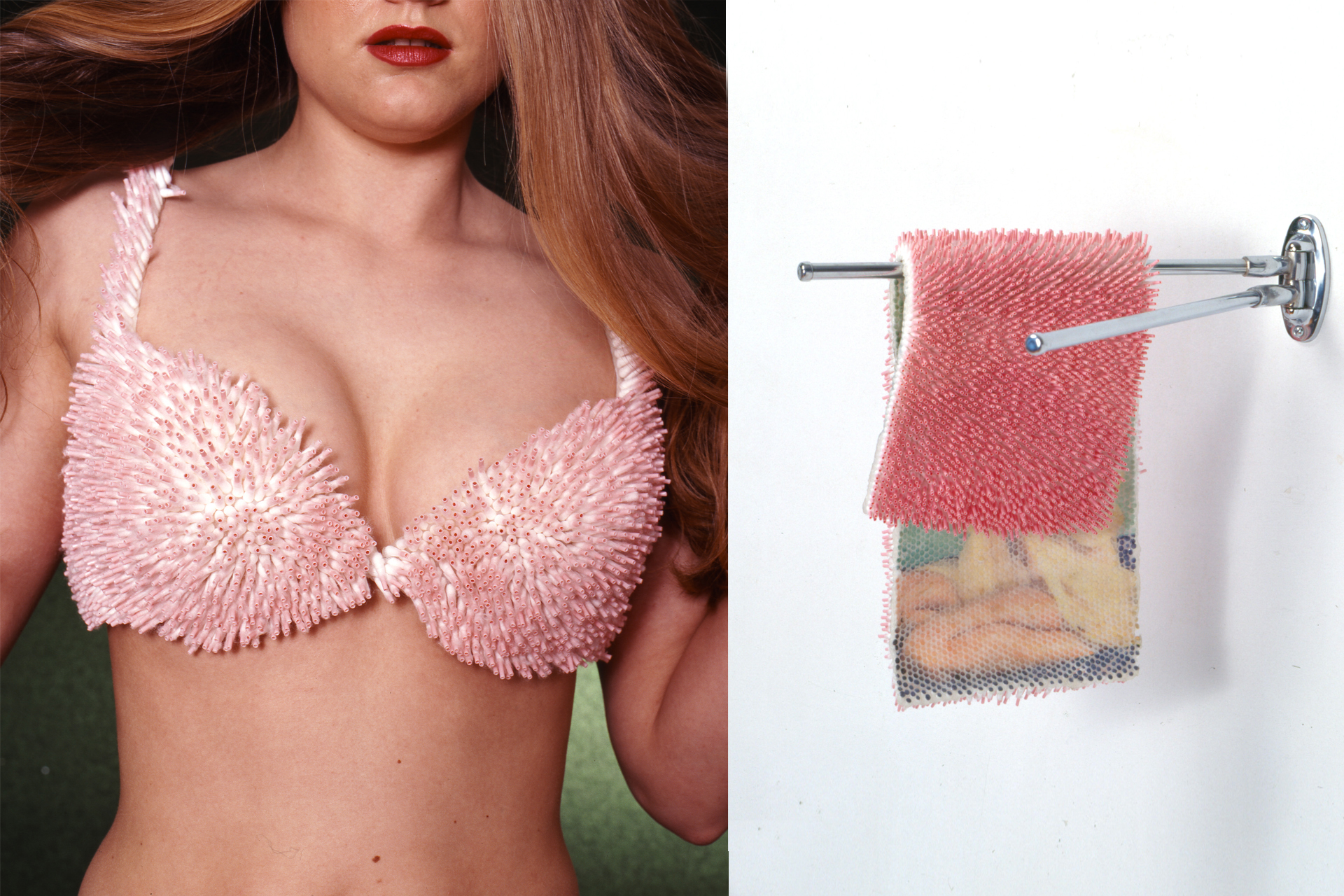
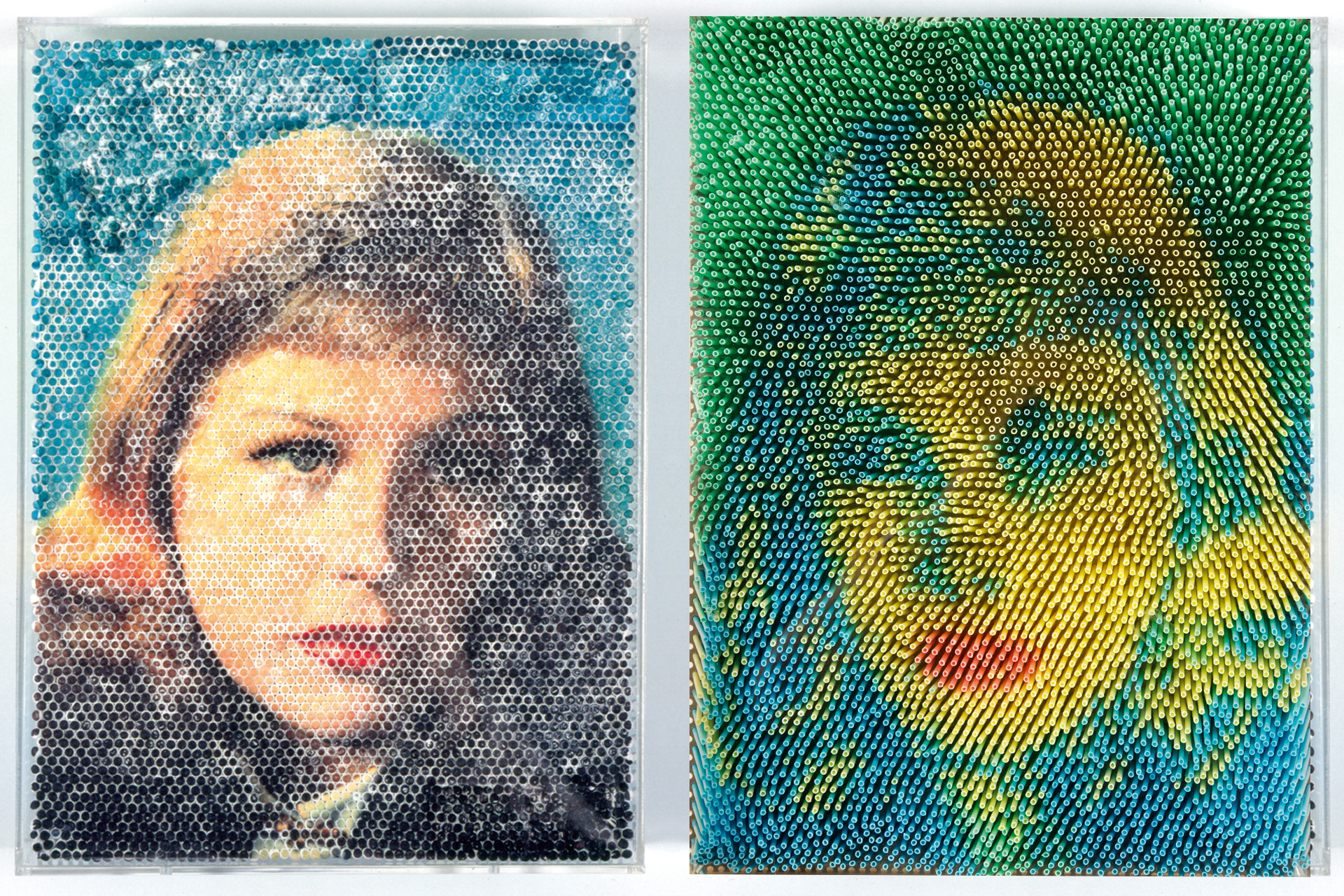
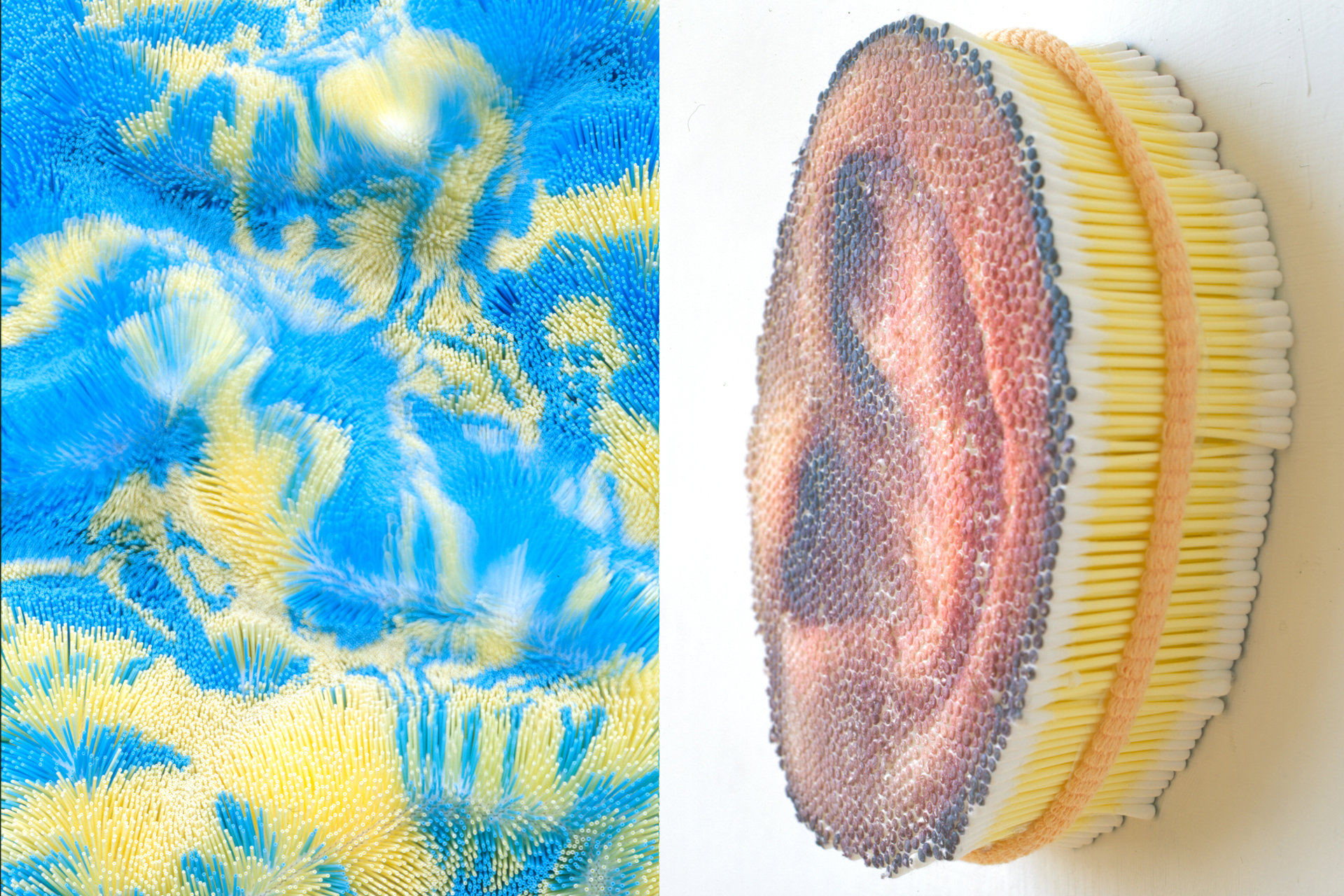
    Shift of Attention, 2002, Original Playtex, 1995

    80 x 65cm, lamda print, 42 x 21cm, laser-copy on cotton buds, silicone

    photo credits: ©Ilse Haider

    > text

  • Cotton buds

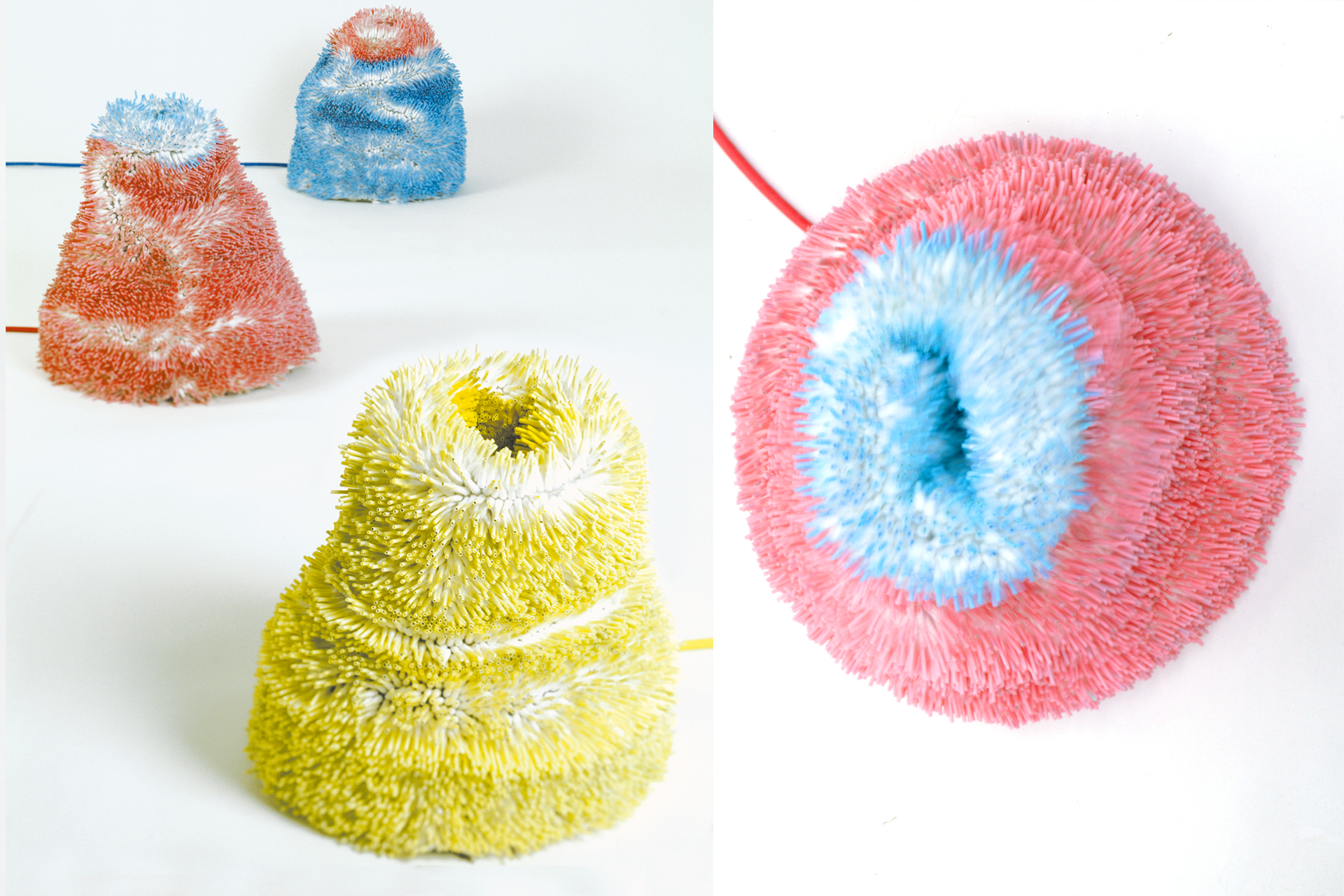
    Fresh and Exciting, 1995

    each 42 x 21 x 30cm, cotton buds, silicone, electric motor

    photo credits: ©Ilse Haider

    > text

  • Cotton buds

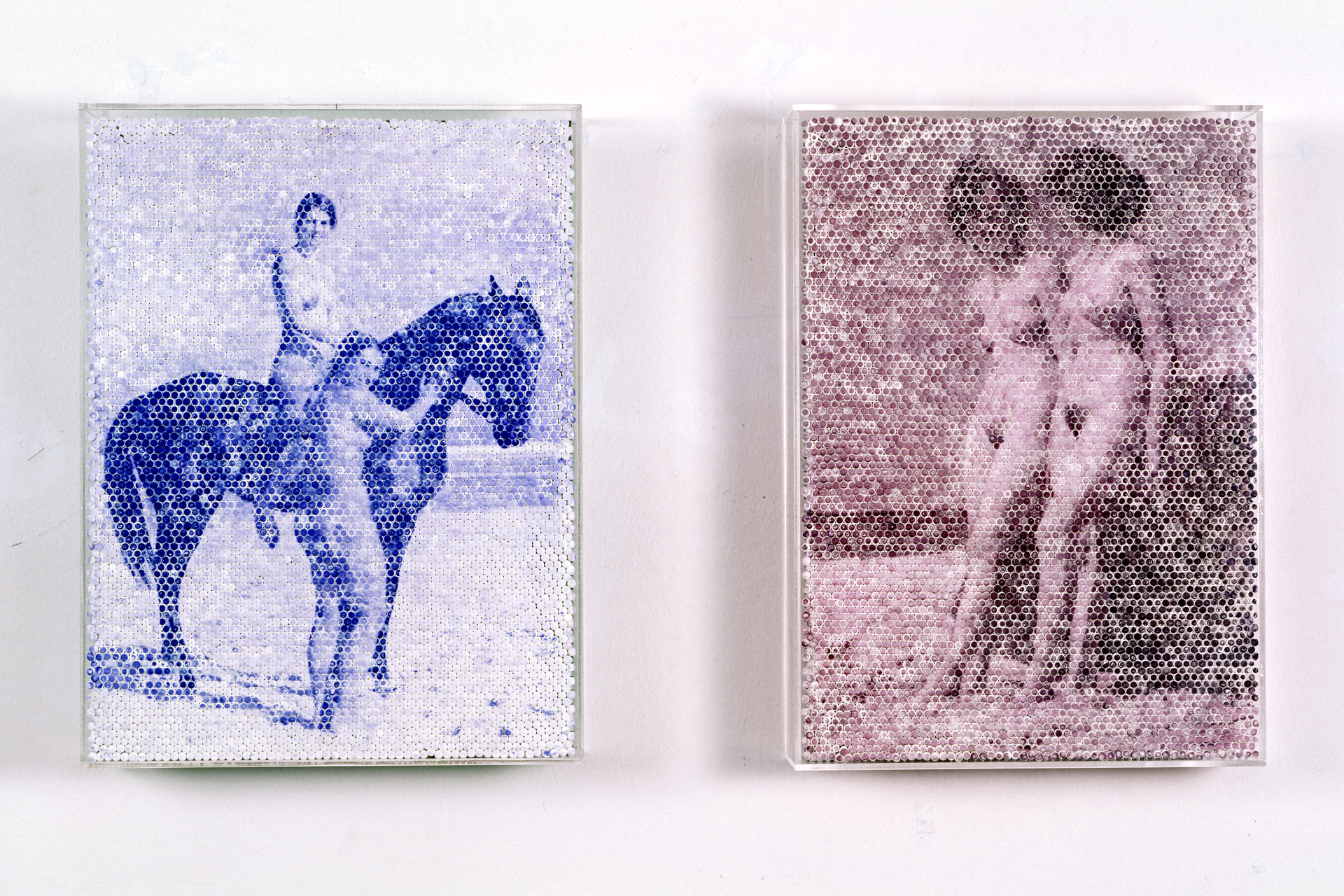
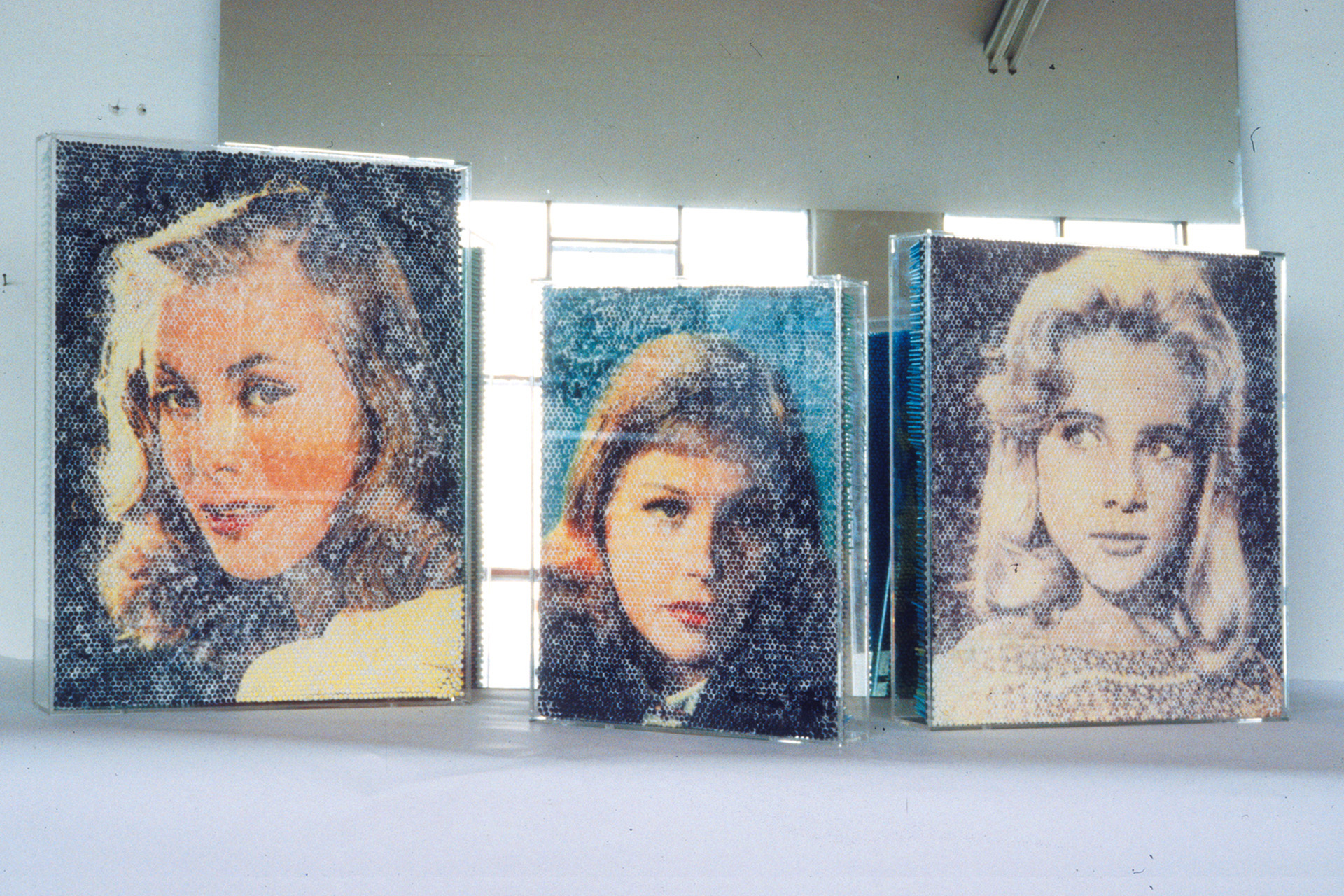
    Etudes Académiques, 1997

    each 42 x 30 x 7cm, laser-copies on cotton buds in plexiboxes

    photo credits: ©Ilse Haider

    > text

  • Cotton buds

    Exhibition view: Renée, 1995

    68 x 56 x 20cm, cotton buds, silicone, electric motor

    At the Mumok, Blooming Poison – On the Feminist Appropriation of the Austrian Unconscious, Vienna, 2015, photo credits: ©Ilse Haider

    > text

  • Cotton buds

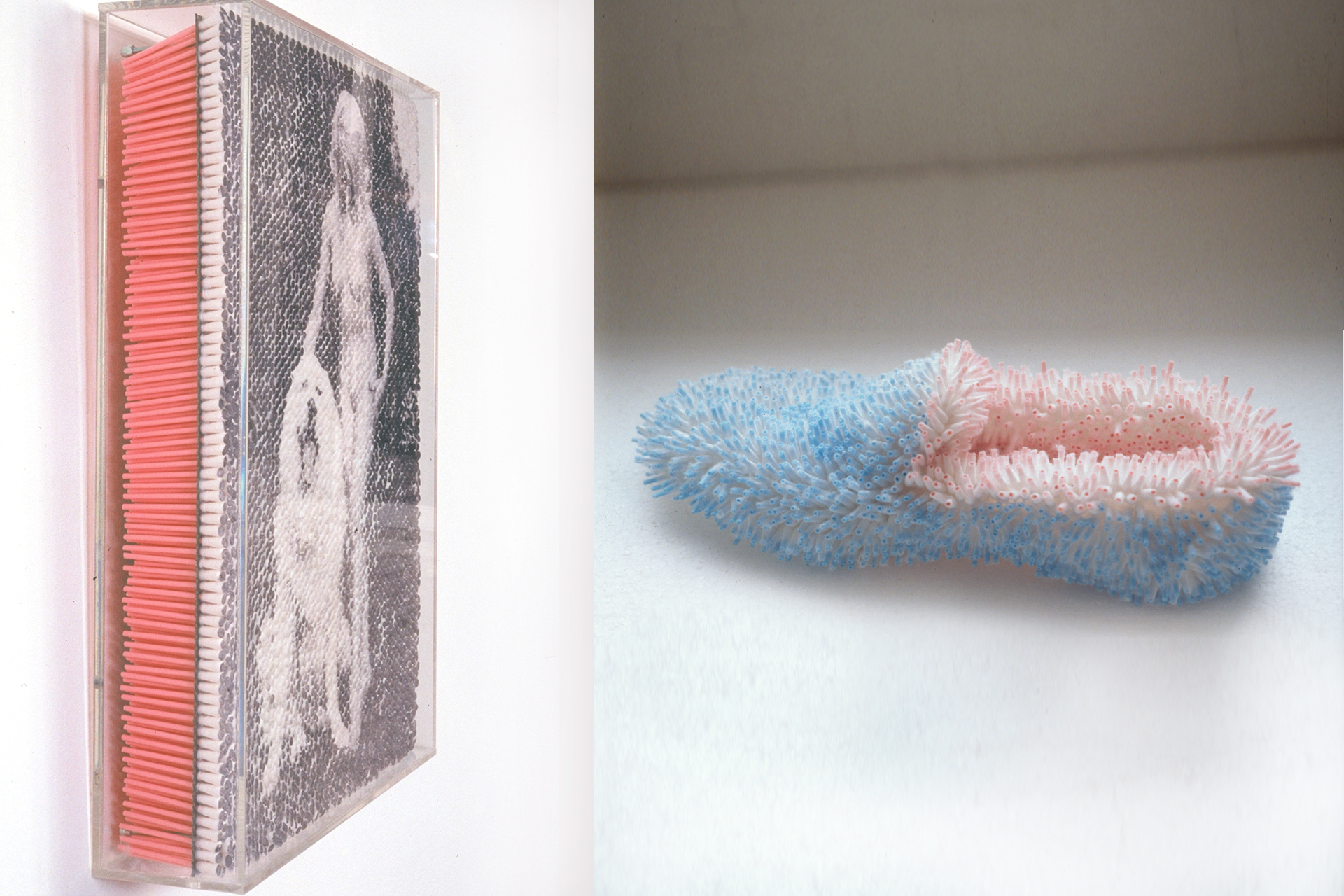
    Etudes Académiques, 1995, The shoe of …, 2003

    41 x 30 x 7cm, laser-copy on cotton buds in plexibox, 30 x 15 x 10cm, cotton buds, silicone

    photo credits: ©Ilse Haider

    > text

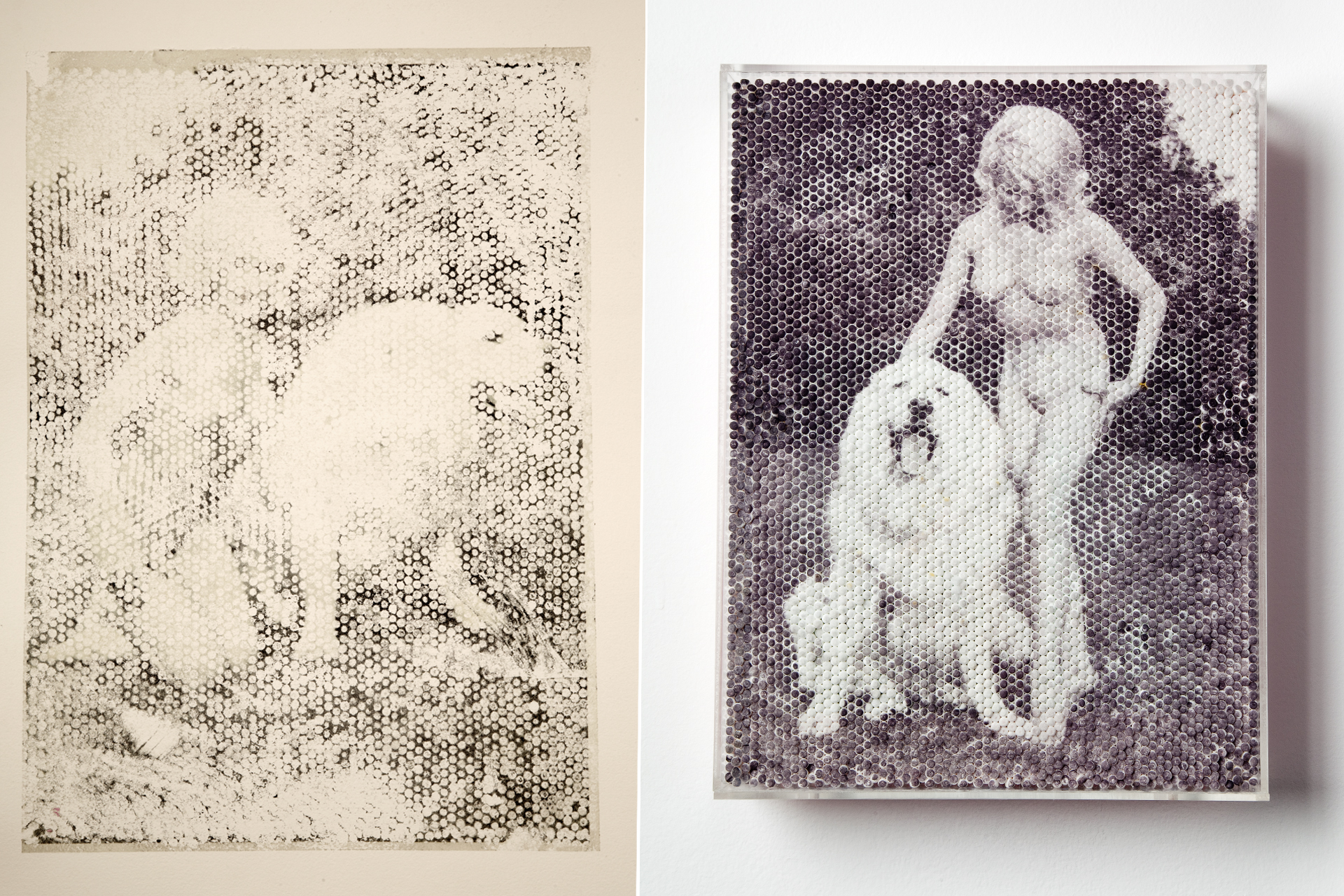
  • Cotton buds

    Etudes Académiques, 1998, Etudes Académiques, 1995

    50 x 35cm, laser-copy on paper, 41 x 30 x 7cm, laser-copy on cotton buds in plexibox

    photo credits: ©Ilse Haider

    > text

  • Cotton buds

    Studio view, 1995

    Laser-copies on cotton buds in plexiboxes

    photo credits: ©Ilse Haider

    > text

  • Cotton buds

    Marlon Brando, 1995

    70 x 50 x 6cm, cotton buds, silicone, electric motor

    photo credits: ©Ilse Haider

    > text

  • Cotton buds

    Hildegard Knef, 1995

    41 x 30 x 7cm, laser-copy on cotton buds in plexibox

    View from the front and the back, photo credits: ©Ilse Haider

    > text

  • Cotton buds

    Always Honeymoon, 1995, In order, 1992

    70 x 50 x 6cm, carpet of cotton buds (l), silicone, electric motor, 30 x 22 x 8cm, laser-copy on cotton buds (r)

    photo credits: ©Ilse Haider

    > text

  • Cotton buds

    Exhibition view: Leave me alone, 1998, The bungled wedding night, 1995

    each 150 x 190 x 50cm, silicone, artificial stamen, electric motor, silicone (l), cotton buds, silicone, electric motor (r)

    At the Galleri Charlotte Lund, Stockholm, 1998 (l) at Kunsthalle, Vienna, 1995 (r), photo credits: ©Ilse Haider and ©Chrsitian Wachter

    > text

  • cotton buds

    The bungled Wedding Night, 1995

    120 x 160 x 90cm, cotton buds, silicone, electric motor

    At the Rupertinum, Museum der Moderne, Objekte und Fotografien, Otto Breicha-Preis für Fotokunst, Salzburg, 2011, photo credits: ©Kai Kuss, MdM

    > text

Continue reading