Author: ilsehaider

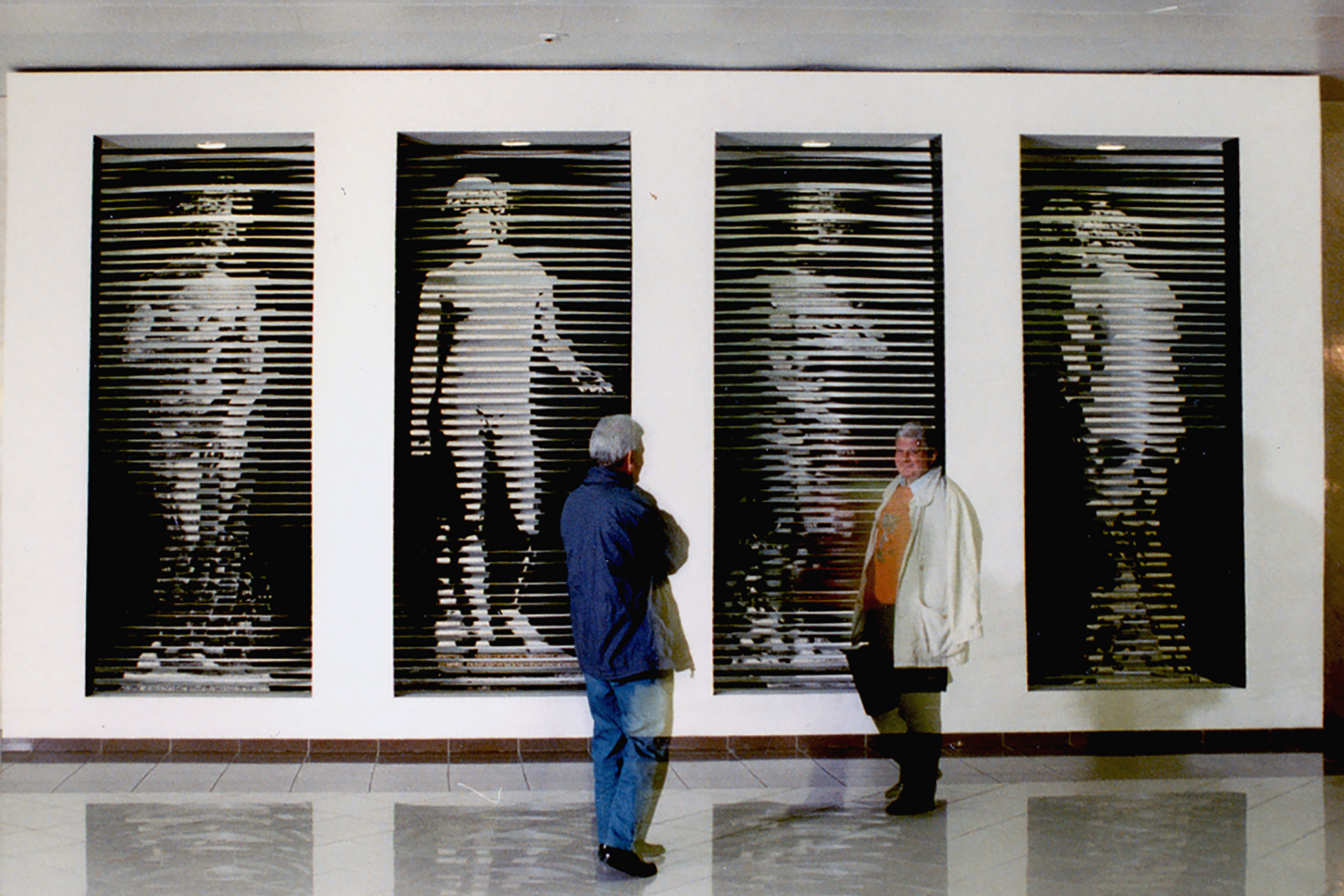
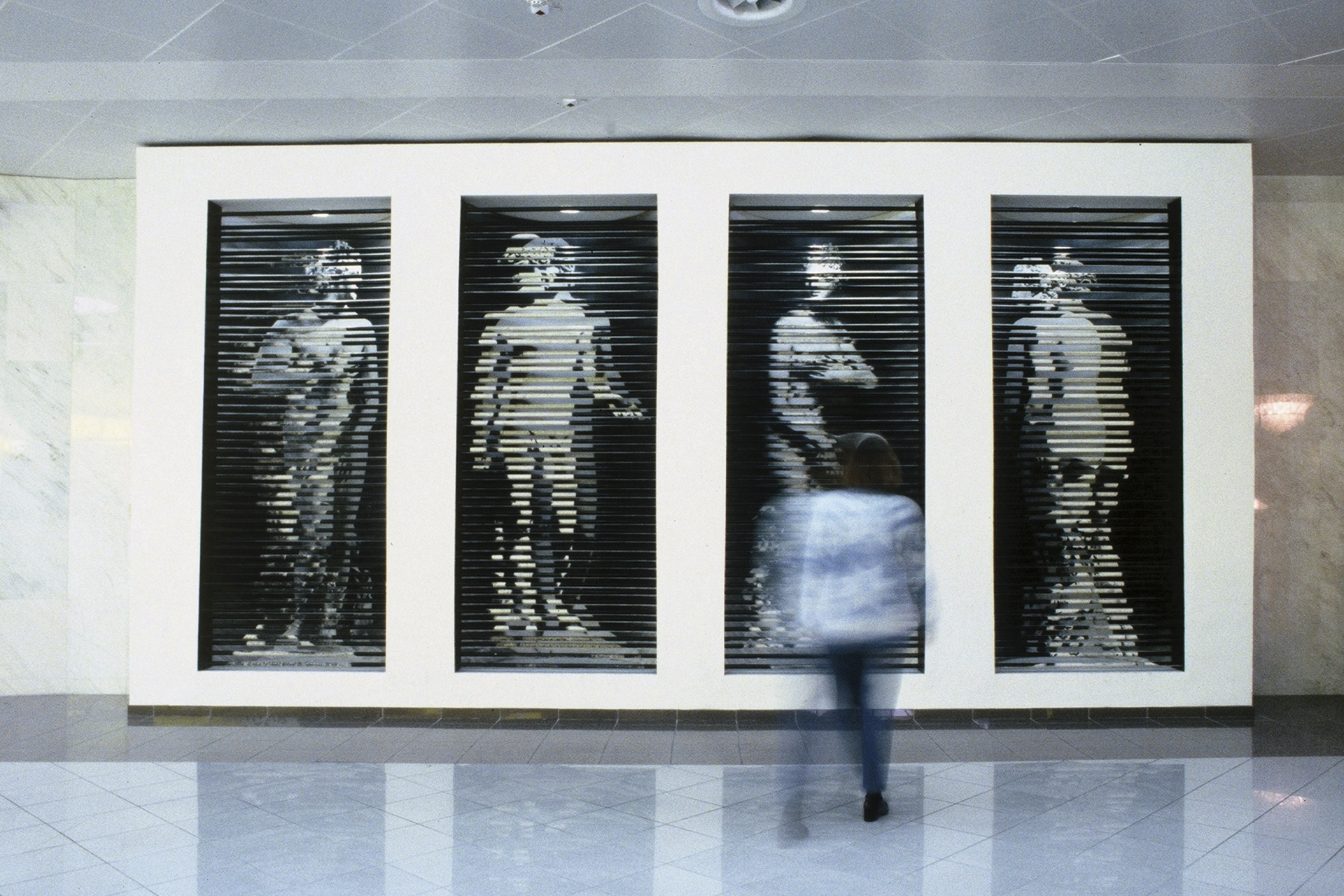
Venus and Antinoos

  • Open Monuments

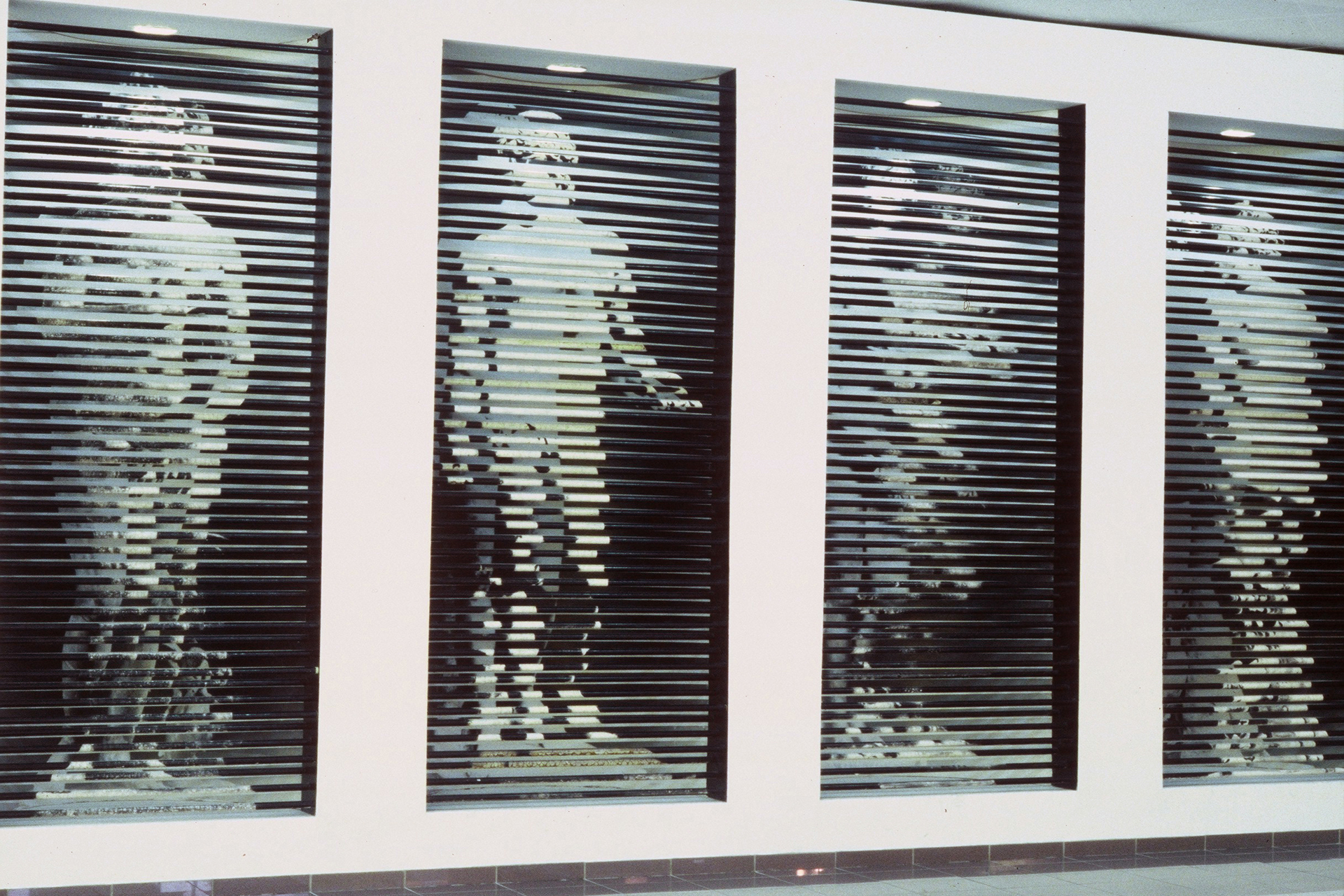
    Wall design with large scale photographic alcoves, 1996

    8 x 4,5 x 1m, photographic emulsion on wood / acrylic paint

    photo credits: ©Ilse Haider

  • Open Monuments

    Wall design with large scale photographic alcoves, 1996

    8 x 4,5 x 1m, photographic emulsion on wood / acrylic paint

    photo credits: ©Ilse Haider

  • Open Monuments

    Wall design with large scale photographic alcoves, 1996

    8 x 4,5 x 1m, photographic emulsion on wood / acrylic paint

    photo credits: ©Ilse Haider

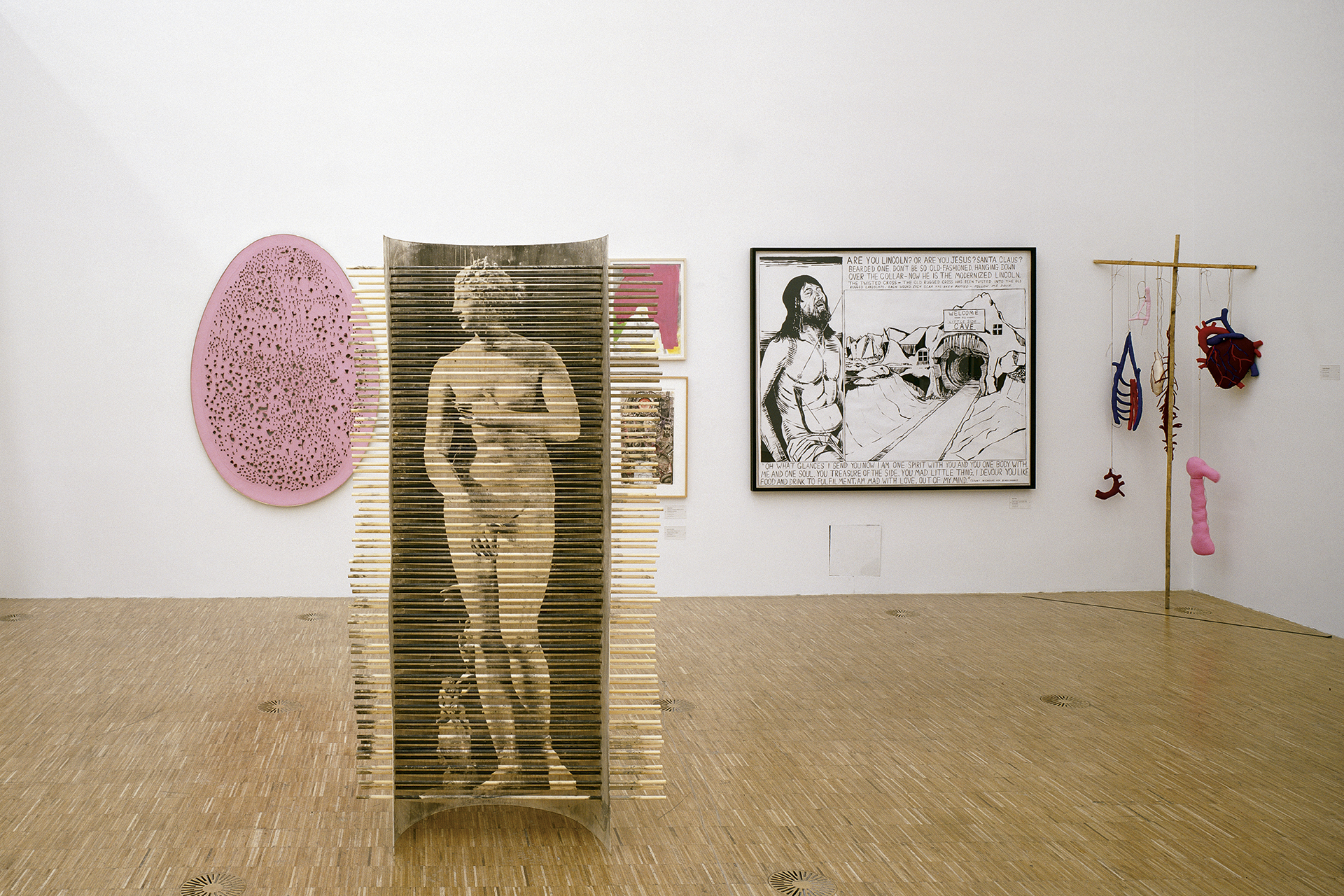
  • Open Monuments

    Prototype for wall designed alcoves: Venus of Naples, 1995

    200 x 50 x 50cm, photographic emulsion on wood

    At the Kunsthalle, Glaube-Hoffnung-Liebe, Tod, Vienna, 1996, photo credits: ©Ilse Haider

Continue reading

Belle Etage

Mona Hahn, Ilse Haider

EN

Belle Etage

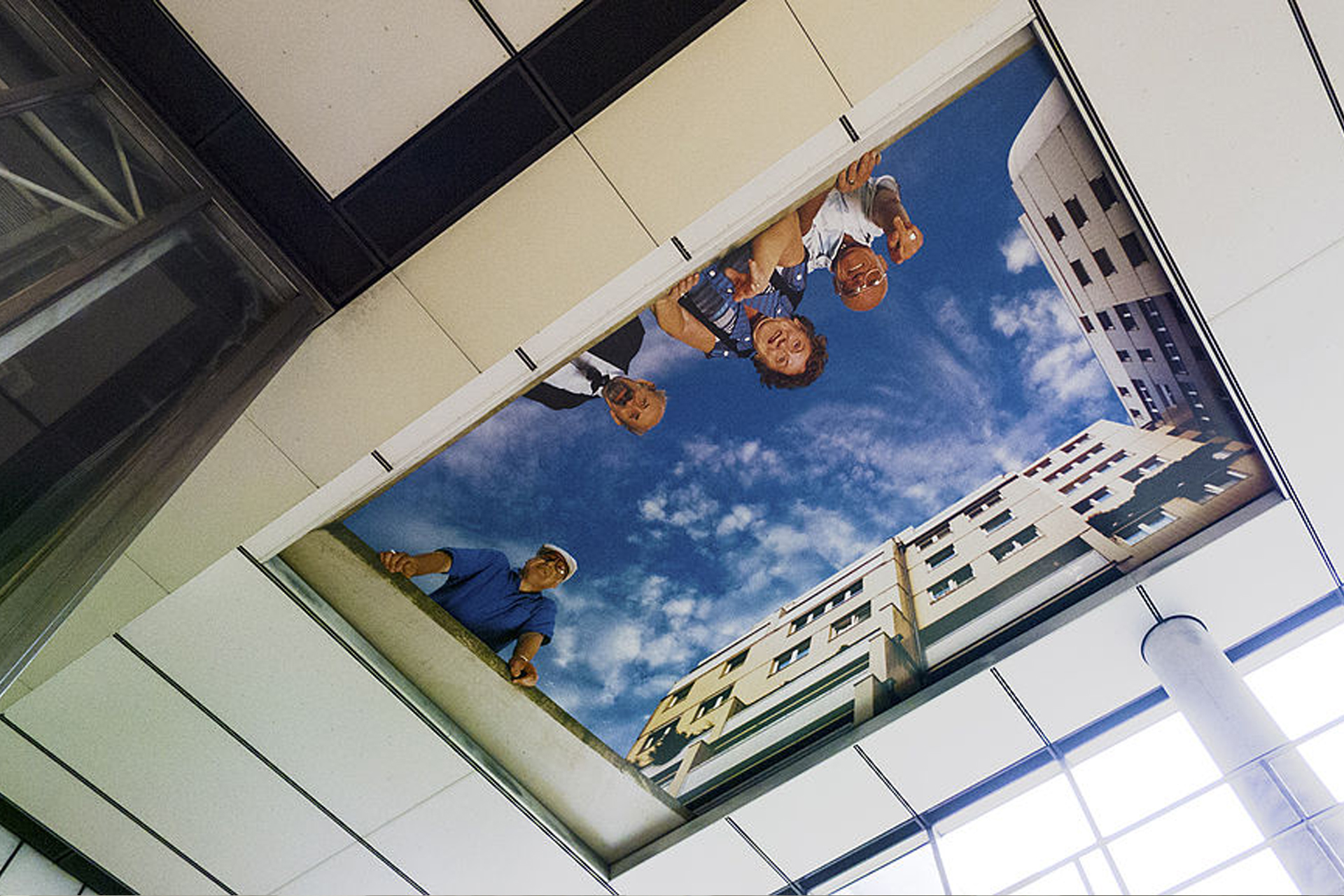
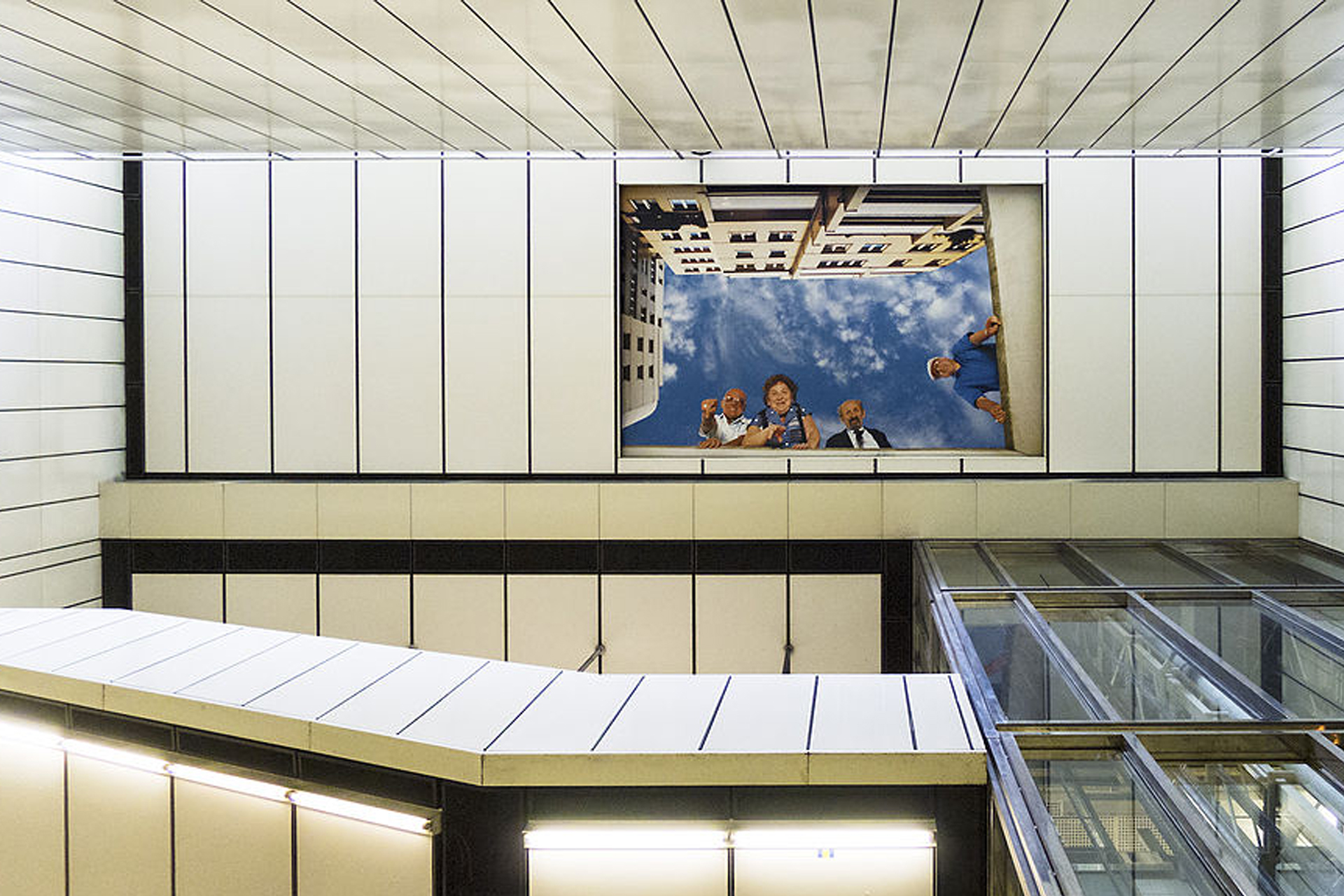
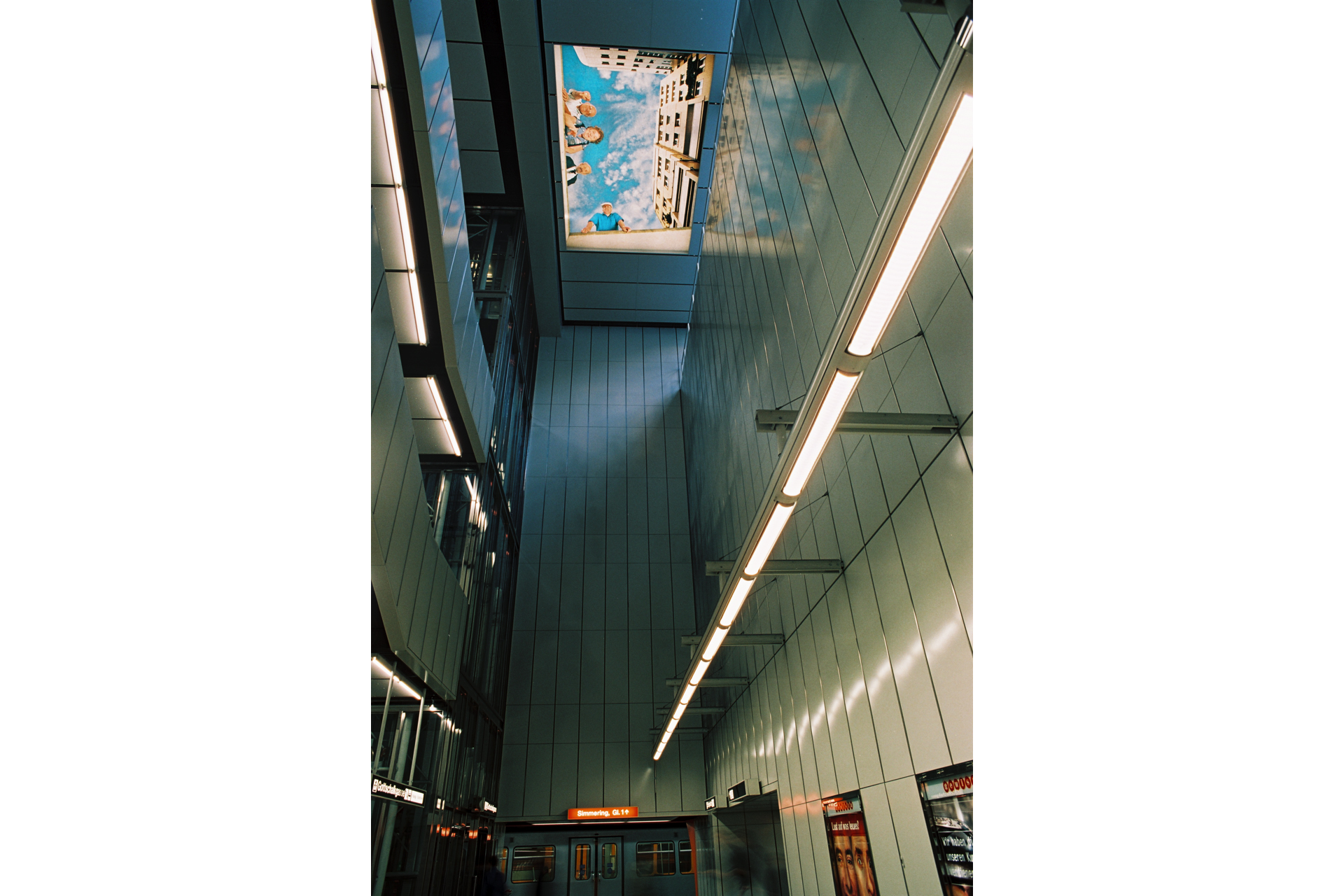
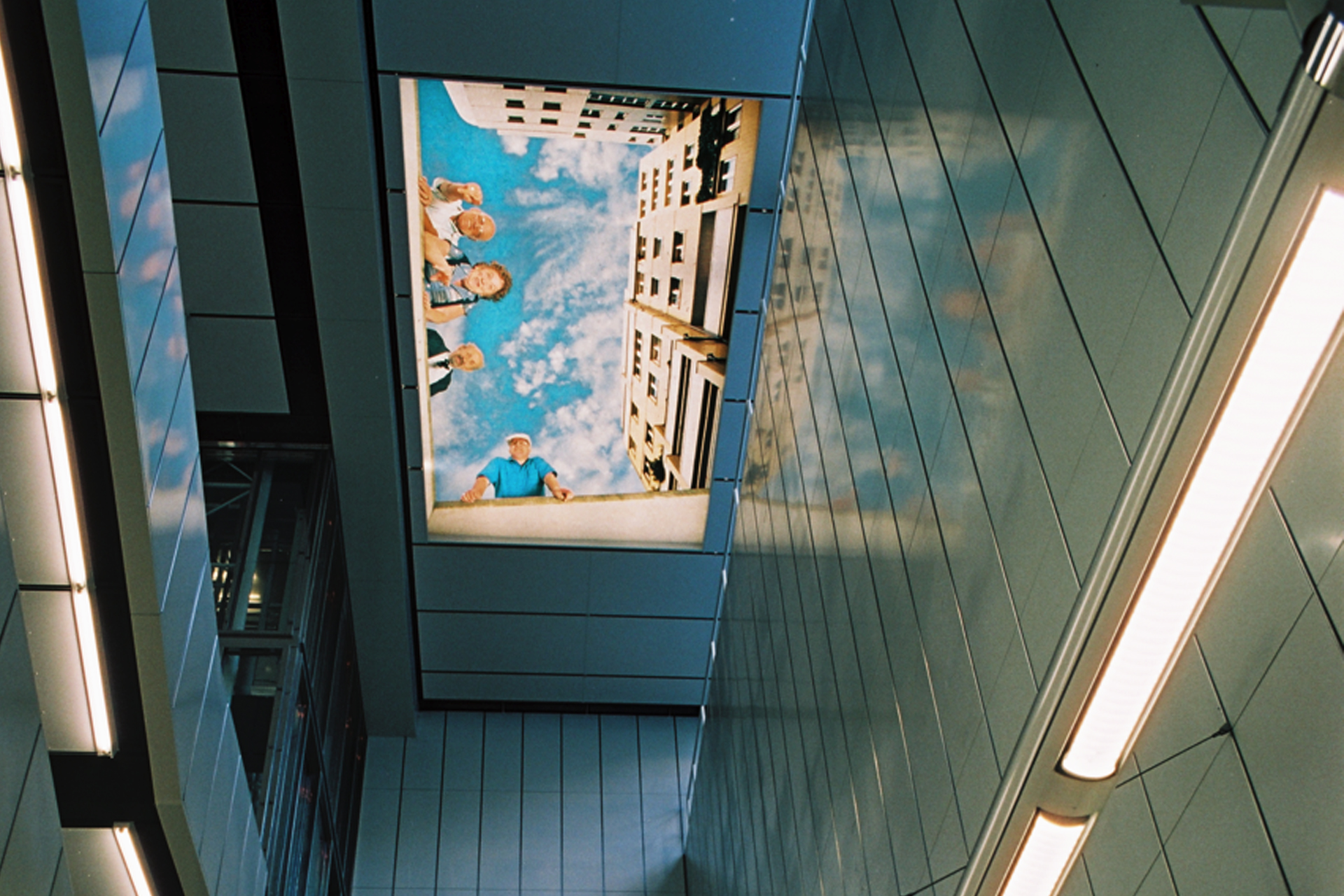
Belle Etage is a staged photograph mounted in a light box on the ceiling of the U3 station Enkplatz in Vienna’s Simmering district.

Ilse Haider and Mona Hahn conceived the work as a ceiling design for a roughly seventeen-meter-high and five-meter-wide subway shaft, in which the disproportionate height of the space was intensified in perspective.

Ceiling paintings in baroque ballrooms depict angels looking down from the clouds, while in Belle Etage — the name is an ironic allusion to the “noble” first floor of a bourgeois building, which in the nineteenth century was usually reserved for the owners of the house as their own apartment—four retirees from Simmering smile down at the U3 passengers from in front of a typical local building, under a blue, summer sky. 

The artists chose the municipal housing complex as representative landmark of Vienna’s 11th district, and with their work created a “monument” to the people who live there who have witnessed a long period of transformation from rural periphery to metropolis. In past decades Simmering was—and still is today — characterized primarily by active municipal housing construction in the district.

Technique: 7 x 4.5m, backlit digitally printed photomontage

Mona Hahn and Ilse Haider invited the residents of the district to a photo session, from which the subject was selected.

(translation: Lisa Rosenblatt)

DE

Belle Etage

Belle Etage ist eine inszenierte Fotografie, die in einem Leuchtkasten an der Decke der U3-Station Enkplatz im Wiener Gemeindebezirk Simmering montiert wurde.

Mona Hahn und Ilse Haider konzipierten die Arbeit als Deckengestaltung eines ca. 17 Meter hohen und ca. 5 Meter breiten U-Bahnschachts, bei der die überproportionale Höhe des Raumes noch zusätzlich perspektivisch gesteigert wurde.
Bei Deckengemälden in barocken Festsälen sind es Engel, die aus den Wolken in die Tiefe schauen, bei der Belle Etage – der Name ist eine ironische Anspielung auf den “vornehmen” 1. Stock eines bürgerlichen Hauses, den sich im 19. Jahrhundert für gewöhnlich die Hauseigentümer als eigene Wohnung vorbehielten – sind es vier Simmeringer Pensionistinnen, die unter einem blauen Sommerhimmel vor einem ortstypischen Gebäude zu den Fahrgästen der U3 hinunterlächeln.
Die Künstlerinnen haben den Gemeindebau als stellvertretendes Wahrzeichen des 11. Wiener Gemeindebezirks ausgewählt und mit ihrer Arbeit dort ansässigen Personen, die eine lange Strecke des Wandels vom ländlich geprägten Außenbezirk zur Großstadt mitverfolgt haben, ein “Denkmal” gesetzt. Simmering war in den vergangenen Jahrzehnten – und ist bis heute – vorwiegend durch rege soziale Wohnbautätigkeit des Bezirkes geprägt.

Technik: 7 x 4,5m, hinterleuchtete digital gedruckte Fotomontage

Mona Hahn und Ilse Haider hatten die Bewohnerinnen und Bewohner des Bezirks zu einem  Fototermin eingeladen aus der die Sujetauswahl erfolgte.

Continue reading

Belle Etage

  • Belle Etage

    Ceiling Design, 2000

    7 x 4.5m, backlit digitally printed photomontage

    Subway station U3-Enkplatz, Station shaft, Gottschalkgasse exit, concept and realisation in cooperation with Mona Hahn, photo credits: ©Ilse Haider/Wiener Linien

    > text

  • Belle Etage

    Ceiling Design, 2000

    7 x 4.5m, backlit digitally printed photomontage

    Subway station U3-Enkplatz, Station shaft, Gottschalkgasse exit, concept and realisation in cooperation with Mona Hahn, photo credits: ©Ilse Haider/Wiener Linien

    > text

  • Belle Etage

    Ceiling Design, 2000

    7 x 4.5m, backlit digitally printed photomontage

    Subway station U3-Enkplatz, Station shaft, Gottschalkgasse exit, concept and realisation in cooperation with Mona Hahn, photo credits: ©Ilse Haider/Wiener Linien

    > text

  • Belle Etage

    Ceiling Design, 2000

    7 x 4.5m, backlit digitally printed photomontage

    Subway Station U3, Enkplatz, Exit Gottschalkgasse, concept and realisation in cooperation with Mona Hahn, photo credits: ©Ilse Haider/Wiener Linien

    > text

Continue reading

Dimanche Après-Midi

Herbert Schnepf

CV

Herbert Schnepf

(*1979 in der Steiermark/Ö, lebt und arbeitet in Wien) studierte Theater- und Filmwissenschaft/ Kunstsoziologie in Wien und Paris/ Nanterre. Anschließend Assistenz und Öffentlichkeitsarbeit für Filmfestivals, Filmproduktionen, Galerien und Künstler*innen; daneben im Sozialbereich u.a. als Trainer für Deutsch als Fremdsprache in Strafanstalten und Kunstakademien und in der Flüchtlingsbetreuung tätig. Arbeitet derzeit im Projektmanagement einer sozialen NGO und absolviert eine Ausbildung zum Psychotherapeuten. 

EN

He’s pretty to look at alright, that guy, the way he’s lying, one hand nonchalantly on his knee and exuding a rough charm with his moustache and lascivious but assertive gaze, chewing on a pen. I bet he’s good in bed, you think, and want to see the whole thing close-up to find out that proximity here means a lack of clear focus – so it actually means distance. 

She would have regretted never having met this beau, says the artist. Having been able to recreate him with artificial stamens and silicon had contributed something to her peace of mind.

Artificial stamens as a material comes from the classical female profession of florist; just as the time-consuming and fidgety work of applying these dots on the image has predominately female connotations. This form of execution and the fact that the motif comes from a man’s collection enables the artwork to generate a diversity of meanings. The male gaze emerges there, and the question of a possible female one – gender-specific attributions of cultural practices and their justification.

The artwork’s content remains elusive, like the representation itself. The gaze searching for the unambiguous is directed to a range of interconnected meanings.

(2003, Die tröstende Camera, catalogue, Galerie Steinek and Galerie Erhard Witzel)
DE

Hübsch anzuschauen ist er schon, dieser Kerl, wie er daliegt, lässig eine Hand ums Knie gelegt, Schimanski-Charme versprüht mit seinem Schnauzer und lasziv, aber doch bestimmt dreinblickend an einem Stift kaut. Der ist bestimmt gut im Bett, denkt man sich und möchte das Ganze schon aus nächster Nähe betrachten, um festzustellen, dass Nähe hier eher Unschärfe, also eigentlich Ferne bedeutet.

Es würde ihr leid tun, den Beau nie kennen gelernt zu haben, meint die Künstlerin. Die Möglichkeit, ihn sich mit künstlichen Blütenstaubgefäßen und Silikon selbst neu zu erschaffen, habe aber einiges zur Ausgeglichenheit ihres Gemüts beigetragen.

Der Werkstoff künstliches Blütenstaubgefäß entstammt der klassisch weiblichen Profession der Floristin; wie auch die zeitaufwändige und Fingerspitzengefühl erfordernde Arbeit des Anbringens dieser Bildpunkte eher weiblich konnotiert ist. Diese Umsetzung und der Umstand, dass das Bildmotiv der Sammlung eines Mannes entstammt, lässt die Arbeit vielfältige Bedeutungen generieren. Der männliche Blick taucht da auf und die Frage nach einem möglichen weiblichen, geschlechtsspezifische Zuschreibungen kultureller Praktiken ebenso wie deren Rechtfertigung. Der Gehalt der Arbeit entzieht sich ständig, analog zur Darstellung selbst. Der Eindeutiges suchende Blick wird auf vielfältige Sinnzusammenhänge verwiesen.

(2003, Die tröstende Camera, Katalog, Galerie Steinek and Galerie Erhard Witzel)

Continue reading

Nudes, Artificial stamen in silicon

Herbert Schnepf

CV

Herbert Schnepf

(*1979 in der Steiermark/Ö, lebt und arbeitet in Wien) studierte Theater- und Filmwissenschaft/ Kunstsoziologie in Wien und Paris/ Nanterre. Anschließend Assistenz und Öffentlichkeitsarbeit für Filmfestivals, Filmproduktionen, Galerien und Künstler*innen; daneben im Sozialbereich u.a. als Trainer für Deutsch als Fremdsprache in Strafanstalten und Kunstakademien und in der Flüchtlingsbetreuung tätig. Arbeitet derzeit im Projektmanagement einer sozialen NGO und absolviert eine Ausbildung zum Psychotherapeuten. 

EN

Male nudes

Ilse Haider’s works are located at the interface of photography and object; in male nudes she “reproduces” several master images by placing artificial stamen in silicone. She formulates her erotically charged female gaze at the male bodies in a finely detailed, “female” technique. The unusual perspective of the reclining man intensifies the sculptural effect and simultaneously drafts an image of masculinity that counters the cliché of the active, invulnerable, and unapproachable hero and his representation in art. With his exposure and passivity, the young man completely becomes an object of the gaze, a status in art history traditionally used for contemplating the female physique.

Male nudes are also a reference to the Austrian artist Anton Kolig (1886–1950), whose male nudes of youths heralded a disintegrating image of the heroic man, which of course was still carried out by a male artist, invariably in relatively engrossed poses. Haider’s nudes embody a much more accessible masculinity; however, here, too, she does not allow too much closeness. When the viewer steps too close to the image, it dissolves into hundreds of tiny objects. The gaze nonetheless remains spellbound: the artificial flower parts, once worked into bouquets by diligent Salzburg florists, disturb with their diffuse, organic, bristly impression.

(translation: Lisa Rosenblatt)

DE

Männliche Akte

Die Arbeiten von Ilse Haider sind an der Schnittstelle von Fotografie und Objekt angesiedelt; in diesem Fall hat sie eine Bildvorlage mittels künstlicher Blütenstaubgefäße in Silikon gesteckt. In weiblich-kleinteiliger Technik formuliert sie etwas durchaus Seltenes: einen erotisch aufgeladenen weiblichen Blick auf den männlichen Körper. Der ungewöhnliche Blickwinkel auf den liegenden Mann verstärkt den plastischen Effekt und entwirft zugleich ein Bild von Männlichkeit, das dem Klischee des aktiv-tätigen, unverwundbaren und unnahbaren Helden und seiner Darstellung in der Kunst widerspricht. In seiner Exponiertheit und Passivität wird der junge Mann vollends zum Blickobjekt, ein Status der traditionellerweise der weiblichen Physis vorbehalten war. 
Male nudes sind auch eine Referenz an den österreichischen Künstler Anton Kolig (1886–1950) und seine Aktzeichnungen. Koligs Jünglinge künden bereits von einem sich auflösenden heroischen Männerbild, freilich noch von einem männlichen Künstler ausgeführt und in vergleichsweise entrückten Posen. Haiders nudes vermitteln über ihre spezifische Haptik eine zugänglichere Männlichkeit; ein zuviel an Nähe verbietet sich aber auch hier: Tritt man zu dicht an die Darstellung heran, löst sich das Bild in hunderte kleine Objekte auf. Dennoch bleibt der Blick gebannt. Die künstlichen Blütenteile, einst von fleißigen Salzburger Floristinnen in Blumensträuße eingearbeitet, irritieren auch im Detail durch ihre diffus organische Anmutung. 

Continue reading

Early Works

  • Open Monuments

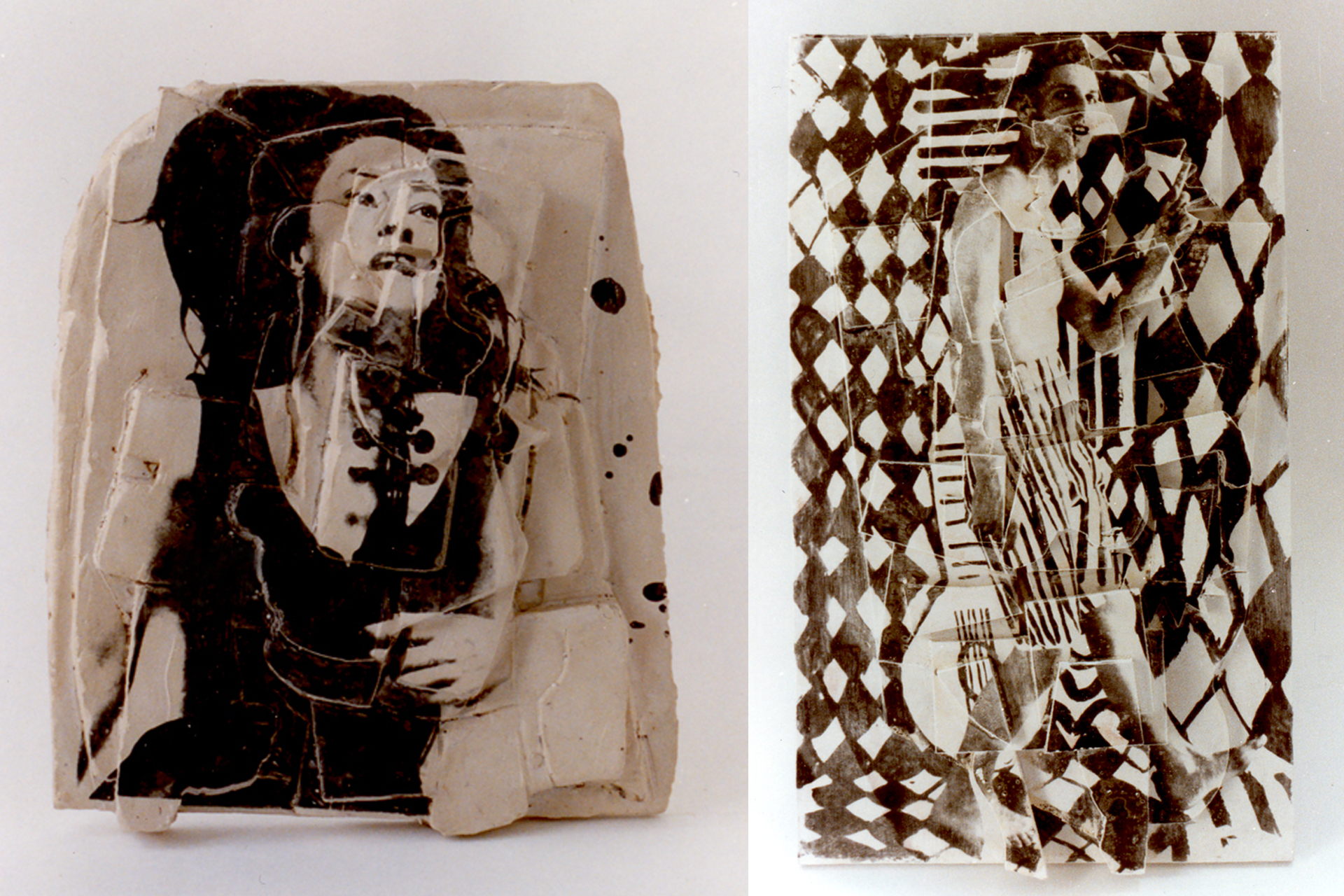
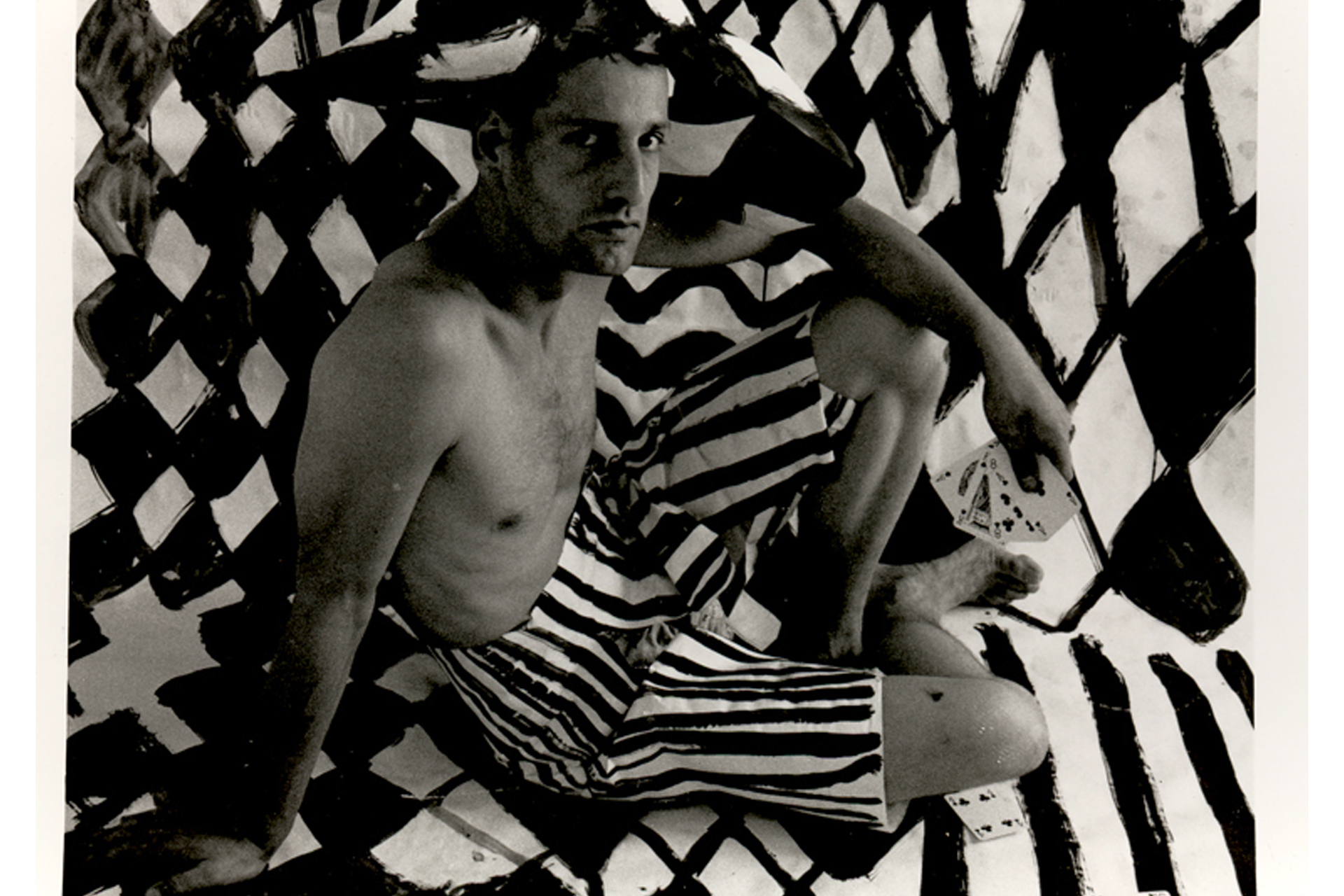
    Susie with Violin, 1990, Alex as Harlequin, 1998

    20 x 15 x 7cm, 10 x 15 x 4cm, photographic emulsion on ceramics

    photo credits: ©Ilse Haider

  • Open Monuments

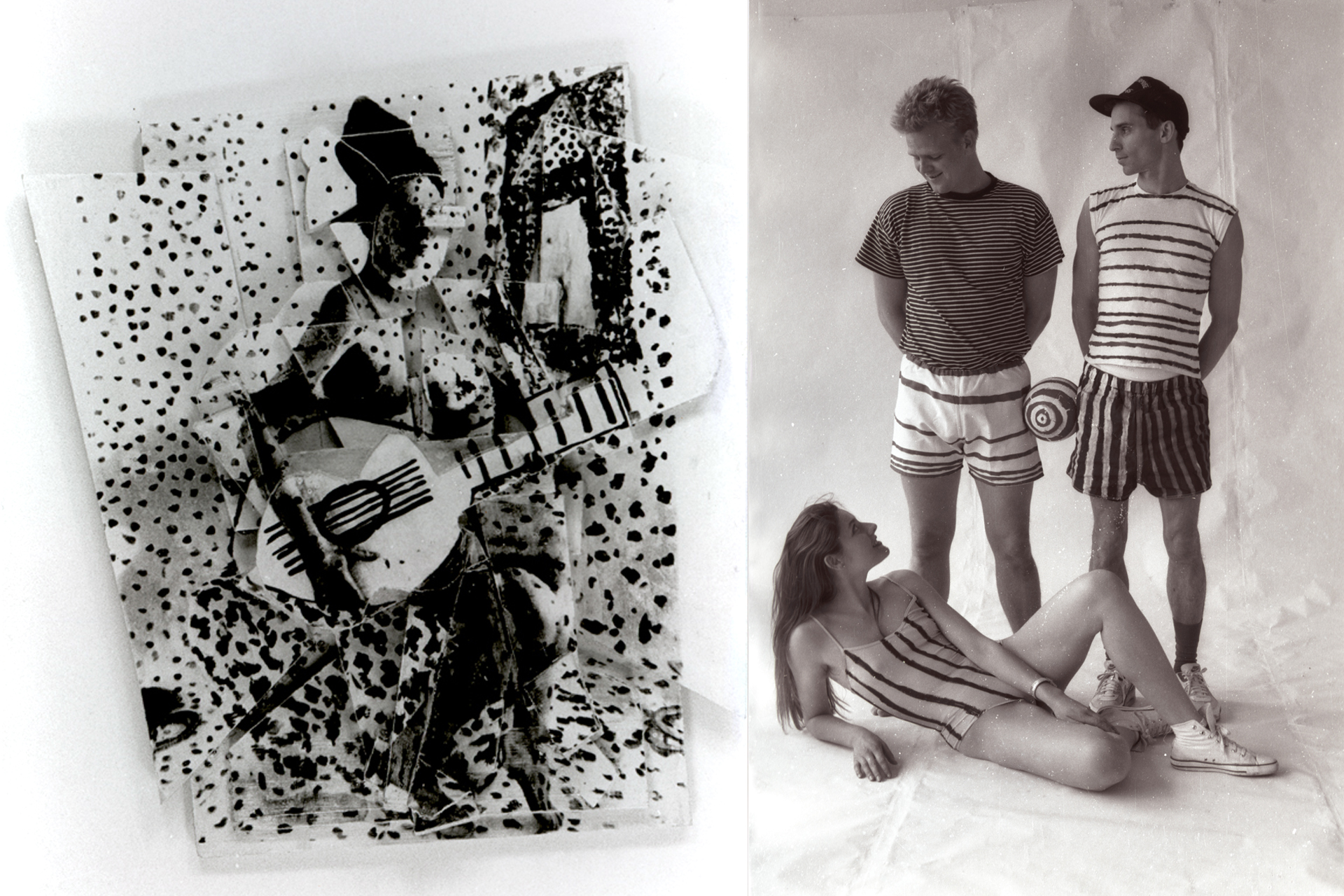
    Selfportrait with Guitar, 1989, Suse, Craig and David, 1989

    20 x 15cm, photographic emulsion on wood (l), photo (r)

    photo credits: ©Ilse Haider

  • Open Monuments

    Alex as Harlequin, 1989

    Photo

    photo credits: ©Ilse Haider

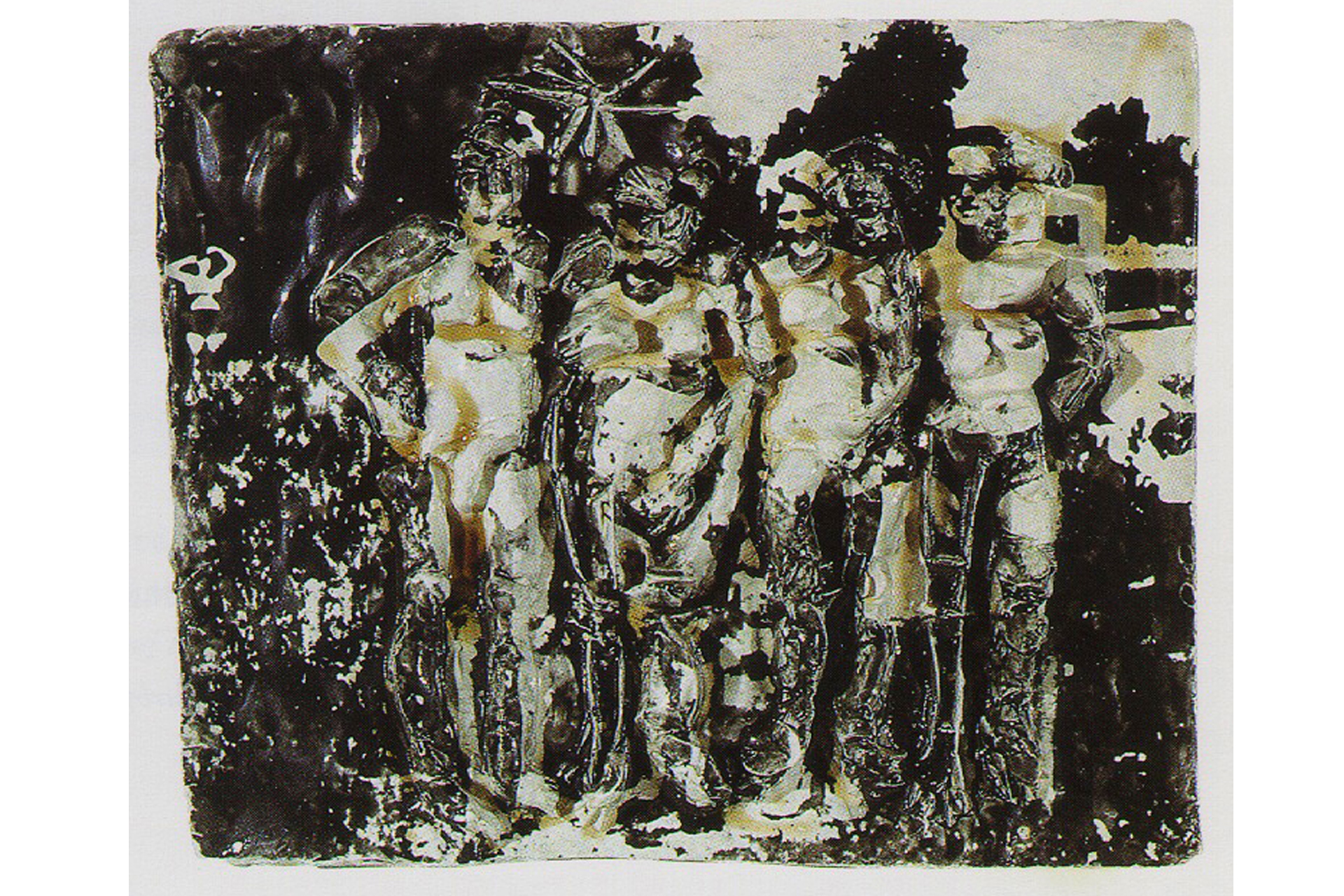
  • [Untitled], 1988

    30 x 42 x 4cm, photographic emulsion on varnished plaster

    Original: found footage, photo album, 1930s, photo credits: ©Ilse Haider

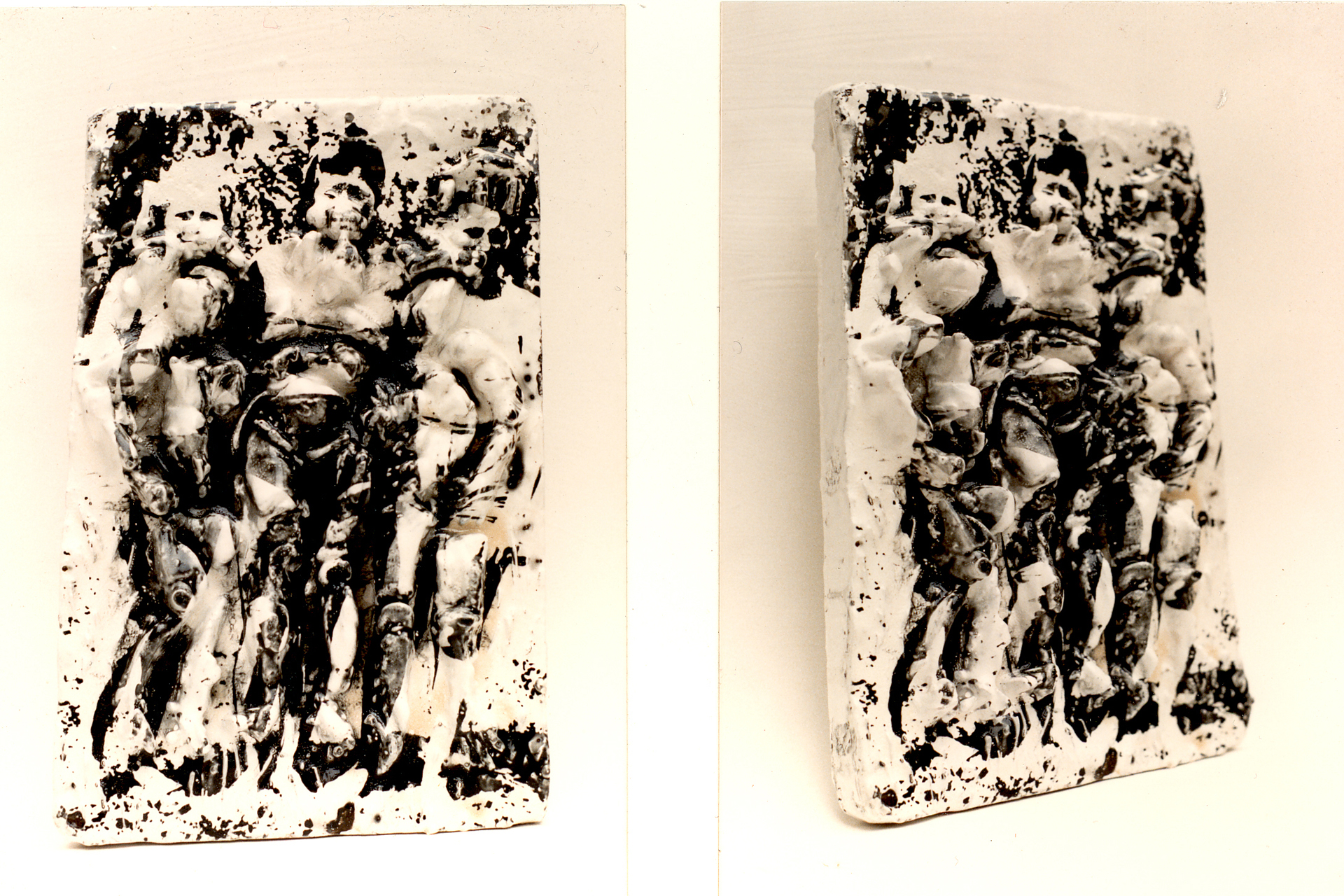
  • [Untitled], 1988

    20 x 15 x 4cm, 30 x 42 x 4cm, photographic emulsion on varnished plaster

    Original: found footage, photo album, 1930s, photo credits: ©Ilse Haider

  • Wedding, 1988

    20 x 20 x 10cm, 30 x 42 x 4cm, photographic emulsion on varnished plaster

    Original: found footage, photo album, 1930s, photo credits: ©Ilse Haider

  • Mike and Jane, 1989

    each 20 x 15 x 10cm, photographic emulsion on wood

    photo credits: ©Ilse Haider

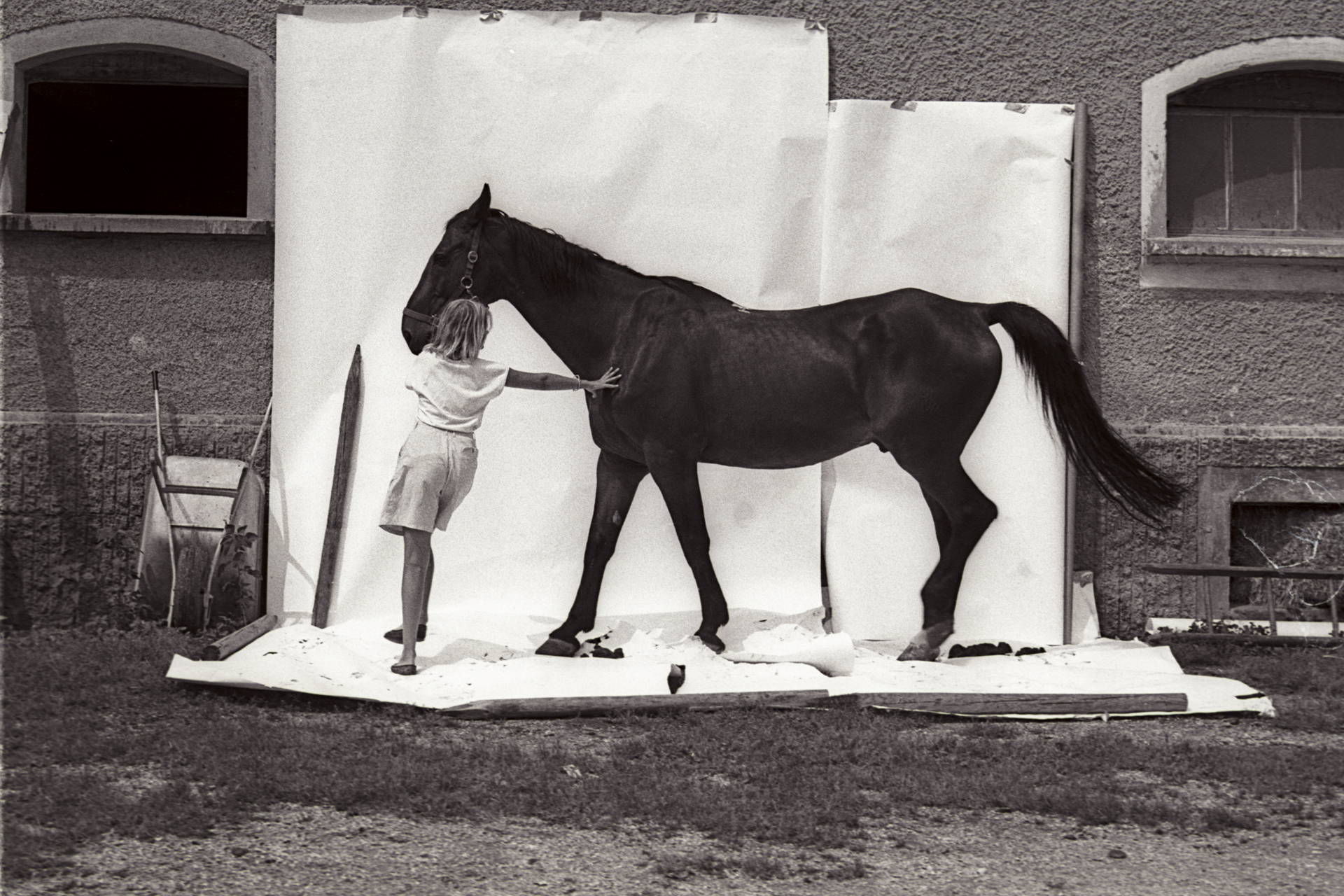
  • From series: Animals in front of a white background, 1989

    Photosession at Malerwochen Stift Rein, Styria

    photo credits: ©Ilse Haider

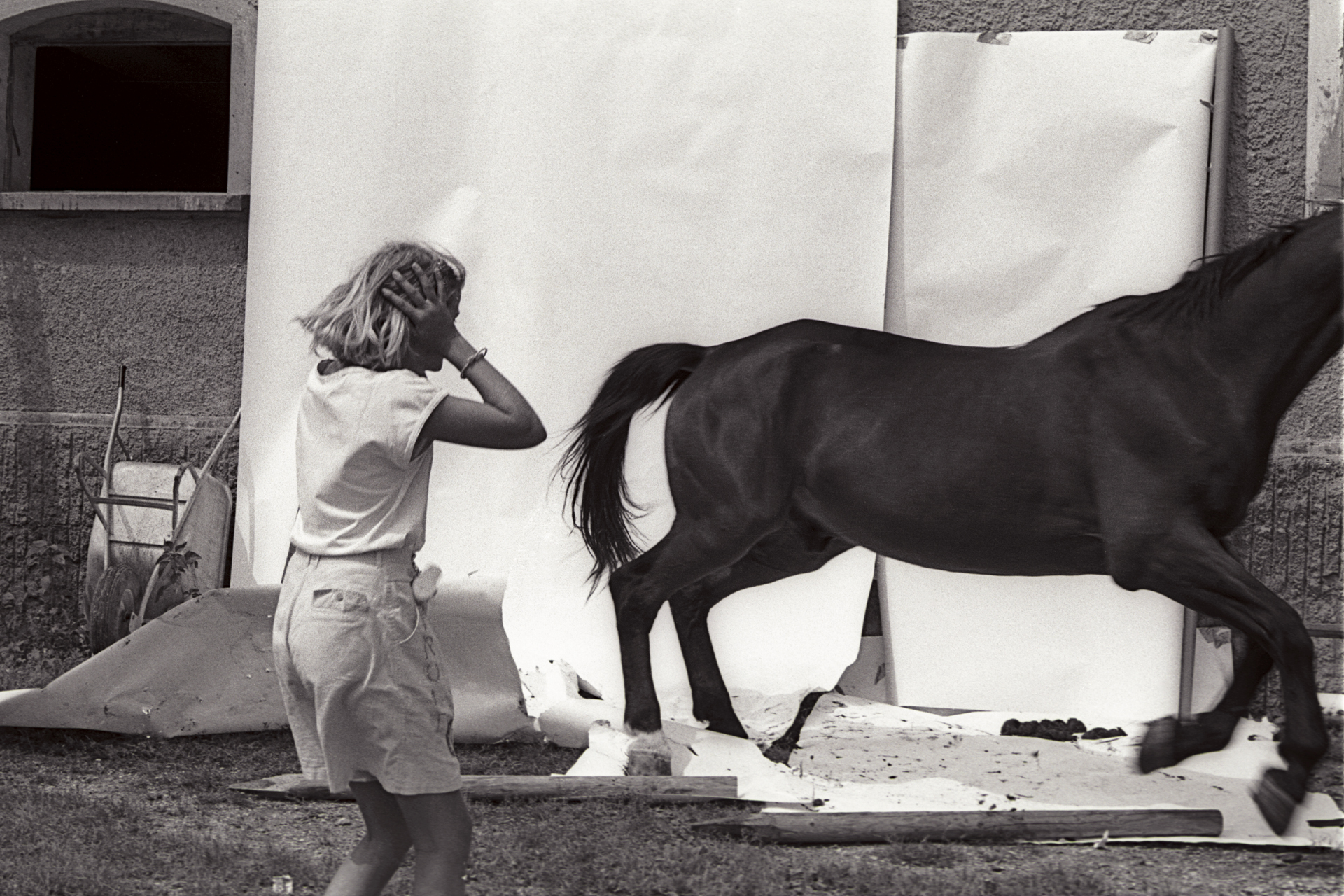
  • From series: Animals in front of a white background, 1989

    Photosession at Malerwochen Stift Rein, Styria

    photo credits: ©Ilse Haider

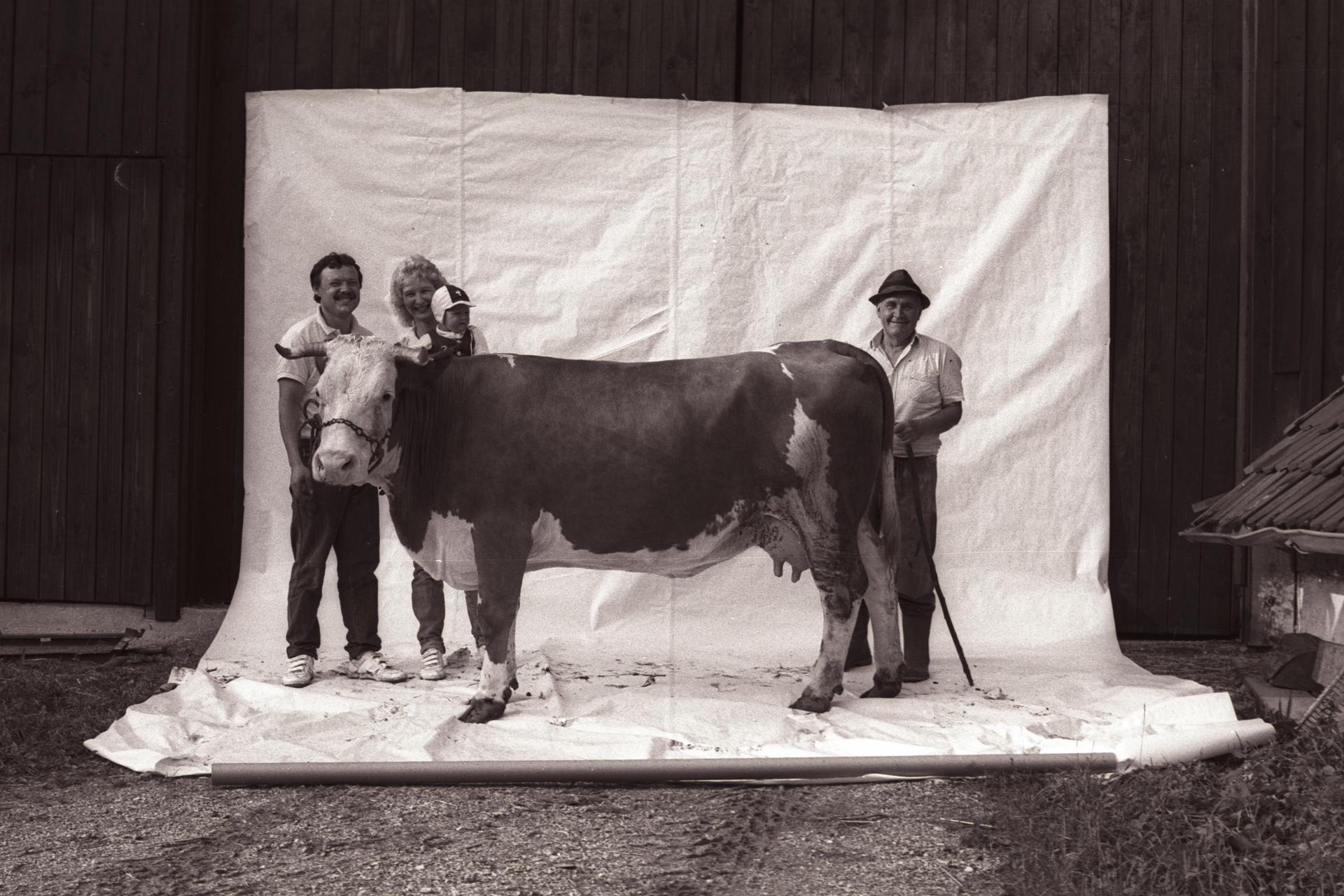
  • From series: Animals in front of a white background, 1989

    Photosession at Malerwochen Stift Rein, Styria

    photo credits: ©Ilse Haider

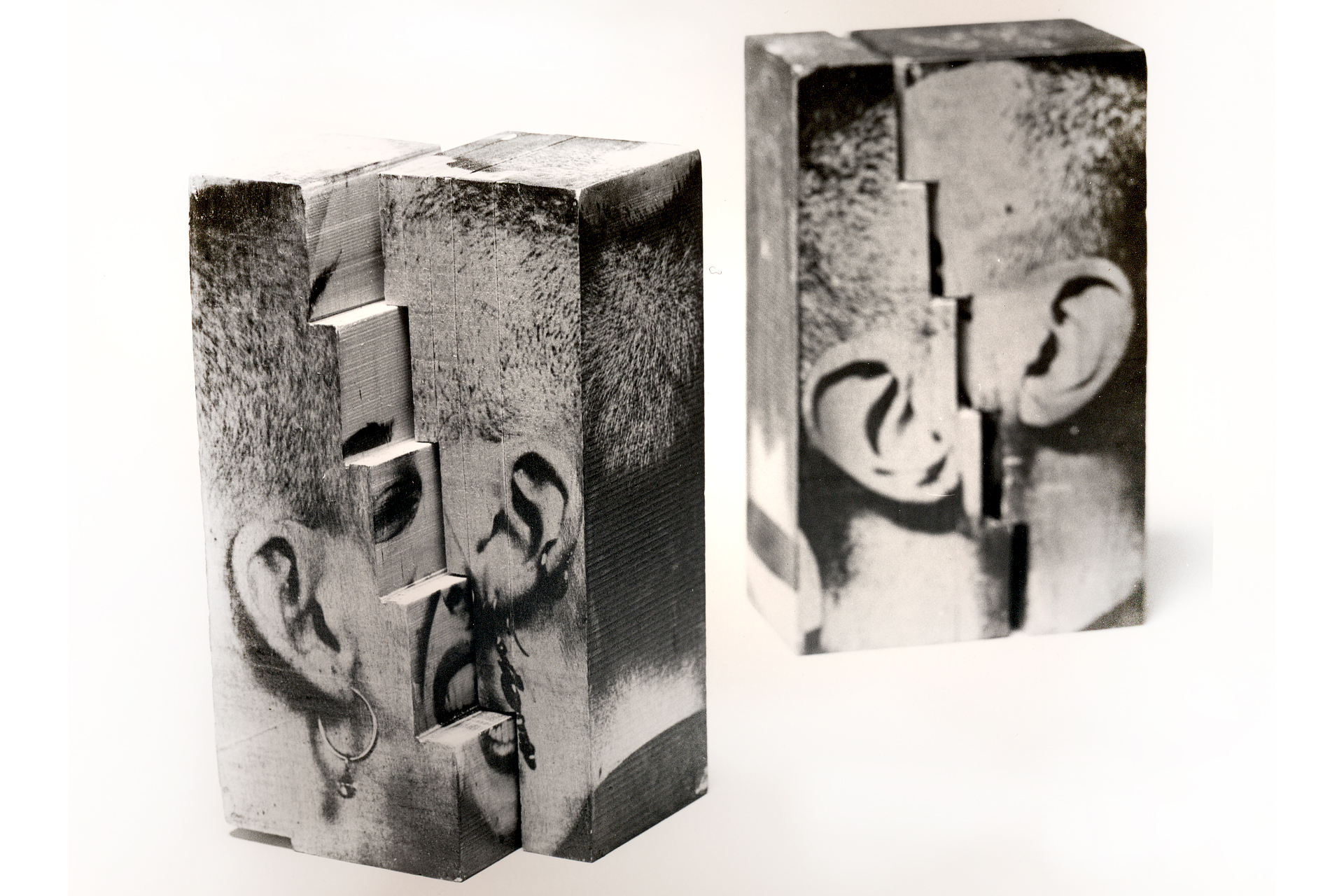
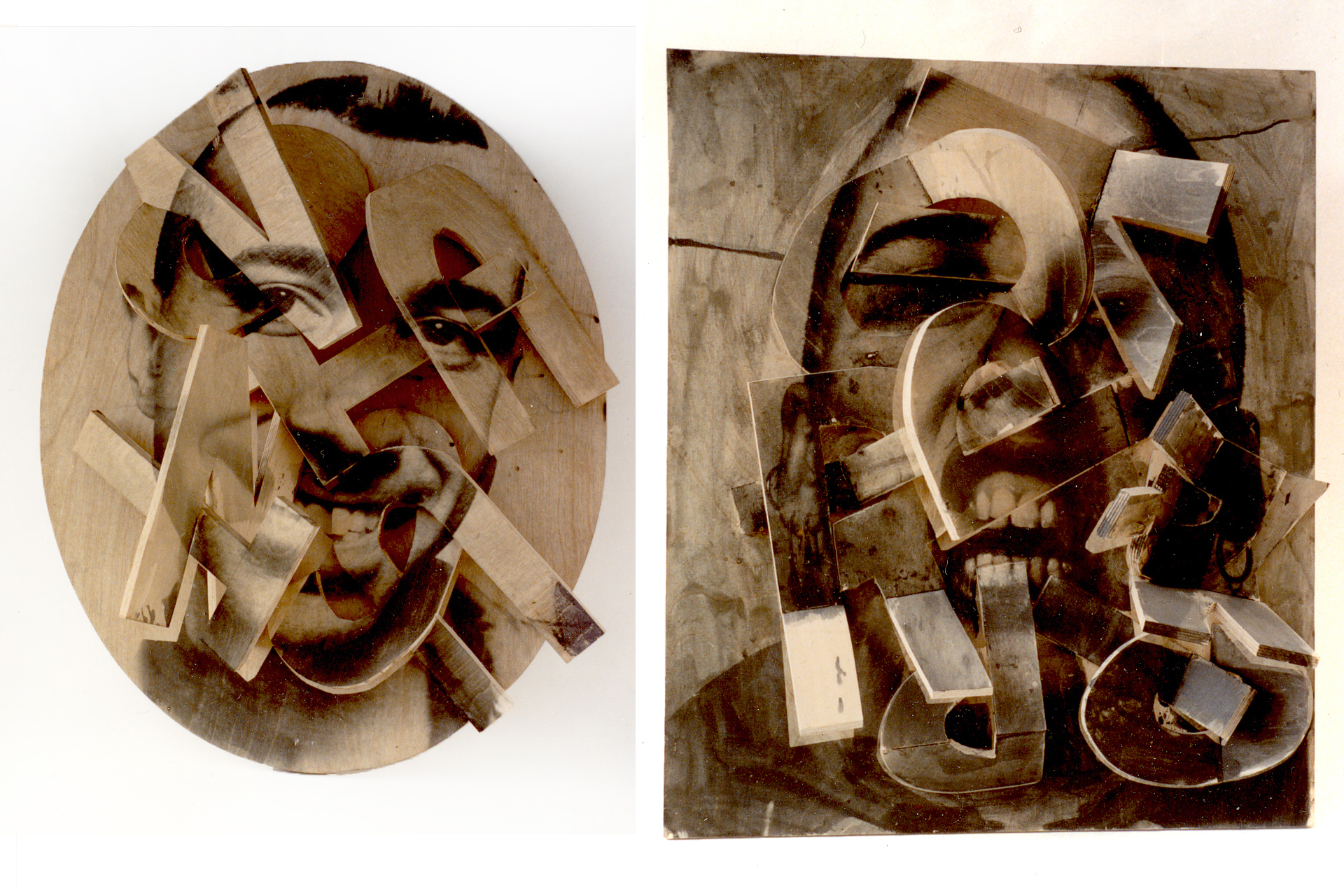
  • C*nt, 1989, Pr*ck, 1989

    70 x 56 x 12cm (l), 70 x 58x 14cm (r), photographic emulsion on wood

    photo credits: ©Ilse Haider

    > text

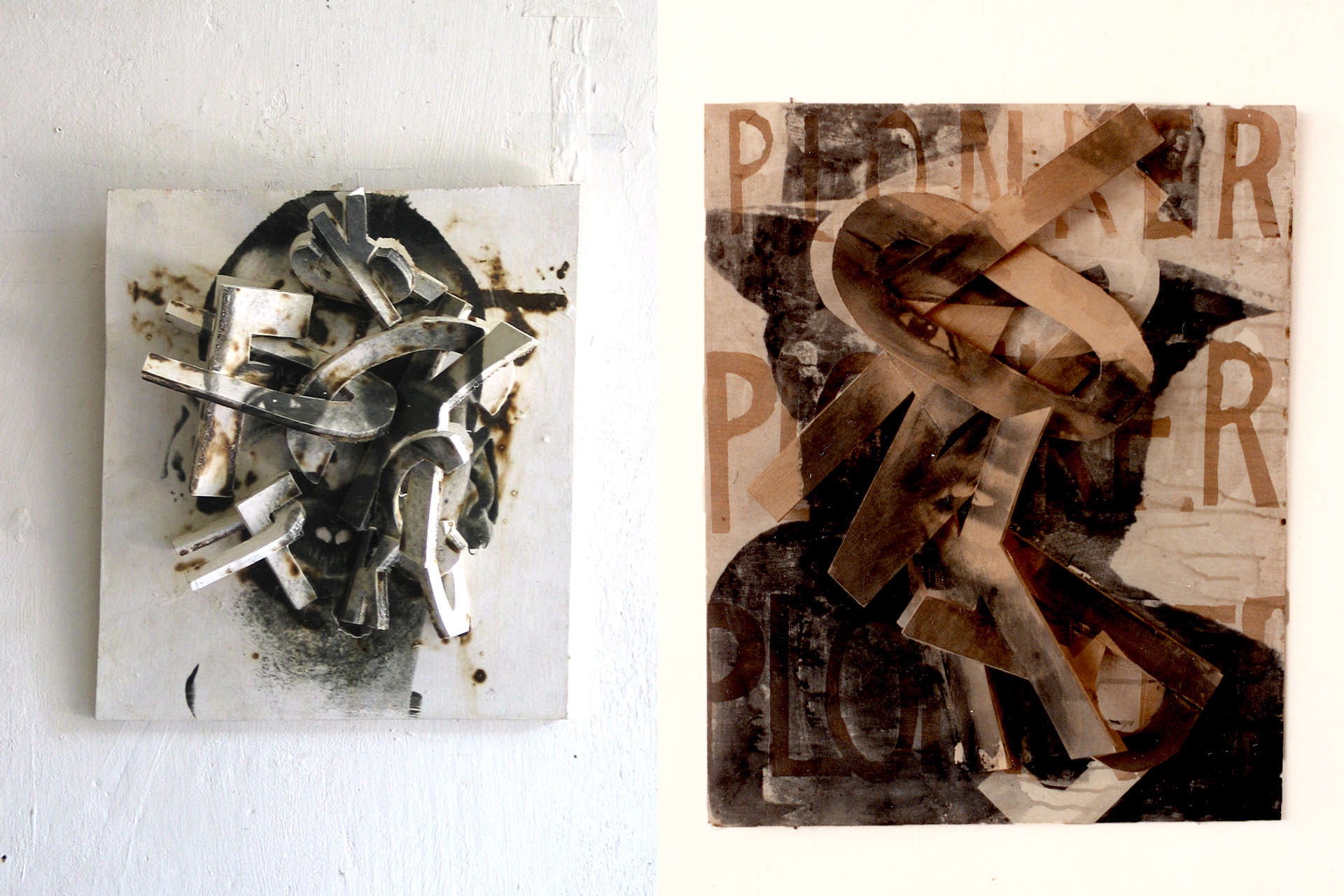
  • F*ck, 1989, Pl*nk*r, 1989

    40 x 30 x 10cm (l), 60 x 50 x 4cm (r), photographic emulsion on wood

    photo credits: ©Ilse Haider

    > text

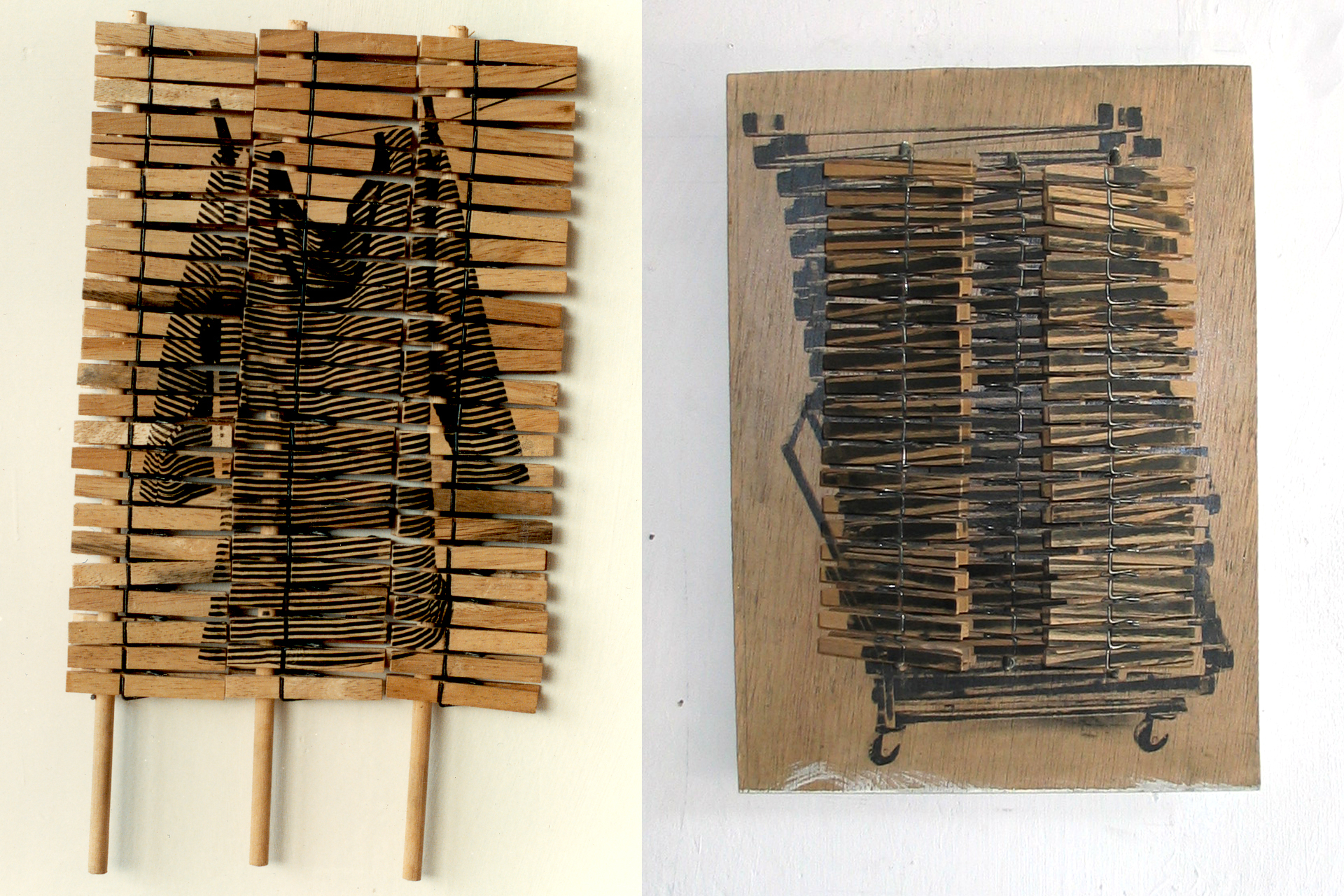
  • Medium, 1990, Untitled, 1991

    40 x 22,5 x 2 cm (l), 50 x 40x 8cm (r), photographic emulsion on wood and clothespins

    photo credits: ©Ilse Haider

    > text

Continue reading

[Untitled (Man’s Portrait with C.U.N.T.)]

Ulrike Matzer

CV

Ulrike Matzer

is an art historian, cultural scientist, and critic. Her work is situated at the intersections of visual culture, gender studies, the history of modern architecture, and media history. Since fall 2024 she is the head of the Margarete Schütte-Lihotzky (MSL) Centre, Vienna. Besides this, she works as a postdoctoral researcher, author, and critic. Since the academic year 2022/23 she lectures at the University of Zurich, as part of the Certificate of Advanced Studies in Theory and History of Photography. Prior to that, she was a visiting professor at the Photography Department of the University of Applied Arts Vienna.

Ulrike Matzer

ist Kunsthistorikerin und Kulturwissenschaftlerin. Ihre Schwerpunkte liegen im Bereich der Geschichte und Theorie der Fotografie, der Architekturgeschichte der Moderne sowie der Gender Studies und der Visuellen Kultur. Seit Herbst 2024 leitet sie das Margarete Schütte-Lihotzky (MSL) Zentrum in Wien, daneben ist sie als Forscherin, Autorin und Kritikerin tätig. Seit dem Studienjahr 2022/23 lehrt sie als Dozierende an der Universität Zürich im Rahmen des Weiterbildungsstudienganges Theory and History of Photography. Zuvor hatte sie die Gastprofessur für Geschichte und Theorie der Fotografie an der Universität für angewandte Kunst in Wien inne.

EN

[Untitled (Man’s Portrait with C.U.N.T.)]

Eight letters, intertwined to form a four-letter word inscribed twice in a counterclockwise circle, an indecent word spelled out at best as c*nt and erased by a beep on radio and TV: this word, unspeakable and yet pronounced precisely by its very silence and concealment, is materialized into an object by Ilse Haider. In contrast with many other works in which the artist appropriates photographic reproductions from the history of art and recreates them by projecting images of bodies onto bodily supports – a rattan cane, wood, the ends of cotton swabs – the photograph in this case is her own: a capturing of various people at the moment of speaking.

Words pronounced repeatedly and in isolation become strangers, their meaning suddenly unrecognizable. The signification and effect of an expression depend on the context as well as the intentions with which they are pronounced, and thus very greatly. Insults, especially, experience wide displacement regarding the original import of expressions with respect to what it designates – entailing also the a displacement of sexual assignation. Moreover, an acoustic signal is here transformed into a visual one, leading to more white noise.

Ilse Haider carries the engagement with such shifts in perception and meaning further in her later objects, which appear even more fully spatial and compel the beholder to adapt certain positions. The picture changes depending on one’s standpoint: showing and concealing, erasing and inscribing as two different versions of signifying.

(2009, MATRIX, Geschlechter / Verhältnisse / Revisionen, catalogue, Kulturabt. der Stadt Wien, MA7)

DE

O.T. (Männerporträt mit C.U.N.T.)

Acht Buchstaben, verhakt ineinander zum four-letter-word, zweifach im Kreis und gegen den Uhrzeigersinn arrangiert: ein wenig schickliches Wort, das bestenfalls c*nt geschrieben wird und in Funk und Fernsehen mit einem Ton gelöscht: eben jenes Unsagbare und im Verschweigen und Verstecken doch Gesagte materialisiert sich in einem Bildwerk Ilse Haiders. 

Anders als bei vielen ihrer Arbeiten, wo sich die Künstlerin fotografische Reproduktionen aus der Kunstgeschichte zu eigen macht und wiederum selbst reproduziert, indem sie Bilder von Körpern auf körperhafte Träger wirft (auf Peddigrohr, Holz, die Enden von Wattestäbchen), stammt in diesem Fall die Aufnahme von ihr: im Moment des Sprechens hat sie verschiedene Personen abgelichtet. Wiederholt und isoliert genannt erscheint einem der Sinn von simplen Wörtern oft plötzlich fremd, nicht wieder zu erkennen. Bedeutung und Wirkung von Ausdrücken hängen jeweils vom Kontext und von Sprechabsichten ab, sind also sehr unterschiedlich. Gerade bei Schimpfwörtern kommt es meist zu ziemlichen Verschiebungen, was den ursprünglichen Sinn eines Ausdrucks in Bezug auf das Bezeichnete betrifft – was in dem Fall auch eine Verschiebung geschlechtlicher Zuschreibung mit sich bringt. Zudem wird hier Akustisches ins Visuelle übertragen, was noch mal ein Rauschen produziert.

Die Auseinandersetzung mit solchen Wahrnehmungs- und Bedeutungswechseln führt Ilse Haider in ihren späteren Objekten fort, die noch stärker räumlich wirken und Betrachtende in bestimmte Positionen zwingen: Je nach Standpunkt nämlich verändert sich das Bild: Zeigen und Verbergen, Auslöschen und Einschreiben als je zwei Varianten des Verweisens.

(2009, MATRIX, Geschlechter / Verhältnisse / Revisionen, Katalog, Kulturabt. der Stadt Wien, MA7)

Continue reading

A Laboratory in the Park

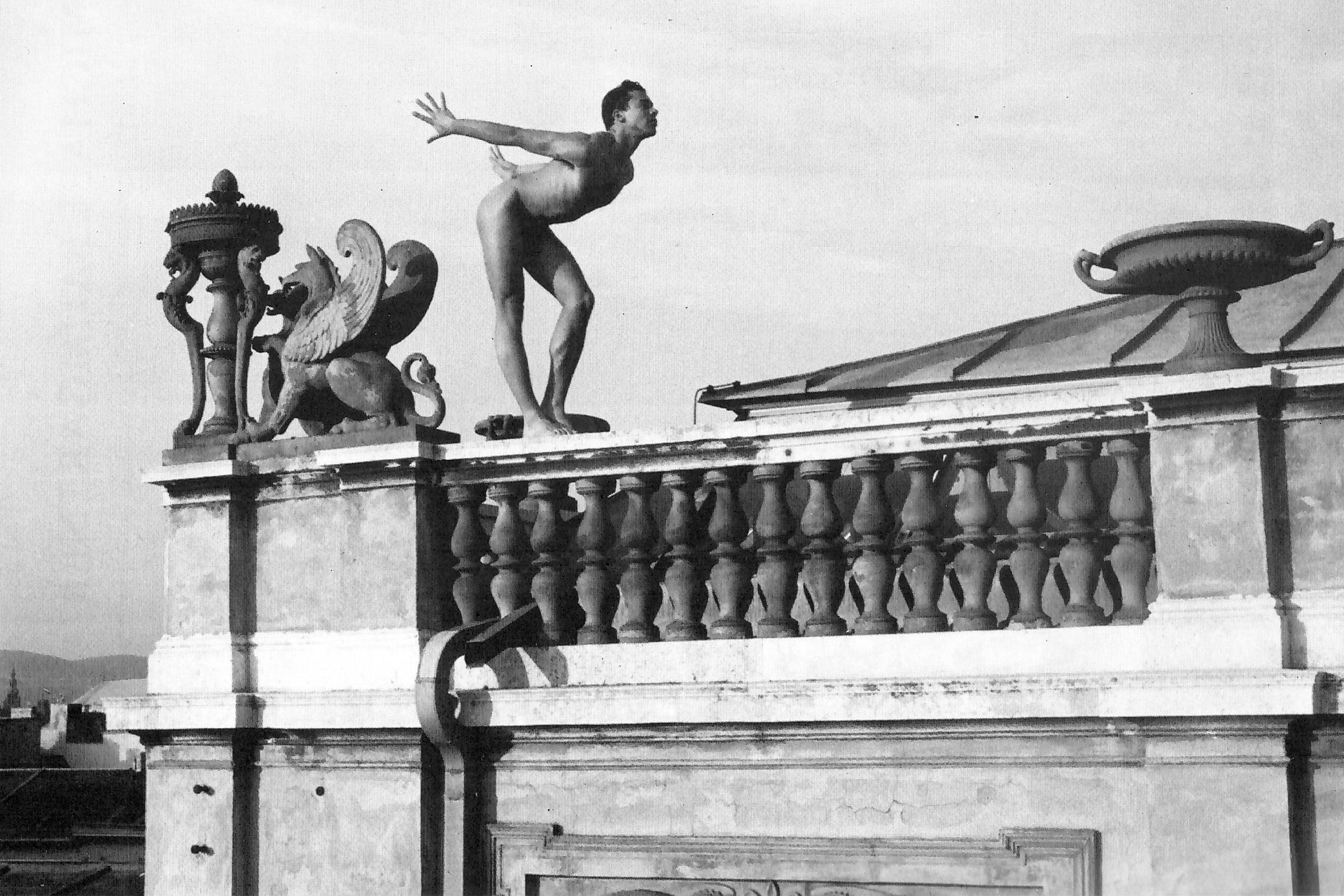
  • Model studies on the roof of the Academy of fine Arts, Vienna, 1988

    > text

  • Design drawing for the project, 1988

    Collage on paper

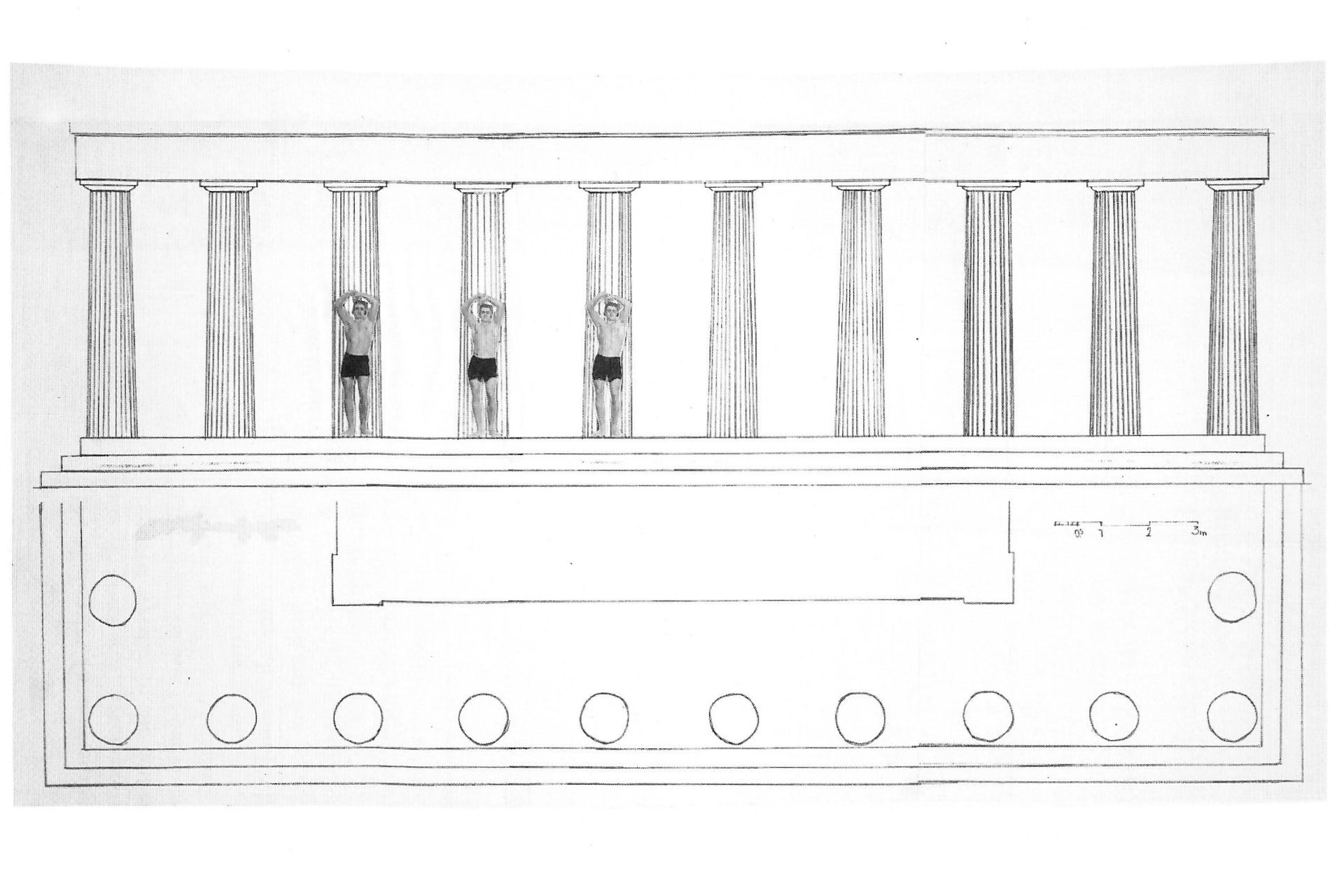
    The idea was to expose the naked body of a blonde, athletic man onto the classic columns of the Theseustemple. After a period of time the image should decompose on its own and peel off through environmental influences.

    > text

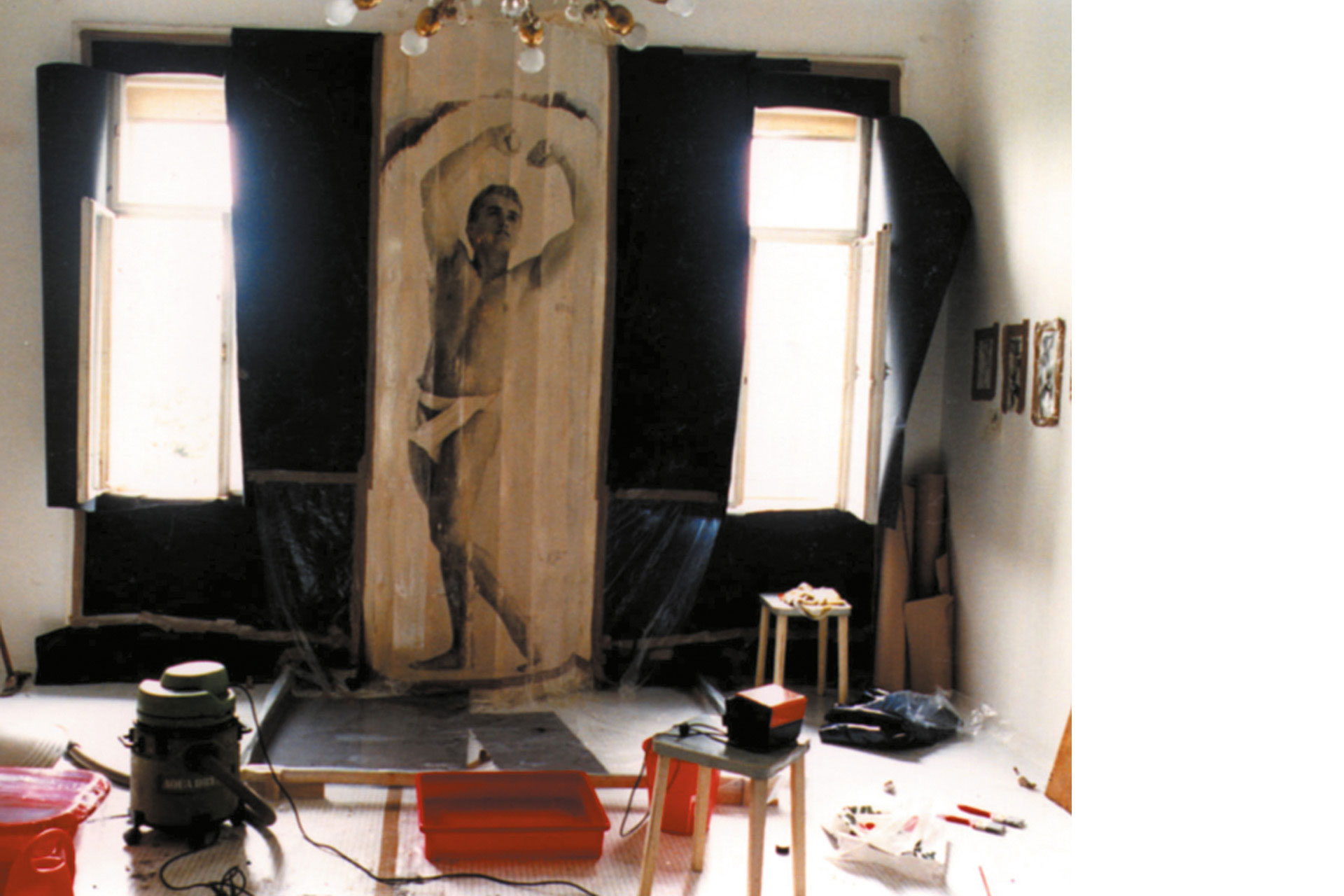
  • Photolab test arrangement at the studio, 1988

    2 x 1,2m, photo emulsion on plastic film

    We tried out the coating and developing of a self built replica of the column of the Theseustemple. photo credits: ©Ilse Haider

    > text

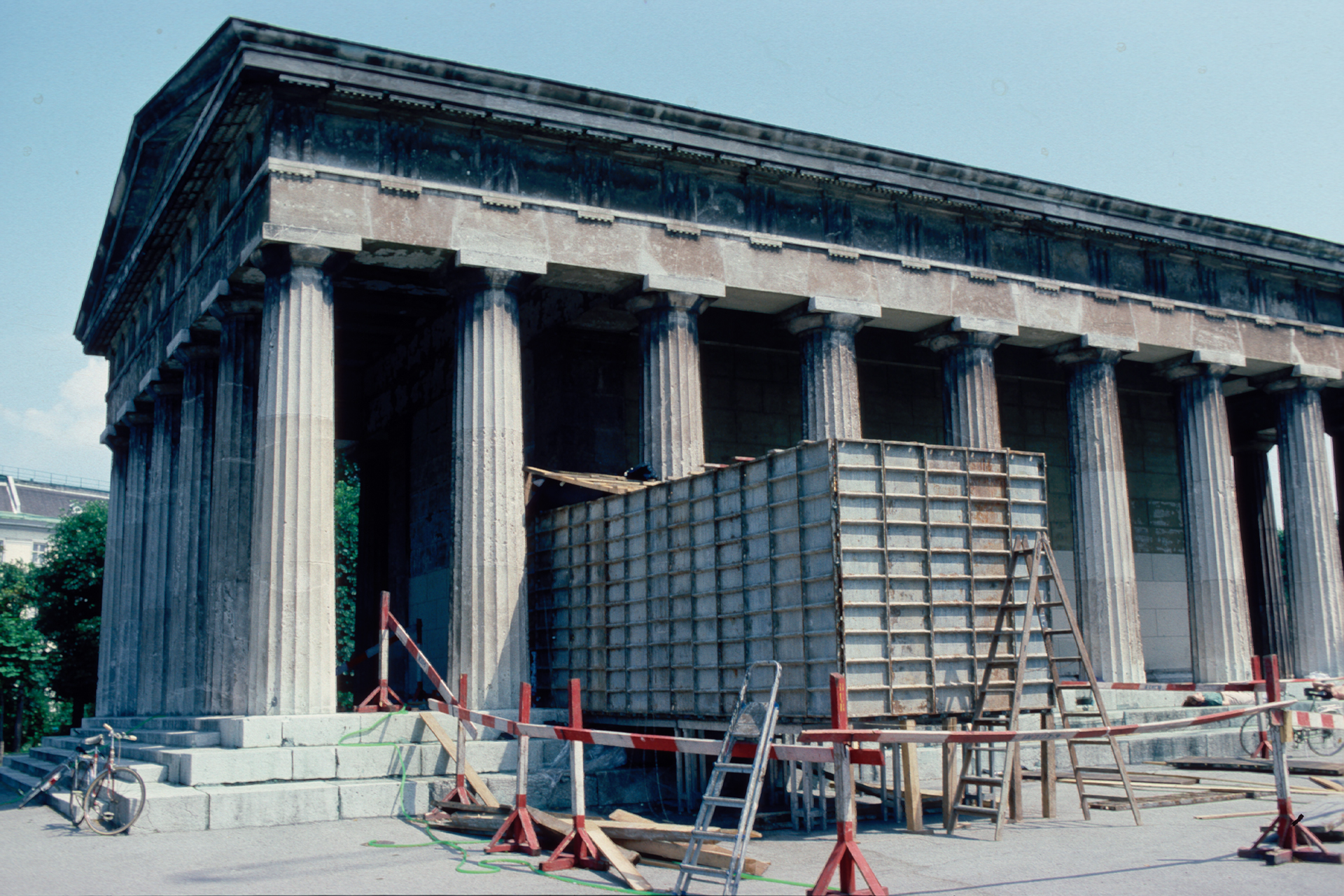
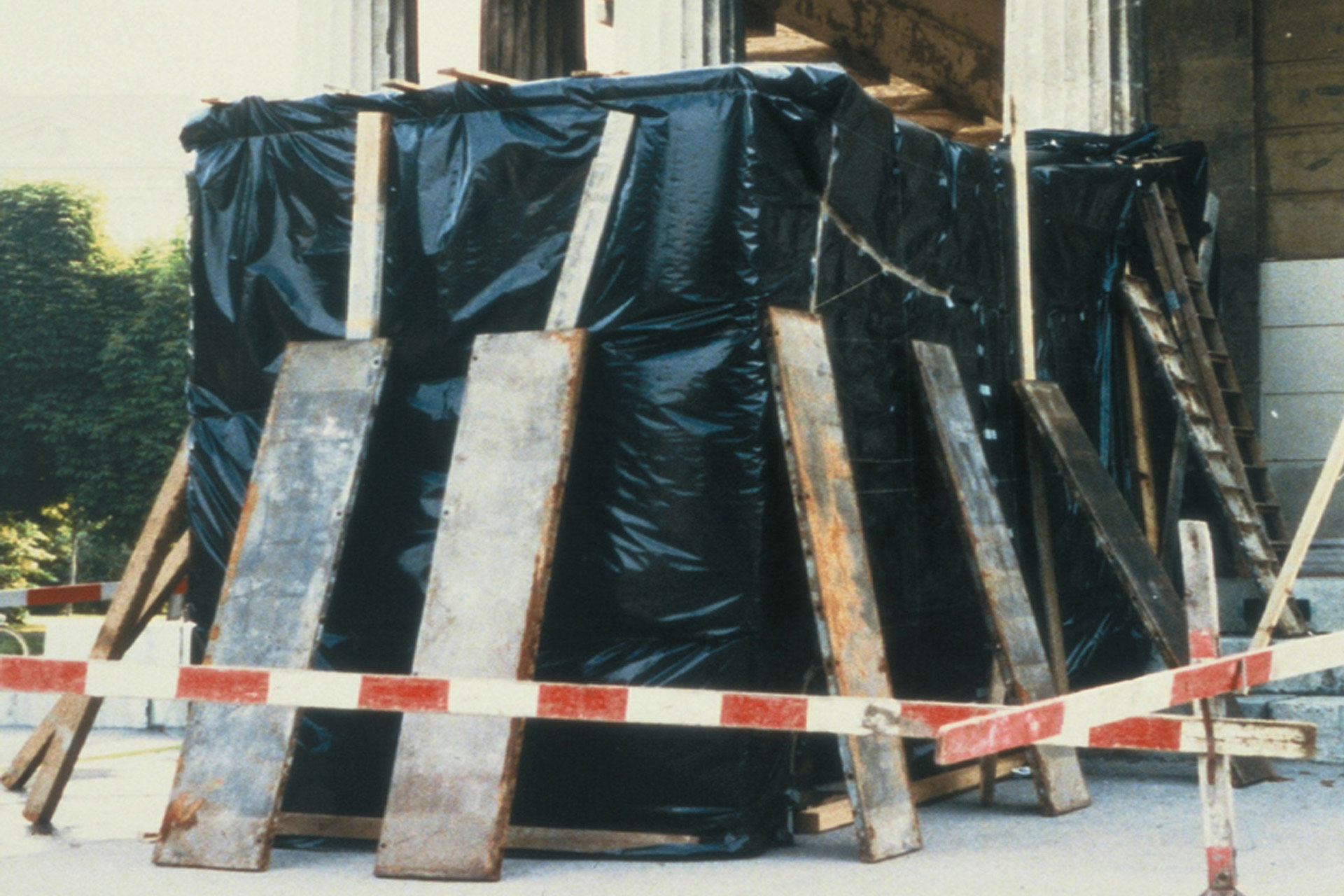
  • Darkroom at the Theseustemple, 1988

    Construction of the mobile darkroom

    The darkroom was built around the 3rd column to be developed. photo credits: ©Ilse Haider

    > text

  • Open Monuments

    Darkroom at the Theseustemple, 1988

    Construction of the mobile darkroom

    The darkroom was built around the 3rd column to be developed. photo credits: ©Ilse Haider

    > text

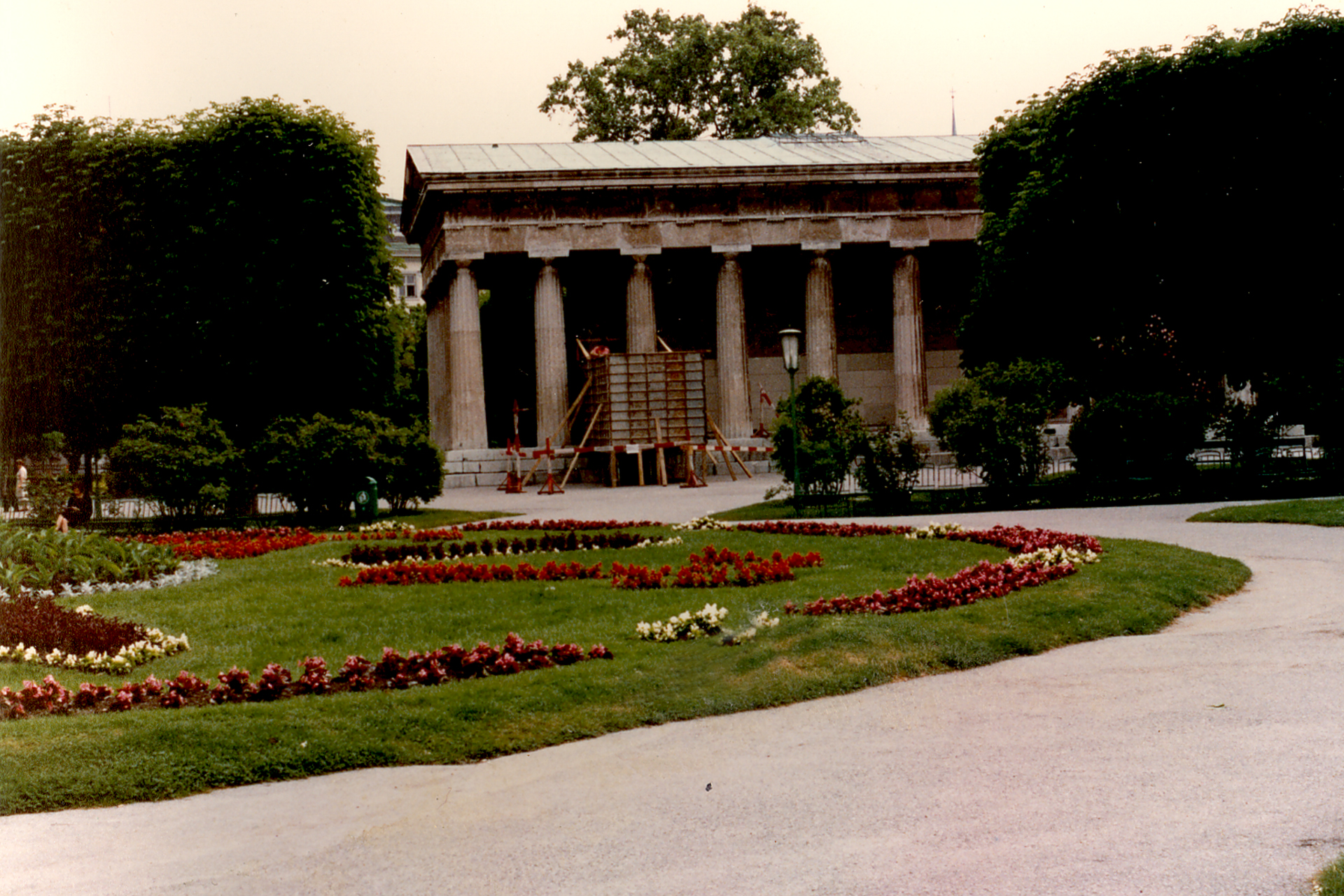
  • Darkroom at the Theseustemple, 1988

    Final Construction of the mobile darkroom

    The darkroom was built around the 3rd column to be developed. photo credits: ©Ilse Haider

    > text

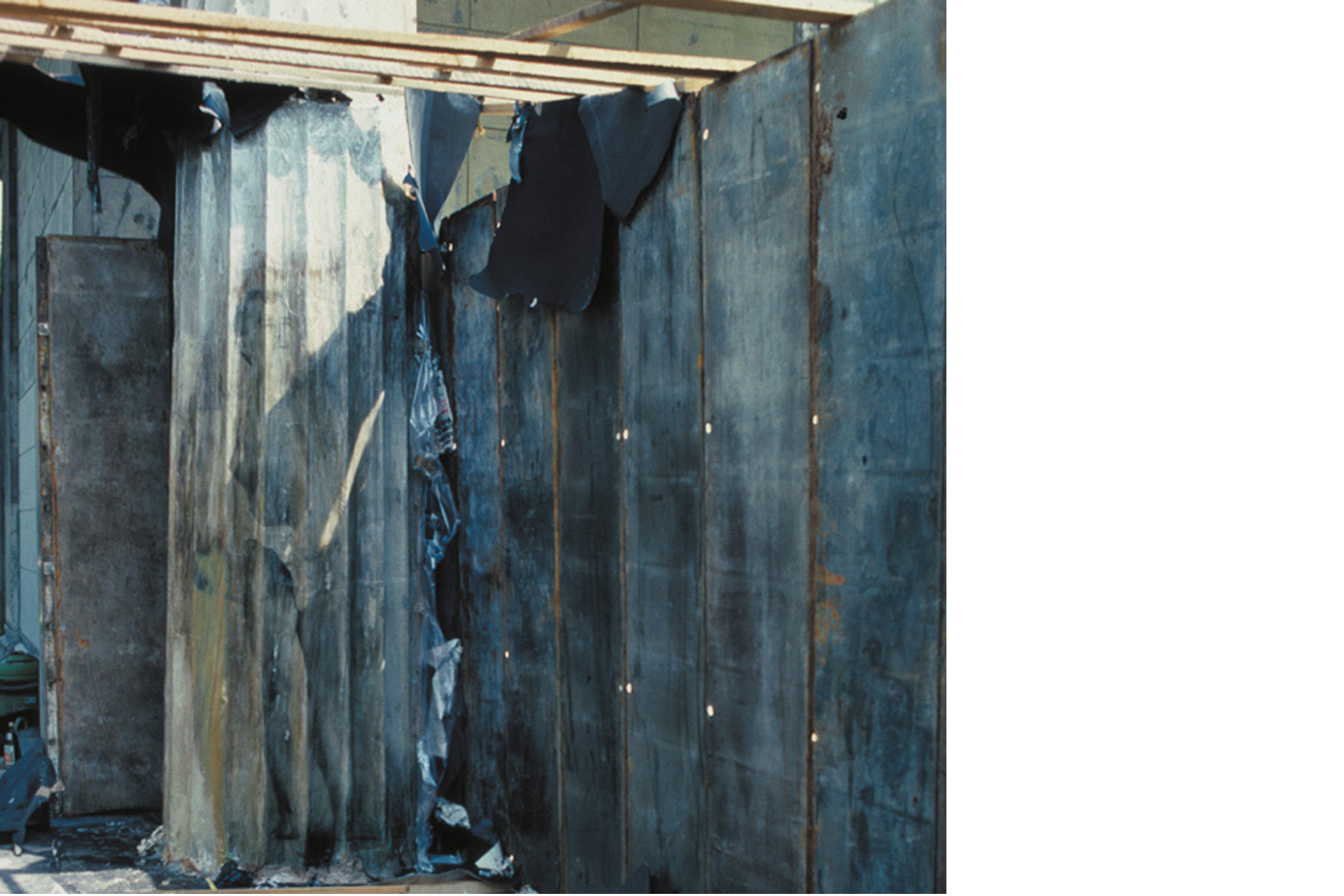
  • Exposed and developed image, 1988

    Photographic emulsion on plastic foil

    Due to the humid and cold weather conditions the photographic emulsion did not completely dry. Therefore, the image could not be properly developed. photo credits: ©Ilse Haider

    > text

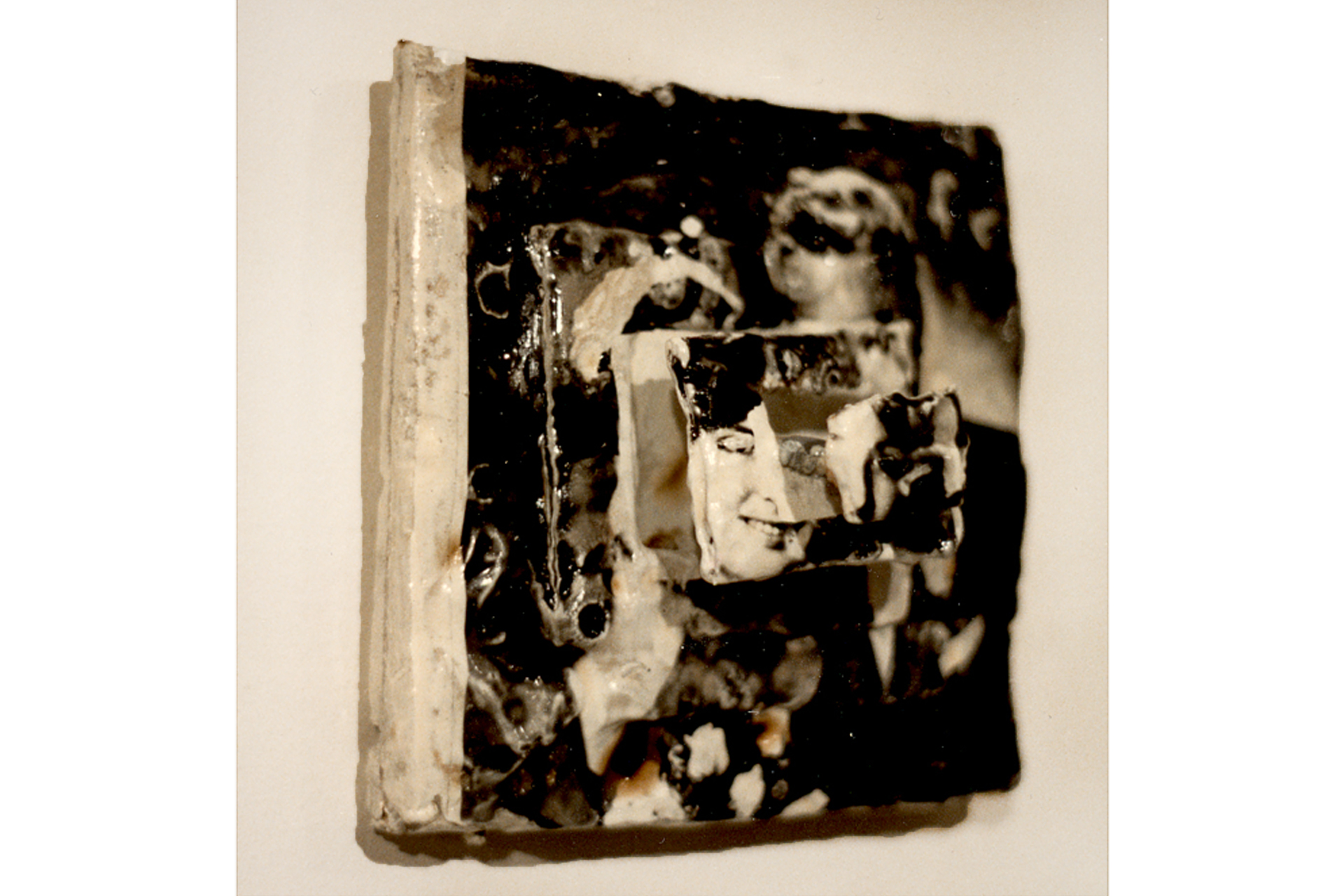
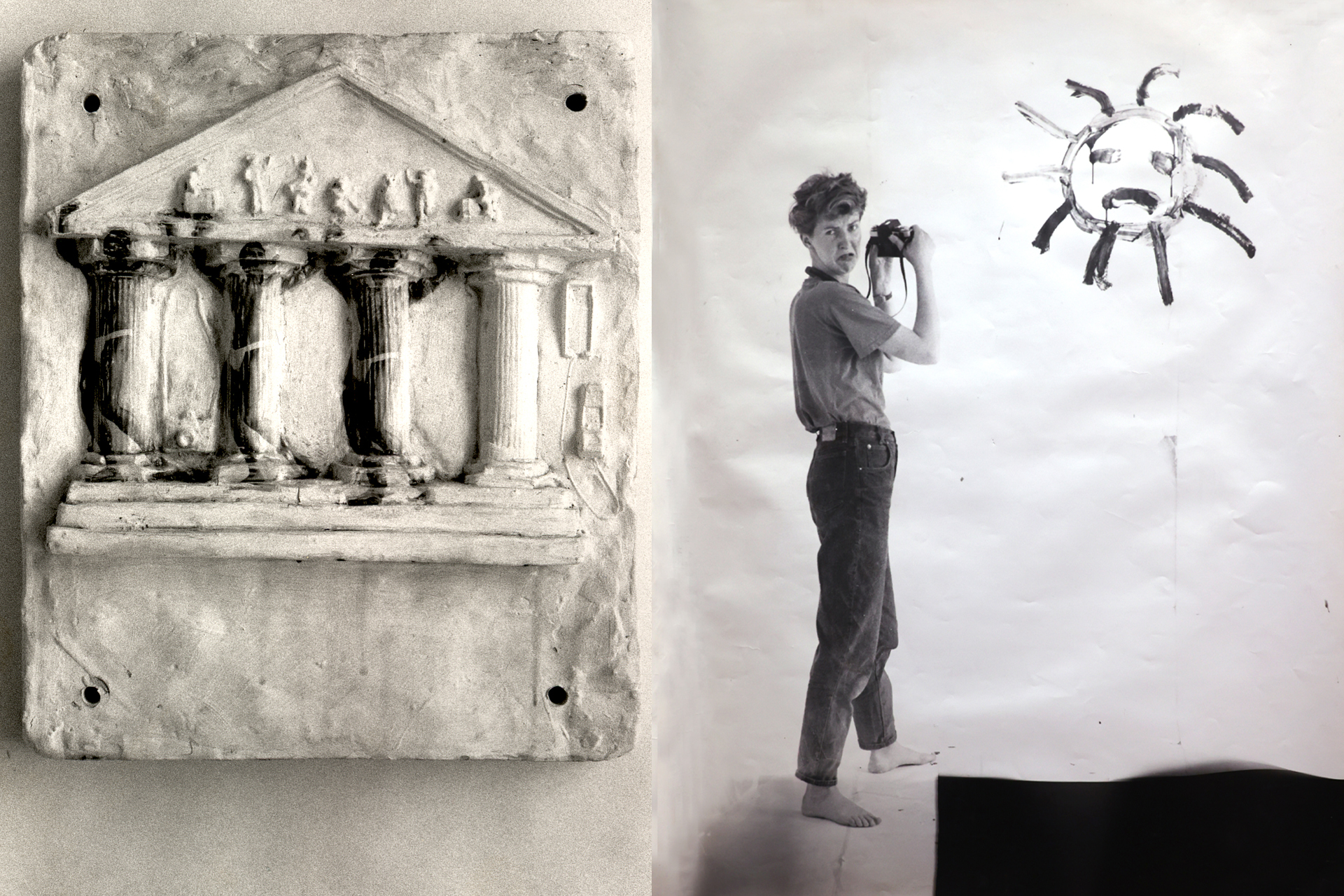
  • Relief in memoriam of the project, 1988

    Photographic emulsion on plaster

    photo credits: ©Ilse Haider

    > text

Continue reading

A Laboratory in the Park

Herbert Schnepf

CV

Herbert Schnepf

(*1979 in der Steiermark/Ö, lebt und arbeitet in Wien) studierte Theater- und Filmwissenschaft/ Kunstsoziologie in Wien und Paris/ Nanterre. Anschließend Assistenz und Öffentlichkeitsarbeit für Filmfestivals, Filmproduktionen, Galerien und Künstler*innen; daneben im Sozialbereich u.a. als Trainer für Deutsch als Fremdsprache in Strafanstalten und Kunstakademien und in der Flüchtlingsbetreuung tätig. Arbeitet derzeit im Projektmanagement einer sozialen NGO und absolviert eine Ausbildung zum Psychotherapeuten. 

EN

A Laboratory in the Park

For the project »Querfeld I« in the Vienna Volksgarten Ilse Haider had a man photographed in a historically correct Germanic loin cloth, and planned to use a light-sensitive emulsion to reproduce the image on columns 3-5 of the Theseus Temple. The photograph was supposed to slowly and steadily flake away from the column. Nevertheless it is the longevity and current relevance of totalitarian ideologies that this piece of work addresses. The process of fading away stands for wishful thinking where this development is concerned. The exposed site in the heart of Vienna is to be seen as part of the agenda just as much as the time-consuming and physically demanding work in the open-air darkroom is. The element of process in the project is not only in the weathering of the photograph but already to be found in the act of working on the object. The paradox that hallmarks this artwork also proves to be an ironic gesture as the complete formulation of this demand taken to the extreme means the end of the demand itself as well. What is being treated with irony here, though, is not the content but the medium and its position. In »The Consoling Camera« Ilse Haider adopts an attitude of protest once again. Here it is the injustices experienced in everyday situations that the protagonists of the video vent their frustration over. The view on which the piece is based has made way for a more optimistic attitude, though: the feeling of powerlessness is expressed for many here on their behalf, the individual’s position is lent more weight. At the same time and with tongue in cheek an opportunity is provided to be heard at least after the fact and to be consoled by the camera.

(2003, Die tröstende Camera, catalogue, Galerie Steinek and Galerie Erhard Witzel)
DE

Labor im Park

Für das Projekt »Querfeld I« im Wiener Volksgarten hat Ilse Haider einen jungen Mann in Germanenschurz abgelichtet und geplant, mittels lichtempfindlicher Emulsion diese Bildvorlage an den Säulen 3–5 des Theseustempels anzubringen. Die Fotografie sollte sich durch kontinuierliches Abblättern langsam vom Stein lösen. Trotzdem wird gerade die Beständigkeit und Aktualität von totalitären Ideologien mit dieser Arbeit thematisiert. Der Vorgang der Auflösung steht für eine imaginierte Wunschvorstellung in Bezug auf deren Entwicklung. Der exponierte Ort im Herzen Wiens ist wohl ebenso programmatisch zu verstehen wie die aufwändige, körperlich anstrengende Arbeit in der Dunkelkammer im Freien. Das Prozessuale der Arbeit liegt nicht nur im Verwitterungsprozess der Fotografie, sondern bereits im Vorgang des Abarbeitens am Objekt. Das Paradoxon, das diese Arbeit kennzeichnet, erweist sich auch als Geste der Ironie, da das vollständige und bis ans Ende ausgeführte Formulieren dieser Forderung zugleich das Ende der Forderung selbst bedeutet. Was hier aber ironisiert wird, ist nicht der Inhalt, sondern das Medium und dessen Position. Bei der Arbeit »Die tröstende Camera« nimmt Ilse Haider erneut die Haltung des Protests ein. Hier sind es im Alltag erfahrene Ungerechtigkeiten, die die Protagonisten der Videoarbeit aufschreien lassen. Das Selbstverständnis, das der Arbeit zugrunde liegt, hat jedoch einer optimistischeren Haltung Platz gemacht : Das Gefühl der Ohnmacht wird hier stellvertretend für viele formuliert, der eigenen Position mehr Gewicht verliehen. Zugleich wird augenzwinkernd die Möglichkeit gegeben, sich zumindest retrospektiv Gehör zu verschaffen und von der Camera trösten zu lassen.

(2003, Die tröstende Camera, Katalog, Galerie Steinek and Galerie Erhard Witzel)
Continue reading